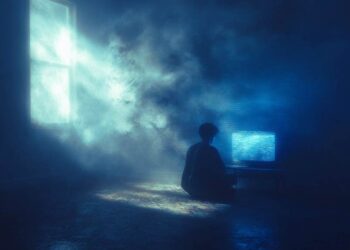
























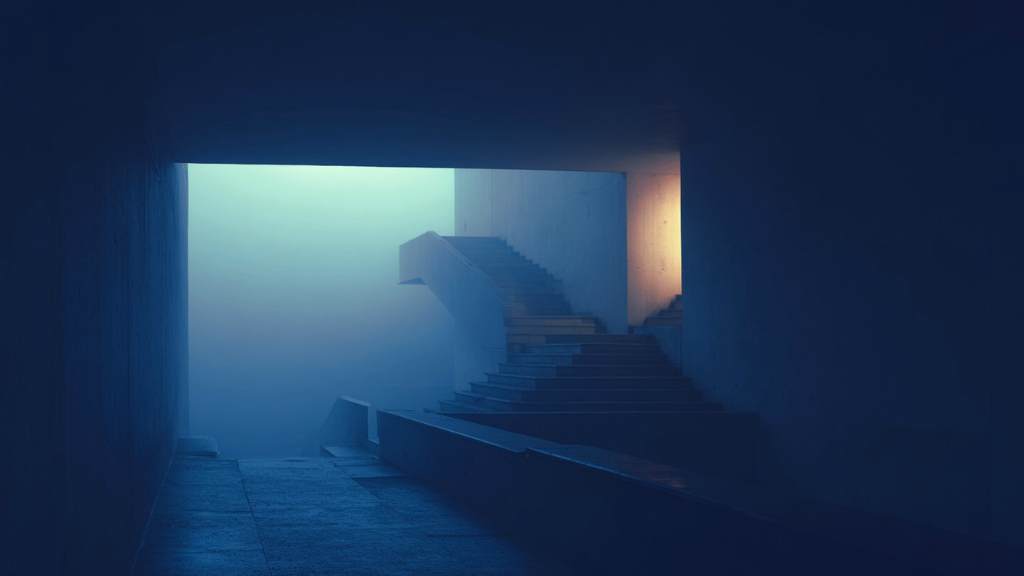
You’ve probably seen them before.
An empty mall.
A quiet hallway lit by fluorescent lights.
A parking garage at dusk.
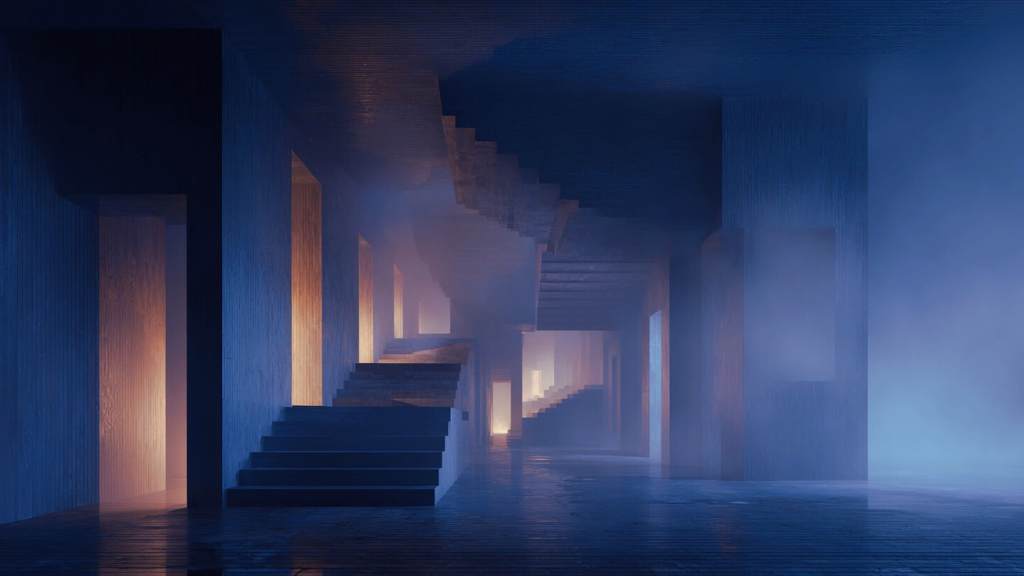
A staircase that feels strangely suspended in time.
These are called liminal spaces.
And for many people, they feel unsettling.
But here’s something less discussed:
For others, they feel calming.
Why?
And more importantly:
Can that feeling help anxiety, especially during uncertain phases of life?
Let’s explore what liminal spaces really are, why they affect the nervous system, and how dark ambient music can transform that eerie feeling into emotional grounding.
What Is a Liminal Space?
The word “liminal” comes from the Latin limen, meaning “threshold.”
A liminal space is a transitional environment – not fully one thing or another.
Examples include:
- Empty airports at night
- Hallways between rooms
- Stairwells
- Abandoned office floors
- Foggy parking lots
- Spaces under renovation
Psychologically, these spaces represent in-between states.
Not arrival.
Not departure.
Just suspension.
That suspension can feel uncomfortable.
But it can also feel freeing.
Why Liminal Spaces Feel Unsettling
From a neurological perspective, liminal spaces disrupt expectation.
Your brain constantly predicts:
- Where people should be
- What sounds should occur
- What movement should exist
When those expectations are violated, like in an empty mall, the brain enters heightened awareness.
This can trigger:
- Mild anxiety
- Hypervigilance
- Existential reflection
- A sense of unreality
For someone already prone to anxiety, this sensation can feel amplified.
But here’s the shift.
Why Liminal Spaces Can Also Feel Calming
When you’re in a life transition — career change, relationship shift, identity evolution – your inner world becomes liminal.
You are no longer who you were.
You are not yet who you will be.
This internal threshold can feel chaotic.
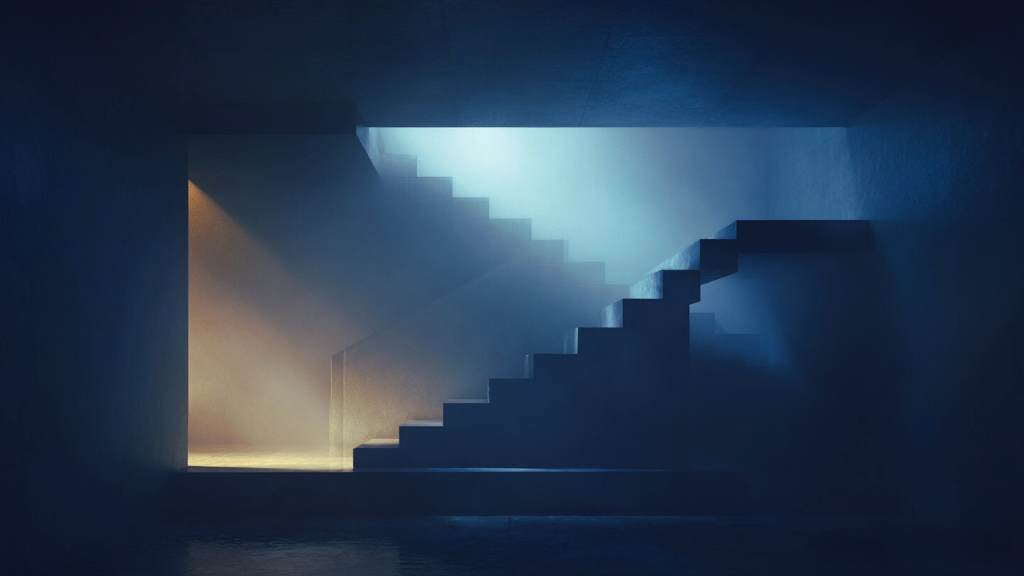
External liminal spaces mirror that state.
And sometimes, when the outside environment matches the inside uncertainty, the nervous system relaxes slightly.
Because it feels seen.
There is no pressure to perform.
No demand for direction.
Just suspension.
This is where the calming effect begins.
The Hidden Link Between Liminality and Anxiety Relief
Anxiety often comes from:
- Needing resolution
- Needing certainty
- Needing clarity
Liminal spaces remove resolution entirely.
They don’t promise answers.
They normalize transition.
Instead of asking, “When will this end?”
They whisper, “This is simply a threshold.”
That subtle shift reduces resistance.
And resistance is what fuels anxiety.
Where Dark Ambient Music Enters the Picture
Liminal spaces are visual thresholds.
Dark ambient music is an auditory threshold.
It doesn’t rush.
It doesn’t resolve quickly.
It doesn’t push toward climax.
It lingers.
Slow evolving textures.
Minimal melodic structure.
Low-frequency warmth.
This sonic architecture mirrors liminal space design.
And when the auditory environment aligns with transitional emotional states, the nervous system begins to regulate.
Why Dark Ambient Works Better Than “Happy Music”
Upbeat music tries to redirect mood.
Dark ambient does something different.
It validates depth.
If you feel uncertain, heavy, or reflective, dark ambient doesn’t contradict you.
It sits with you.
And paradoxically, being allowed to sit in uncertainty without forcing positivity reduces anxiety.
Because the body no longer has to fight its own state.
Using Liminal Sound as Emotional Shelter
If you’re currently in a transitional phase, career shift, burnout, existential questioning, try this:
- Dim the lights.
- Play low-volume dark ambient music.
- Sit in stillness for 10 minutes.
- Do not seek clarity.
- Simply observe the threshold feeling.
You’re not solving your life.
You’re normalizing the in-between.
This practice builds tolerance for uncertainty.
And anxiety weakens when uncertainty becomes familiar.
Liminal Spaces in the Digital Age
In 2026, many people experience digital liminality:
- Endless scrolling
- AI replacing routines
- Rapid cultural change
- Shifting job landscapes
We exist between old systems and emerging ones.
This creates collective threshold anxiety.
Dark ambient music becomes not just aesthetic, but functional.
It slows tempo in a world that accelerates.
It offers continuity in fragmentation.
It creates depth in algorithmic surface culture.
When to Use This Practice
Dark ambient + liminal reflection is especially powerful during:
- Career transitions
- Post-relationship recovery
- Creative burnout
- Night overthinking
- Identity shifts
- Life between major milestones
It’s not therapy.
But it is environmental regulation.
And environment shapes nervous system response.
Final Thought
Liminal spaces are not empty.
They are thresholds.
Anxiety during uncertainty is not weakness.
It is a nervous system searching for stability.
Dark ambient music does not provide answers.
It provides containment.
And sometimes containment is enough.