



















Intro
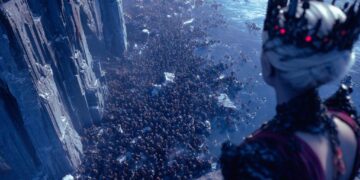
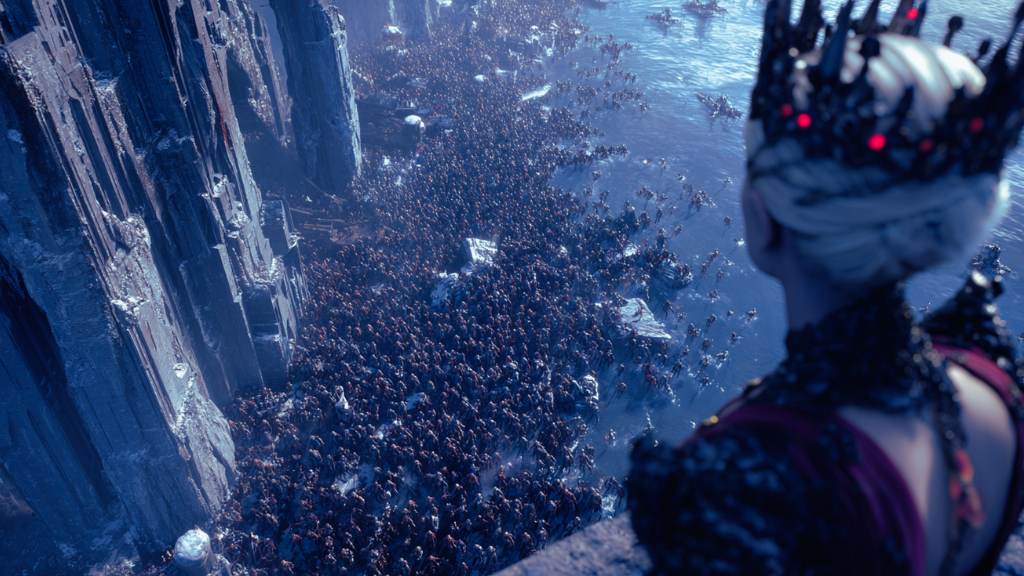
Some vantage points exist not to command, but to witness. From above, meaning shifts. Scale dissolves intention. What looks like inevitability from below becomes a pattern from a distance. This image captures such a moment: a crowned figure standing at the edge of height, looking down not at an enemy, but at momentum itself. Mirith belongs to this elevated stillness, where sound recedes, judgment softens, and awareness widens.

Best listened with:
- Headphones or a full but restrained speaker setup
- Cool light or early evening darkness
- A calm, undistracted environment
- A mentally overloaded or decision-heavy state
- Ideal for grounding, strategic thinking, or emotional distancing
- My music via the Wartonno Hub
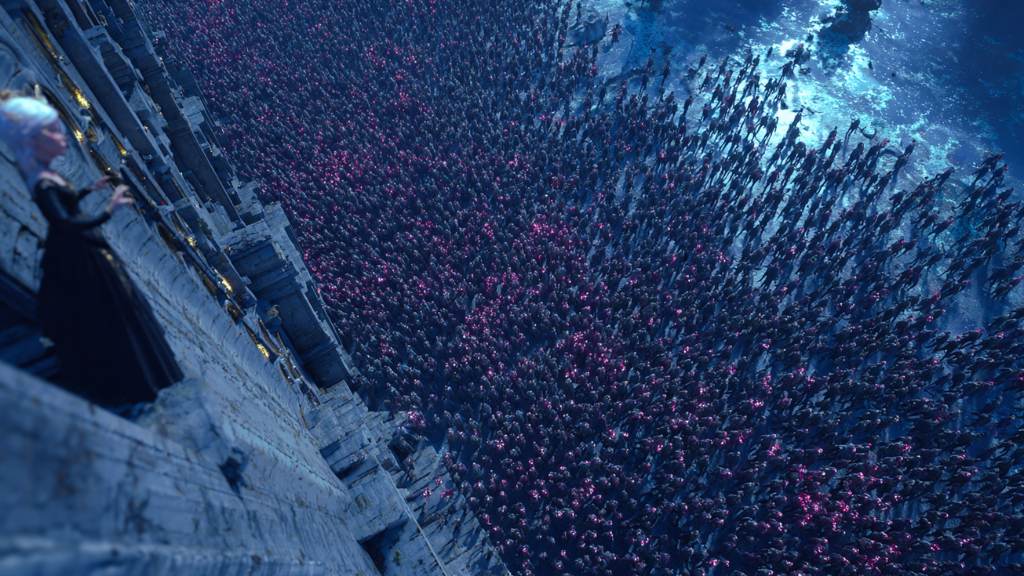
From the cliff, the sea of movement had no voice.
Thousands moved below—no, tens of thousands—but from this height they merged into something singular. Not a crowd. A current. Armor and flesh, banners and weapons, all reduced to a slow, relentless tide pressing against stone and water alike.
Mirith did not lean forward.
She stood upright, spine aligned, hands resting loosely at her sides. The crown she wore was not ornamental. Its dark spines were embedded with faint red points of light, not gems, not technology, but markers. Each one corresponded to a vow once spoken and never fulfilled. She carried them openly. That was her burden, and her authority.
The fortress behind her was ancient, poured from concrete long before concrete had learned to crack politely. Its walls had been shaped to endure pressure rather than beauty. From this height, it resembled a decision that had already been made centuries ago.
Below, the tide surged closer.
She felt no urgency.
Urgency was a tool for those inside the flow.
Mirith had learned early that standing above momentum required a different discipline. Not detachment, but restraint. Not apathy, but calibration. The world below believed she watched to judge, to command, to release something devastating at the precise moment.
They were wrong.
She watched to understand when not to act.
The sea churned where stone met water. Bodies pressed forward, drawn not by orders but by inevitability. Each individual believed they moved by choice. From above, choice blurred into repetition. Patterns emerged—eddies of hesitation, surges of resolve, collapses where fear briefly outweighed direction.
This was the true language of conflict.
Not cries. Not banners. Motion.
The wind lifted strands of pale hair from her neck. Cold air carried salt and iron upward, thinning as it rose. The sound beneath everything, a low, restrained presence, remained steady within her. It did not swell with tension. It did not sharpen. It simply held the moment in suspension.
Mirith closed her eyes briefly.
Not in prayer.
In alignment.
She remembered another cliff, another tide, another version of herself who had believed intervention was always necessary. That belief had cost her more than it had saved. Since then, she had learned to let momentum reveal its own fracture points.
No crown could stop a tide.
But awareness could outlast it.
When she opened her eyes again, nothing below had changed. And yet everything had.
She turned, not away from the edge, but inward, letting the height settle into her body. The fortress remained. The sea continued its slow advance. The moment did not demand resolution.
Some thresholds exist only to be held.
From above, the tide was not a threat.
It was information.
Where this music fits best
Mirith supports moments requiring emotional distance, clarity under pressure, and elevated perspective. It works well for personal listening during grounding exercises, strategic thinking, late-night reflection, or recovery from overstimulation. Its restrained, expansive atmosphere also suits cinematic scenes of scale and consequence, television sequences involving moral tension or observation, and games that emphasize world-state awareness, leadership, or quiet decision-making over immediate action.