








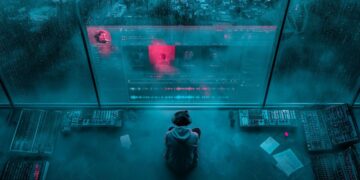
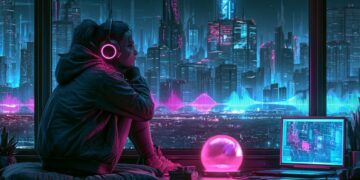

Late-night music is changing.
It is no longer only about genre. It is no longer only about whether something is ambient, bedroom pop, dark lofi, shoegaze, cinematic electronic, or experimental sound design.
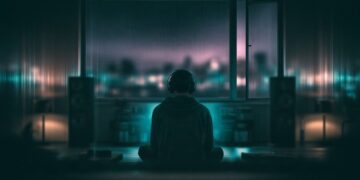
More and more, listeners seem to be searching for music that feels like a place.
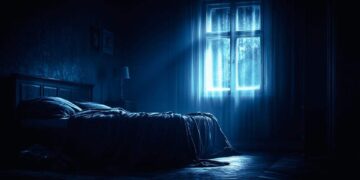
A room for overthinking.
A city for loneliness.
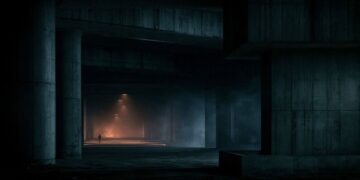
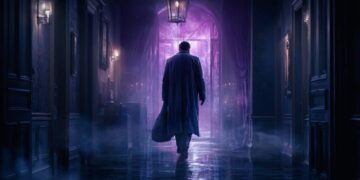
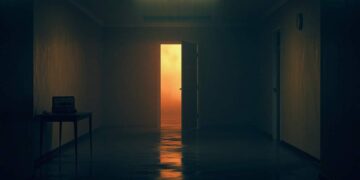
A corridor for memory.
A voice for private thoughts.
A soundtrack for the version of the future that already feels close.
That is why dark ambient, bedroom pop, liminal music, and cinematic cyberpunk ambient now belong in the same conversation.
Dark ambient gives overthinking a room.
Bedroom pop gives overthinking a voice.
Cyberpunk ambient turns both into a world.
This is where Wartonno’s new direction begins.
Ambient music is becoming emotional architecture
Recent ambient music coverage keeps pointing toward the same shift: ambient is not only being treated as background sound anymore. It is being discussed as music for interior states, reflection, creative pressure, memory, doubt, atmosphere, and psychological space.
Bandcamp Daily’s ongoing ambient coverage shows how wide the genre has become, moving through drone, experimental composition, electronic texture, abstraction, and emotional listening environments. Their recent ambient roundups continue to frame ambient as a flexible space for feeling, not just relaxation.
This matters because it changes how listeners discover music.
People do not only search for “ambient music.” They search for music for writing. Music for sleep. Music for overthinking. Music for liminal spaces. Music for walking at night. Music for focus. Music for strange moods they cannot fully explain.
That is emotional architecture.
The music becomes a place the listener can enter.
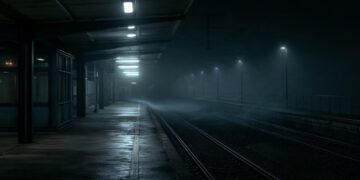
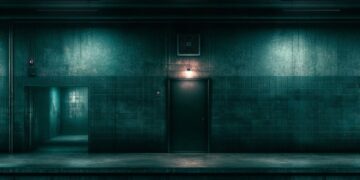
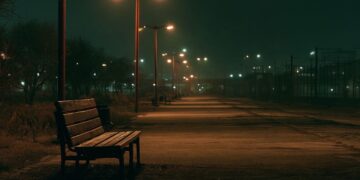
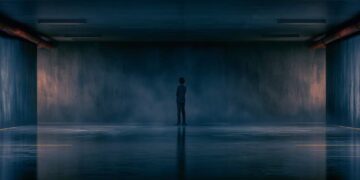
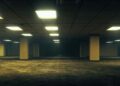
Dark ambient is especially powerful here because it does not force a clean emotional answer. It can feel like an empty hallway, a basement light, a silent train platform, a room after everyone has left, or the low pressure of a city at 3 a.m.
It makes inner states physical.
Bedroom pop is becoming more atmospheric
Bedroom pop is moving in a similar direction from the opposite side.
Where dark ambient removes the voice and builds space, bedroom pop keeps the voice close. It gives private emotion a human shape.
But modern bedroom pop is no longer limited to minimal lo-fi recordings. It increasingly blends with shoegaze, dream pop, R&B, indie rock, and cinematic production while keeping the feeling of intimacy.
Fousheé’s “Drive,” for example, has been described as sitting between shoegaze and bedroom pop, with a warm and blurry atmosphere. That is a useful signal: bedroom pop is becoming more textural, more spacious, and more atmospheric while still feeling personal.
L’Rain’s upcoming album Fata Morgana also points toward this wider emotional landscape. The album is set for release on August 14 via Mexican Summer, and its tracklist includes “Bedroom Songs,” a title that captures how the bedroom remains a symbolic space in modern music: private, unstable, intimate, and emotionally charged.
Bedroom pop gives the listener a voice inside the room.
Dark ambient gives the listener the room itself.
Together, they form a late-night language.
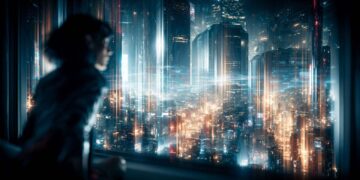
Cyberpunk ambient turns the room into a city
This is where cyberpunk ambient becomes interesting.
Cyberpunk ambient does not only create a mood. It creates a world.
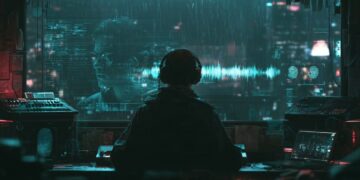
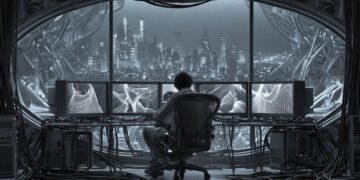
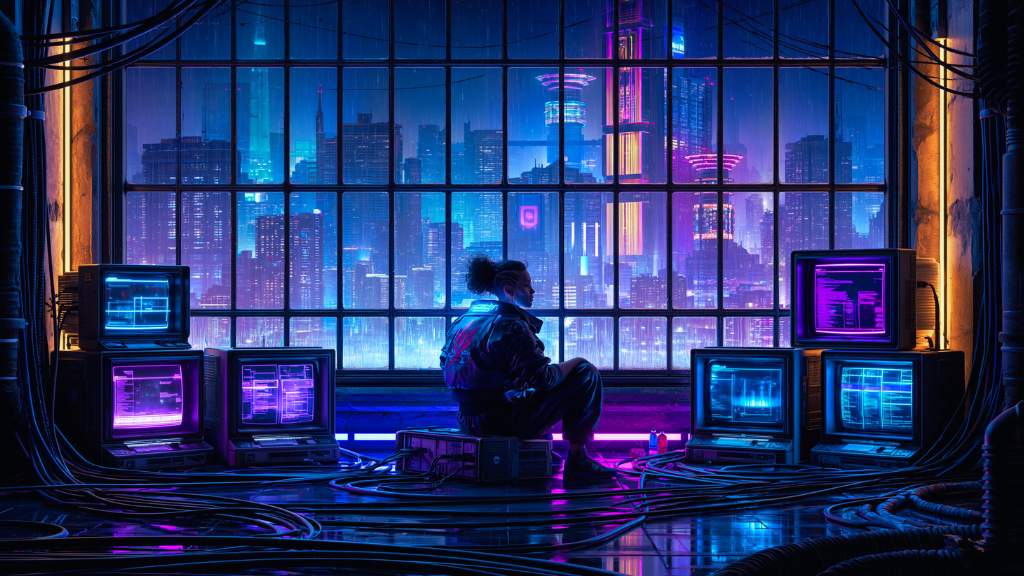
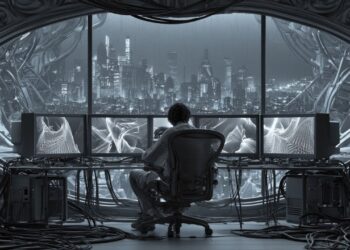
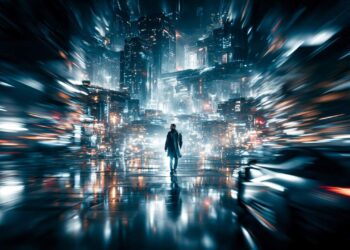
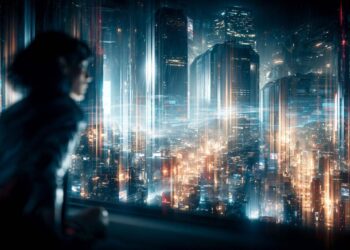
It brings together the emotional depth of dark ambient, the intimacy of late-night listening, and the cinematic imagination of future noir: rain-soaked cities, neon reflections, artificial intelligence, damaged memory, surveillance, data ghosts, corporate towers, underground networks, and people trying to stay human inside systems that no longer feel human.
This is the space Wartonno is moving into with the new cinematic cyberpunk ambient project.
Wartonno is not only the composer here. Wartonno is also the creator, curator, narrator, and worldbuilder.
That matters.
Because this project is not simply a collection of tracks. It is a sound world.
The first track, After The System Broke, introduces that world through dark cinematic ambient music shaped by cyberpunk aesthetics, future-noir atmosphere, and the feeling of a city after its systems have failed.
The track is part of a larger creative direction: Neon Ghost Frequencies.
Not a soundtrack to an official film or series.
Not an official adaptation.
Not background music without context.
More like a parallel transmission.
A room beside the story.
A signal from a city that may or may not exist yet.
The sound of a broken system
The title After The System Broke works because it immediately suggests aftermath.
Something has already happened.
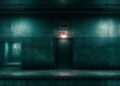
The network has failed. The city is still running, but not correctly. The screens still glow. The machines still hum. The rain keeps falling. Somewhere, a human being is awake inside the wreckage, trying to understand what remains.
That is a very cyberpunk emotional state.
Cyberpunk is often discussed through technology: AI, hackers, corporations, implants, networks, data, surveillance, and virtual space. But the deeper power of cyberpunk is emotional.
It asks what happens to memory when everything becomes data.
It asks what happens to identity when systems know us better than people do.
It asks what happens to the human soul inside artificial light.
This is why cinematic cyberpunk ambient fits the moment so well.
It does not need to explain the future with lyrics.
It can make the future audible.
A pad can become a skyline.
A drone can become a server room.
A distant melody can become a memory inside a machine.
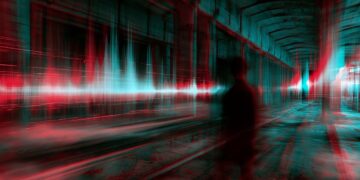
A distorted texture can become the sound of a city dreaming badly.
Why this connects to current ambient trends
The broader ambient scene is already moving toward hybrid forms.
Space Afrika’s upcoming album Quiet Storm is a useful example. The project is described as spanning trip-hop, jazz, ambient, modern classical, techno, and related experimental textures, with Dais Records connected to the release. This kind of hybrid, urban, cinematic atmosphere sits close to the emotional territory of cyberpunk ambient: city pressure, abstraction, memory, and late-night atmosphere.
Carmen Villain’s announced album Memoria is another ambient-adjacent signal. It is described as an ambient dub project inspired by ideas around internally recalled sound, memory, and filmic influence. That supports the same larger movement: ambient music is becoming increasingly connected to memory, cinema, and inner perception.
This gives Wartonno’s cyberpunk ambient direction a strong cultural context.
The current moment is ready for music that does more than fill silence.
It wants music that builds worlds.
Wartonno, Wartonno Sound, and SOMNII as three late-night worlds
There is also a useful way to understand the wider ecosystem.
Wartonno is cinematic cyberpunk ambient and worldbuilding. This is the space of neon cities, broken systems, future noir, data ghosts, and atmospheric storytelling.
Wartonno Sound is dark ambient, liminal spaces, psychological atmosphere, overthinking, empty rooms, and slow emotional decompression.
SOMNII is cinematic bedroom pop with intimate storytelling: the voice in the late-night room, the human confession, the soft emotional signal.
These projects do not need to become the same thing.
Their strength is that they can orbit the same emotional listener from different angles.
Wartonno builds the city.
Wartonno Sound builds the room.
SOMNII gives the room a voice.
Together, they map a modern late-night listening world: cinematic, intimate, dark, emotional, and quietly haunted.
Why late-night listeners need worlds now
The strongest trend right now is not simply that ambient is growing, or that bedroom pop is changing, or that cyberpunk aesthetics are returning.
The stronger trend is that listeners are using music as a form of orientation.
When the world feels overstimulated, fragmented, automated, and too bright, music becomes a way to find a private signal.
A dark ambient track can slow the mind.
A bedroom pop song can make loneliness feel shared.
A cyberpunk ambient piece can turn anxiety about the future into a cinematic place that can be entered, explored, and understood.
That is what worldbuilding does.
It gives emotion a location.
For Wartonno, this means the new cyberpunk ambient project can become more than a release campaign. It can become a narrative archive: tracks, visuals, blog posts, short transmissions, field notes, YouTube soundscapes, and cinematic fragments that all point toward the same future-noir atmosphere.
The listener does not only hear the track.
They enter the signal.
Start with After The System Broke
After The System Broke is the right opening transmission because it begins after collapse.
It does not start with the clean dream of technology. It starts with the damaged aftermath.
That makes it human.
Because most of us do not experience the future as something clean and polished. We experience it through glitches, overload, screens, uncertainty, strange beauty, and the constant feeling that the system is both helping us and watching us.
Cinematic cyberpunk ambient is a way to sit with that feeling.
Not to escape it completely.
But to hear it from a distance.
To turn noise into atmosphere.
To turn pressure into sound.
To turn the broken system into a place where something human can still be found.
Final thought
Late-night music is becoming worldbuilding because listeners need more than songs.
They need emotional places.
Dark ambient gives overthinking a room.
Bedroom pop gives overthinking a voice.
Cyberpunk ambient gives overthinking a city.
That is the world Wartonno is beginning to build with Neon Ghost Frequencies and After The System Broke.
A city of sound.
A future-noir signal.
A cinematic ambient transmission for the hour after the system broke.
Listen to Wartonno’s cinematic cyberpunk ambient project and follow the next transmissions through DarkLofi.com, YouTube, and streaming platforms.
FAQ
What is cyberpunk ambient music?
Cyberpunk ambient music is atmospheric, cinematic music inspired by neon cities, artificial intelligence, future noir, surveillance, hackers, data, memory, and dystopian technology. It often uses pads, drones, textures, electronic sound design, and slow cinematic movement.
How is cyberpunk ambient different from dark ambient?
Dark ambient often focuses on shadow, isolation, dread, liminal spaces, and psychological atmosphere. Cyberpunk ambient can include those elements, but places them inside a futuristic world of neon cities, machines, data systems, AI, and urban noir storytelling.
Why does bedroom pop connect with dark ambient?
Bedroom pop and dark ambient both work well for late-night listening. Bedroom pop gives private emotion a voice, while dark ambient gives emotion a space. Both are often used for reflection, overthinking, loneliness, and quiet emotional processing.
What is Wartonno’s new project?
Wartonno’s new project is a cinematic cyberpunk ambient and worldbuilding direction connected to Neon Ghost Frequencies and the first track After The System Broke. It is not an official soundtrack or adaptation, but an independent future-noir ambient project.
Is Wartonno the same as Wartonno Sound?
No. Wartonno is the creator, curator, narrator, worldbuilder, and composer behind the cinematic cyberpunk ambient project. Wartonno Sound is a related but separate dark ambient and liminal ambient identity.













Comments 3