



















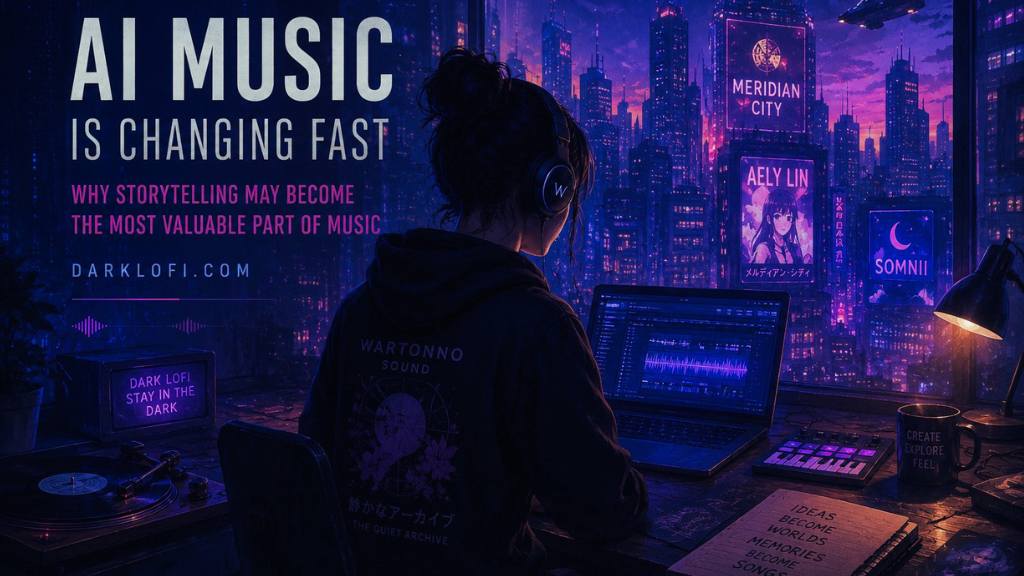
AI Music Is Changing Fast: Why Storytelling May Become the Most Valuable Part of Music
Published: July 2026
Artificial intelligence is changing music faster than almost anyone predicted.
Over the past week, several major announcements have made one thing clear: the future of AI music won’t be defined by who can generate the most songs. Instead, it will be defined by authorship, transparency, originality, and storytelling.
For independent artists using AI responsibly, this is actually good news.
TIDAL Draws a Line Between AI-Generated and Human Creativity
Perhaps the biggest announcement came from TIDAL.
Beginning July 15, 2026, the streaming platform will label music it identifies as fully AI-generated and will no longer pay royalties on tracks that are considered 100% AI-generated. Instead, TIDAL says royalties should primarily reward music that is written, composed and performed by people. The company also plans to expand AI detection over time while continuing to fight impersonation and streaming fraud.
This doesn’t mean AI is banned.
Instead, it suggests that streaming services are beginning to distinguish between two very different approaches:
- Fully automated music generated with a prompt.
- Human-directed music created with AI as one creative tool.
That distinction could shape the future of music streaming.
AI Is a Tool, Not a Replacement for Creativity
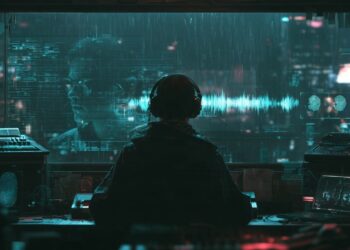
At Dark Lofi, AI has never been the destination.
It is simply one tool inside a much larger creative process.
Every Wartonno Sound release begins with an idea.
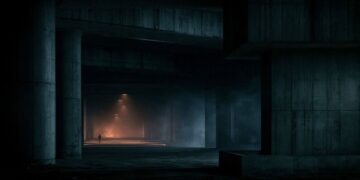
Sometimes that idea becomes a liminal horror soundtrack.
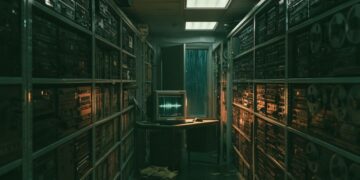
Sometimes it becomes a fictional archive from The Quiet Archive.
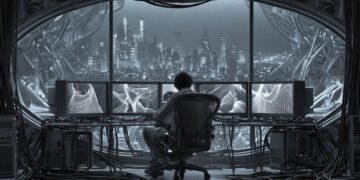
Sometimes it evolves into an entire universe like Meridian City, complete with characters, stories, artwork, music, blog posts, playlists, and visual worldbuilding.
The technology helps bring those ideas to life, but it doesn’t replace imagination.
The Suno Spark Program Raises Important Questions
Another major story this week was Suno’s launch of its new Spark incubator for independent artists.
The program offers grants, mentorship and promotion, but its terms have already generated debate because participants grant broad rights over submitted music and promotional content.
Programs like this may become increasingly common.
Before joining any AI platform or creator program, independent musicians should carefully understand:
- What rights are being licensed.
- Whether derivative works are allowed.
- Who owns future improvements.
- Whether exclusivity is required.
- How your music may be used to improve future AI systems.
Your intellectual property is often your most valuable asset.
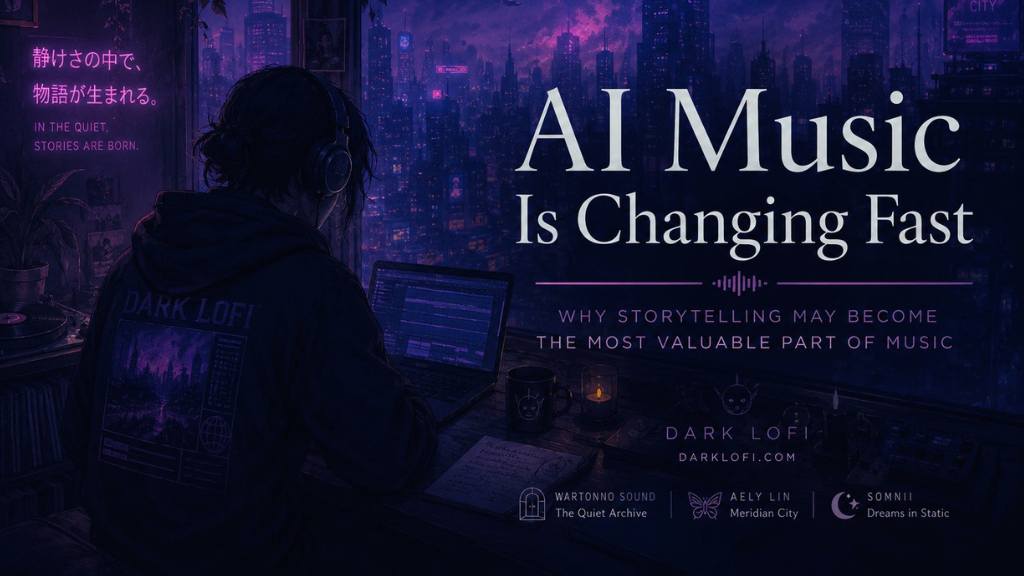
Why Worldbuilding Matters More Than Ever
Anyone can generate a song.
Much harder to generate is an entire world.
That’s why projects like:
- Meridian City
- The Quiet Archive
- Wartonno Sound
- Aely Lin
- SOMNII
are designed as creative universes rather than isolated tracks.
Music becomes part of something larger:
- recurring characters,
- original stories,
- cinematic artwork,
- playlists,
- fictional archives,
- blog articles,
- short films,
- and immersive listening experiences.
These are things listeners connect with emotionally.
What This Means for Independent AI Musicians
The AI music landscape is changing quickly.
Streaming services are introducing transparency requirements.
Copyright cases continue to evolve.
Platforms are experimenting with AI labels and detection systems.
Rather than seeing these developments as obstacles, independent creators have an opportunity to build something that cannot easily be replicated:
A recognizable artistic identity.
People don’t become fans because an algorithm generated a song.
They become fans because music makes them feel like they’re entering a world.
Our Philosophy at Dark Lofi
At Dark Lofi, we believe AI is most powerful when it amplifies human creativity, not when it replaces it.
Every project published here starts with a creative vision.
AI helps accelerate production, explore ideas, and build immersive experiences, but the storytelling, direction, emotional atmosphere, and artistic identity remain human-led.
As the AI music industry matures, we believe creators who focus on originality, authenticity, and long-term worldbuilding will stand out.
Technology changes.
Stories last.
Listen to the Worlds We Build
If you enjoy cinematic ambient music, liminal horror, dark ambient, anime-inspired storytelling, or fictional worlds told through music, explore our projects:
- Wartonno Sound: Dark ambient, liminal spaces, Backrooms-inspired soundscapes, and The Quiet Archive.
- Aely Lin: Original anime-inspired J-Pop set inside Meridian City.
- SOMNII: Dreamlike bedroom pop and emotional electronic music.
Because great music isn’t just something you hear.
It’s somewhere you visit.
FAQ
Is AI music replacing musicians?
No. AI is increasingly being used as a creative tool alongside human composers, producers, and artists rather than replacing them entirely.
What is AI-assisted music?
AI-assisted music combines human creativity with AI tools for composition, production, sound design, or vocals while maintaining human artistic direction.
Why is storytelling becoming important in AI music?
As AI makes music creation more accessible, original stories, fictional worlds, and recognizable artistic identities become key ways for creators to stand out.
How does Wartonno Sound use AI?
Wartonno Sound uses AI as part of a human-led creative workflow to build immersive projects such as The Quiet Archive and Meridian City, combining original music with storytelling, visual art, and worldbuilding.
















Comments 1