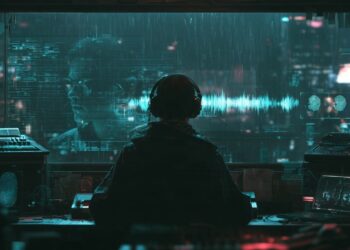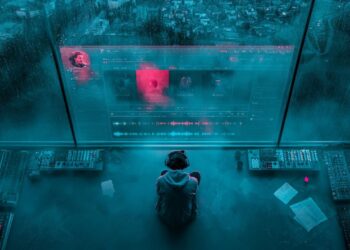


























Why Human-Led Storytelling Matters More Than Ever
Artificial intelligence is no longer a strange experiment happening at the edge of music.

It is inside streaming platforms, creator tools, recommendation systems, production workflows, copyright debates, and the daily lives of independent artists. But the most important change is not that AI can generate songs. We already know it can.
The real question now is different:
What makes music worth remembering when anyone can generate endless tracks?
For Dark Lofi, Wartonno Sound, Meridian City, Aely Lin, and SOMNII, the answer is becoming clearer every week.
It is not only the sound.
It is the world behind the sound.
AI Music Is Flooding Streaming Platforms
One of the clearest signs that the AI music era has changed came from Deezer. The company reported that around 90,000 fully AI-generated tracks per day were being delivered to its platform at peak level in June 2026, representing more than 50% of all new daily music uploads on those peak days. Deezer also says it began detecting and tagging AI-generated music in 2025.
That number is massive.
It means AI music is no longer a niche.
It is becoming part of the daily supply chain of streaming music.
But more music does not automatically mean more meaning. In fact, the opposite may happen. When the internet is flooded with anonymous, machine-generated songs, listeners may begin looking harder for something with identity, context, emotion, and authorship.
That is where human-led creative projects still matter.
TIDAL Draws a Sharp Line Around AI-Generated Music
TIDAL has taken one of the strongest public positions so far. Its current AI policy allows AI-generated music on the platform, but tracks identified as entirely AI-generated are not eligible for royalty allocation. TIDAL’s terms also state that the platform may exclude AI-generated content from royalty calculations.
TIDAL’s content guidelines also prohibit AI-generated music that impersonates artists, misrepresents identity, or contributes to streaming fraud.
This matters because it changes the conversation.
The issue is no longer simply:
“Can AI music be uploaded?”
The new question is:
“Should fully AI-generated music be treated the same as human-led music?”
That distinction may become one of the most important music industry questions of the next few years.
AI-Generated Music vs. AI-Assisted Music
There is a major difference between fully AI-generated music and AI-assisted music.
Fully AI-generated music is often created with minimal human direction. A prompt goes in. A track comes out. Sometimes there is little editing, little arrangement, little authorship, and no wider artistic world around it.
AI-assisted music is different.
In AI-assisted music, the human creator remains the creative director. AI may help with sound generation, vocals, composition drafts, visual ideas, production experiments, or workflow speed. But the artistic vision, selection, editing, storytelling, emotional direction, branding, and worldbuilding remain human-led.
That distinction is central to how Dark Lofi approaches music.
The music is not just generated and uploaded.
It is connected to atmosphere, fiction, imagery, emotional states, and recurring worlds.

Why This Matters for Wartonno Sound
Wartonno Sound exists in the space between dark ambient music, liminal horror, cinematic soundscapes, and quiet worldbuilding.
A track is not just a track.
It may be part of:
- The Quiet Archive
- A liminal corridor
- A forgotten room
- A fictional recording
- A place that may never have existed
- A ritual for sleep, focus, or emotional reset
This makes the music more than background audio.
It becomes a document from a world.
That is hard to replace with anonymous AI output because the value is not only in the sound file. The value is in the continuity, the atmosphere, the archive, and the emotional language around it.
Why Meridian City Becomes More Important in the AI Era
Meridian City is not simply a music project.
It is a fictional universe.
It contains characters, locations, mystery, visual identity, music, archive fragments, and narrative continuity. Aely Lin is not just a voice. She belongs to a larger world. SOMNII is not just bedroom pop. It connects to emotional dream states, late-night memory, and cinematic identity.
This is exactly the kind of creative structure that becomes more valuable when AI-generated content becomes abundant.
Because AI can generate songs quickly.
But it cannot easily create years of intentional continuity, emotional mythology, audience trust, and recognizable artistic identity without a human worldbuilder guiding it.
The Real Threat Is Not AI Music. It Is Disposable Music.
A recent academic paper on AI music streaming described the rise of “AI slop”: large volumes of low-effort generated content uploaded across platforms, often with weak engagement and inconsistent policy enforcement across distributors. The researchers also found that the vast majority of AI music they examined received little or no listener activity.
This is the real issue.
The problem is not that AI exists.
The problem is disposable output.
Music created only to fill platforms.
Music created only to chase royalties.
Music created without identity, story, care, or emotional purpose.
That is the opposite of what Dark Lofi is trying to build.
The Future Belongs to Recognizable Worlds
As AI tools become more powerful, the value of simple production may decrease.
But the value of taste may increase.
The value of atmosphere may increase.
The value of trust may increase.
The value of a recognizable creative world may increase.
That is why projects like Wartonno Sound, Meridian City, Aely Lin, and SOMNII matter. They create a reason for listeners to return. They offer continuity. They give the music a place to live.
In a world where anyone can generate a song, the strongest artists may be the ones who can answer these questions:
What world does this music belong to?
What emotion does it protect?
What story does it continue?
Why should someone remember it tomorrow?
AI Hardware, AI Policy, and the Next Creative Interface
AI is also moving beyond chatbots and websites.
OpenAI has been preparing its first consumer device after acquiring Jony Ive’s hardware company, with reports pointing toward a possible new kind of AI-first interface. Axios reported earlier in 2026 that OpenAI was on track to unveil its first device in the second half of 2026.
At the same time, the AI industry is becoming more politically divided. Nvidia CEO Jensen Huang recently warned policymakers not to let “science fiction” fears dominate AI regulation, arguing that excessive fear could slow innovation.
These stories may sound separate from music, but they are connected.
The way people discover, create, and listen to music may soon change again. Music creation could become more conversational. Listening could become more contextual. AI assistants may recommend soundscapes based on mood, location, reading habits, or emotional state.
For dark ambient and cinematic music creators, that could be a major opportunity.
Because this kind of music is already contextual.
It is music for reading.
Music for sleep.
Music for focus.
Music for fictional worlds.
Music for the strange hour after midnight.
What Independent Artists Should Do Now
Independent artists do not need to reject AI.
But they do need to become clearer about how they use it.
The future may reward creators who can show:
- Human creative direction
- Original concepts
- Clear authorship
- Ethical use of AI tools
- Strong visual identity
- Recognizable storytelling
- Real emotional purpose
- Consistent worldbuilding
This does not mean every song needs a novel behind it.
But it does mean that music needs context.
The more AI content floods the internet, the more listeners may search for work that feels intentional.
Dark Lofi’s Position
Dark Lofi is built around the idea that music can become a place.
A room.
A city.
A dream.
A memory.
A signal.
A ritual.
A story you can hear before you fully understand it.
AI may help shape parts of that process, but it does not replace the vision.
The direction remains human.
The worldbuilding remains human.
The emotional choices remain human.
The final question is not whether AI can make music.
It can.
The better question is whether the music leads somewhere worth visiting.
For Dark Lofi, that is the goal.
Not more songs.
More worlds.
FAQ
What is AI-assisted music?
AI-assisted music is music where AI tools support the creative process, but the human artist remains responsible for the direction, selection, editing, arrangement, concept, and final artistic identity.
Is AI-generated music allowed on streaming platforms?
Policies differ by platform. TIDAL currently allows AI-generated music but says fully AI-generated tracks are not eligible for royalty allocation. Deezer detects and tags AI-generated music, while other platforms continue to develop their own approaches.
Why does storytelling matter in AI music?
As music generation becomes easier, sound alone may not be enough to stand out. Storytelling, worldbuilding, visual identity, and emotional continuity help listeners connect with music on a deeper level.
How does Dark Lofi use AI?
Dark Lofi treats AI as one tool inside a human-led creative workflow. The focus remains on atmosphere, original worlds, dark ambient soundscapes, fictional archives, emotional storytelling, and recognizable artist identities such as Wartonno Sound, Aely Lin, SOMNII, and Meridian City.
Is AI music bad for independent artists?
Not necessarily. AI can help independent creators work faster and explore new ideas. The risk comes from low-effort mass uploads, impersonation, streaming fraud, and music without clear authorship. Human-led, story-driven projects may become more valuable as generic AI content becomes more common.