









• About
  • Advertise
  • Privacy & Policy
  • Contact
Soundscapes and Stories | Dark Lofi Media
  • Start Here!
  • Dark Ambient & Lofi Music
    • All
    • Playlist Spotlights
    • Soundscape Explorations
    • Track Descriptions
    • Wartonno Sound
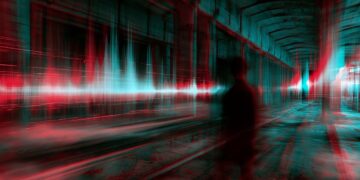
    Field recordings visualized as sound waves inside an empty nighttime railway station

    When the Real World Enters the Music: Why Field Recordings Are Returning to Ambient

    Dark ambient environment with repeating light pulses representing rhythm in atmospheric music

    Dark Ambient Is Escaping the Drone: Why Rhythm Is Entering Atmospheric Music

    dark-ambient-with-vocals-human-voice

    Dark Ambient With Vocals: Why the Human Voice Is Returning | DarkLofi

    Ambient Music Is Becoming Emotional World-Building

    Ambient Music Is Becoming Emotional World-Building

    Long-form ambient music visualized as a dark room opening into a neon future-noir city for sleep

    Why Long-Form Ambient Is Making a Comeback | Dark Ambient & Bedroom Pop

    Dark ambient cyberpunk studio at night representing late-night music, emotional worldbuilding, Wartonno, Wartonno Sound, and SOMNII

    Why Music Is Becoming a Place We Visit: Dark Ambient, Bedroom Pop, and Cyberpunk Ambient

  • Short Stories
    • All
    • Liminal Horror
    • Occult Mystery
    • Story Behind the Track
    • Urban Fantasy
    Dark cyberpunk music workstation used by Wartonno to create After the System Broke

    How I Create Cyberpunk Ambient Music | Wartonno

    Dark Urban Fantasy Microfiction - The Man Who Was Not on the Map

    Dark Urban Fantasy Microfiction: The Man Who Was Not on the Map

    Cinematic gothic corridor filled with silent figures under warm lantern light, elderly woman in round sunglasses standing in foreground, tall shadow silhouette at end of hallway, atmospheric liminal horror scene.

    The Corridor of the Unblooming | A Cinematic Dark Short Story of Collective Silence

    The Quiet Above the Tide

    The Quiet Above the Tide

    The library was older than its records suggested

    Where the Books Forgot His Name

    He did not remember when the lamp had first appeared

    The Lamp That Walked Before Him

  • Dark Lofi Journal
    • All
    • Liminal Thoughts
    • Sound & Silence
    Backrooms-inspired liminal hallway and bedroom listening room representing dark ambient music, bedroom pop, and overthinking

    From Backrooms to Bedroom Pop: Why Late-Night Music Is Becoming Emotional Architecture

    Why Dark Ambient and Bedroom Pop Are Becoming the Sound of Overthinking

    Why Dark Ambient and Bedroom Pop Are Becoming the Sound of Overthinking

    Why Ambient and Bedroom Pop Are Becoming Music for Emotional States

    Why Ambient and Bedroom Pop Are Becoming Music for Emotional States

    Why Dark Ambient and Bedroom Pop Are Moving Toward the Same Emotional Future

    Why Dark Ambient and Bedroom Pop Are Moving Toward the Same Emotional Future

    Why Emotional Music Is Winning_ Dark Ambient, Bedroom Pop, and the Rise of Feeling-First Listening

    Why Emotional Music Is Winning: Dark Ambient, Bedroom Pop, and the Rise of Feeling-First Listening

    Why Empty Rooms Feel Alive

    Why Empty Rooms Feel Alive: The Psychology Behind Liminal Spaces and Ambient Music

  • Visuals & AI Art
    • All
    • AI Music & Listening Culture
    • Behind the Visual
    Why artist identity matters in AI music

    AI Music and Artist Identity: Can AI Copy Your Sound?

    The AI Artist Is Becoming a New Category of Music

    Spotify AI Persona Labels: What the September 2026 Rollout Means for Artists

    AI Is Becoming Infrastructure, Not Just Software

    AI Music Listening Culture: When AI Moves Beyond the Screen

    AI Is Moving Beyond the Screen - What It Means for Music, Creativity, and Dark Lofi

    AI Is Moving Beyond the Screen: What It Means for Music

    AI Assisted Music Is Entering Its Reality Check Era

    AI Music Is Entering Its Reality Check Era

    What if the truth was hidden in the pattern

    Aely Lin – Patterns Don’t Lie: An Anime J-Pop Opening from Meridian City

  • Whispers
    • All
    • Independent Artists
    • Liminal Mindfulness
    • Microfiction
    • Somnio Poetica
    • Sound Discoveries
    Long-form ambient music visualized as a dark room opening into a neon future-noir city for sleep

    Why Long-Form Ambient Is Making a Comeback | Dark Ambient & Bedroom Pop

    Why Late-Night Music Is Becoming Emotional Worldbuilding

    Why Late-Night Music Is Becoming Emotional Worldbuilding

    Dark cyberpunk music workstation used by Wartonno to create After the System Broke

    How I Create Cyberpunk Ambient Music | Wartonno

    Cinematic cyberpunk ambient city and dark studio representing late-night music, emotional worldbuilding, Wartonno, and future noir

    Dark Ambient, Bedroom Pop & Cyberpunk Ambient for Late-Night Listening

    Cinematic cyberpunk ambient city and dark control room representing Wartonno, late-night music, and worldbuilding

    From Dark Ambient to Cyberpunk Ambient: Why Late-Night Music Is Becoming Worldbuilding

    What if the truth was hidden in the pattern

    Aely Lin – Patterns Don’t Lie: An Anime J-Pop Opening from Meridian City

No Result
View All Result
  • Start Here!
  • Dark Ambient & Lofi Music
    • All
    • Playlist Spotlights
    • Soundscape Explorations
    • Track Descriptions
    • Wartonno Sound
    Field recordings visualized as sound waves inside an empty nighttime railway station

    When the Real World Enters the Music: Why Field Recordings Are Returning to Ambient

    Dark ambient environment with repeating light pulses representing rhythm in atmospheric music

    Dark Ambient Is Escaping the Drone: Why Rhythm Is Entering Atmospheric Music

    dark-ambient-with-vocals-human-voice

    Dark Ambient With Vocals: Why the Human Voice Is Returning | DarkLofi

    Ambient Music Is Becoming Emotional World-Building

    Ambient Music Is Becoming Emotional World-Building

    Long-form ambient music visualized as a dark room opening into a neon future-noir city for sleep

    Why Long-Form Ambient Is Making a Comeback | Dark Ambient & Bedroom Pop

    Dark ambient cyberpunk studio at night representing late-night music, emotional worldbuilding, Wartonno, Wartonno Sound, and SOMNII

    Why Music Is Becoming a Place We Visit: Dark Ambient, Bedroom Pop, and Cyberpunk Ambient

  • Short Stories
    • All
    • Liminal Horror
    • Occult Mystery
    • Story Behind the Track
    • Urban Fantasy
    Dark cyberpunk music workstation used by Wartonno to create After the System Broke

    How I Create Cyberpunk Ambient Music | Wartonno

    Dark Urban Fantasy Microfiction - The Man Who Was Not on the Map

    Dark Urban Fantasy Microfiction: The Man Who Was Not on the Map

    Cinematic gothic corridor filled with silent figures under warm lantern light, elderly woman in round sunglasses standing in foreground, tall shadow silhouette at end of hallway, atmospheric liminal horror scene.

    The Corridor of the Unblooming | A Cinematic Dark Short Story of Collective Silence

    The Quiet Above the Tide

    The Quiet Above the Tide

    The library was older than its records suggested

    Where the Books Forgot His Name

    He did not remember when the lamp had first appeared

    The Lamp That Walked Before Him

  • Dark Lofi Journal
    • All
    • Liminal Thoughts
    • Sound & Silence
    Backrooms-inspired liminal hallway and bedroom listening room representing dark ambient music, bedroom pop, and overthinking

    From Backrooms to Bedroom Pop: Why Late-Night Music Is Becoming Emotional Architecture

    Why Dark Ambient and Bedroom Pop Are Becoming the Sound of Overthinking

    Why Dark Ambient and Bedroom Pop Are Becoming the Sound of Overthinking

    Why Ambient and Bedroom Pop Are Becoming Music for Emotional States

    Why Ambient and Bedroom Pop Are Becoming Music for Emotional States

    Why Dark Ambient and Bedroom Pop Are Moving Toward the Same Emotional Future

    Why Dark Ambient and Bedroom Pop Are Moving Toward the Same Emotional Future

    Why Emotional Music Is Winning_ Dark Ambient, Bedroom Pop, and the Rise of Feeling-First Listening

    Why Emotional Music Is Winning: Dark Ambient, Bedroom Pop, and the Rise of Feeling-First Listening

    Why Empty Rooms Feel Alive

    Why Empty Rooms Feel Alive: The Psychology Behind Liminal Spaces and Ambient Music

  • Visuals & AI Art
    • All
    • AI Music & Listening Culture
    • Behind the Visual
    Why artist identity matters in AI music

    AI Music and Artist Identity: Can AI Copy Your Sound?

    The AI Artist Is Becoming a New Category of Music

    Spotify AI Persona Labels: What the September 2026 Rollout Means for Artists

    AI Is Becoming Infrastructure, Not Just Software

    AI Music Listening Culture: When AI Moves Beyond the Screen

    AI Is Moving Beyond the Screen - What It Means for Music, Creativity, and Dark Lofi

    AI Is Moving Beyond the Screen: What It Means for Music

    AI Assisted Music Is Entering Its Reality Check Era

    AI Music Is Entering Its Reality Check Era

    What if the truth was hidden in the pattern

    Aely Lin – Patterns Don’t Lie: An Anime J-Pop Opening from Meridian City

  • Whispers
    • All
    • Independent Artists
    • Liminal Mindfulness
    • Microfiction
    • Somnio Poetica
    • Sound Discoveries
    Long-form ambient music visualized as a dark room opening into a neon future-noir city for sleep

    Why Long-Form Ambient Is Making a Comeback | Dark Ambient & Bedroom Pop

    Why Late-Night Music Is Becoming Emotional Worldbuilding

    Why Late-Night Music Is Becoming Emotional Worldbuilding

    Dark cyberpunk music workstation used by Wartonno to create After the System Broke

    How I Create Cyberpunk Ambient Music | Wartonno

    Cinematic cyberpunk ambient city and dark studio representing late-night music, emotional worldbuilding, Wartonno, and future noir

    Dark Ambient, Bedroom Pop & Cyberpunk Ambient for Late-Night Listening

    Cinematic cyberpunk ambient city and dark control room representing Wartonno, late-night music, and worldbuilding

    From Dark Ambient to Cyberpunk Ambient: Why Late-Night Music Is Becoming Worldbuilding

    What if the truth was hidden in the pattern

    Aely Lin – Patterns Don’t Lie: An Anime J-Pop Opening from Meridian City

No Result
View All Result
Soundscapes and Stories | Dark Lofi Media
No Result
View All Result
Home Dark Ambient & Lofi Music

When the Real World Enters the Music: Why Field Recordings Are Returning to Ambient

Wartonno by Wartonno
September 17, 2026
in Dark Ambient & Lofi Music
Reading Time: 24 mins read
A A
0
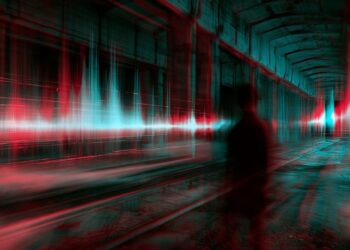
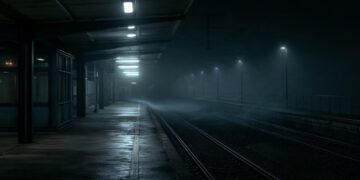
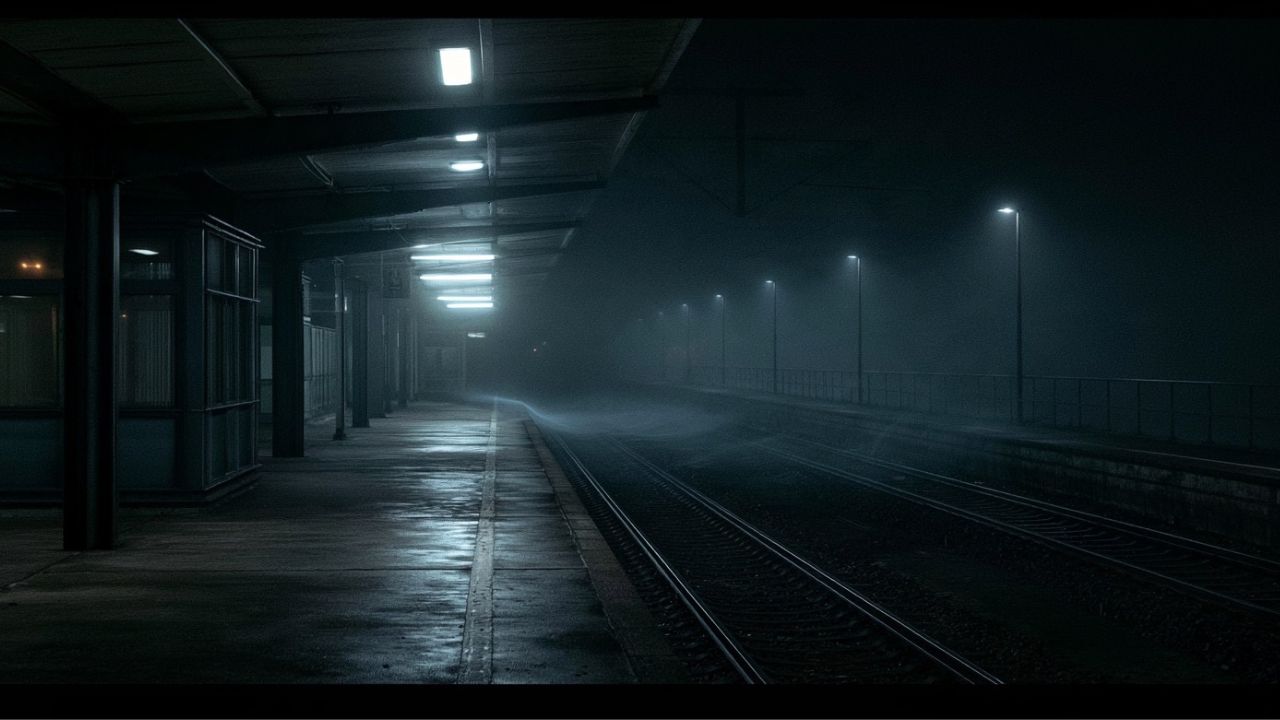
Field recordings visualized as sound waves inside an empty nighttime railway station
5
VIEWS
Share on FacebookShare on Twitter

Ambient music can create almost impossible places. Endless corridors. Empty cities. Rooms that exist only at night. Landscapes with no visible horizon.

Much of that world can be created with synthesizers, drones and effects. But something interesting happens when you introduce one ordinary sound from the real world. A train passing. Wind moving through a building. Shoes on concrete. A distant aircraft. A door closing somewhere outside the room.

Suddenly the imaginary space feels real. That is one reason field recordings are becoming increasingly important in ambient, dark ambient and experimental music.

They give the listener something synthetic sound cannot always provide: evidence that the world exists.

What Is a Field Recording?

A field recording is simply a sound recorded outside a traditional studio environment.

That might include:

  • wind
  • rain
  • footsteps
  • traffic
  • trains
  • birds
  • machinery
  • crowds
  • room tone
  • water
  • buildings
  • electrical hum
  • distant conversations

The recording does not necessarily have to be beautiful. In fact, imperfections are often what make it useful. A microphone may capture unwanted noise. The wind may distort slightly. Something unexpected may happen in the background. Those details create place.

A synthesizer can imitate a train. But recording an actual train also captures the station, the air, the reflections from the walls and everything else happening around it. You are not simply recording a sound. You are recording an environment.


Why Ambient Music Needs the Real World

Ambient music is exceptionally good at creating space. But purely electronic sound can sometimes become almost too perfect. A pad can sustain forever. A synthesizer can remain completely stable. Reverb can create a room that never existed.

That can be beautiful. But sometimes the listener needs friction. Something unpredictable. Something physical.

Field recordings introduce that friction. You hear the irregular rhythm of wind. The changing pressure of traffic. A door that does not close cleanly. A train whose metal wheels behave slightly differently every second.

Real environments never repeat perfectly. That imperfection makes ambient music breathe.


A Current Example: Hannes Strobl Turns a Landscape Into Music

One of the clearest current examples comes from Austrian composer Hannes Strobl.

His upcoming Resonance IBK, due September 25 through Room40, uses field recordings from the Innsbruck landscape as compositional material. Those recordings include railways, motorways, air traffic and wind, alongside electric bass, double bass, voice, electronics and trombones. That is important because the environment is not merely decoration behind the composition. The environment becomes part of the composition. A railway is rhythm. Traffic becomes texture. Aircraft create movement through space. Wind becomes a sustained tone. The city effectively becomes another instrument.


This Changes How We Think About Music

Traditional music usually begins with instruments. Piano. Guitar. Drums. Synthesizer.

But field recording asks a different question:

What if the world around you is already making music?

A pedestrian crossing has rhythm. An elevator has harmony. A railway station contains drones. A ventilation system can produce low-frequency tones. A shopping center after closing time has its own acoustic character.

You do not always need to invent sound. Sometimes you only need to notice it. That idea fits especially well with dark ambient and liminal music. These genres already pay attention to spaces most people ignore.


Why Field Recordings Work So Well in Dark Ambient

Dark ambient often creates a feeling of uncertainty. Where are you? What happened here? Is somebody else nearby?

Real environmental sounds make those questions stronger. Imagine a dark drone. It can suggest almost anything. Now add the sound of a railway announcement buried deep inside the mix. Suddenly the listener imagines a station. Add footsteps. Now somebody may be walking through it. Add the distant mechanical sound of a train. The environment starts developing its own story.

Nothing has been explained. But the listener has enough information to construct a world. This is where field recordings become more than sound design. They become narrative clues.
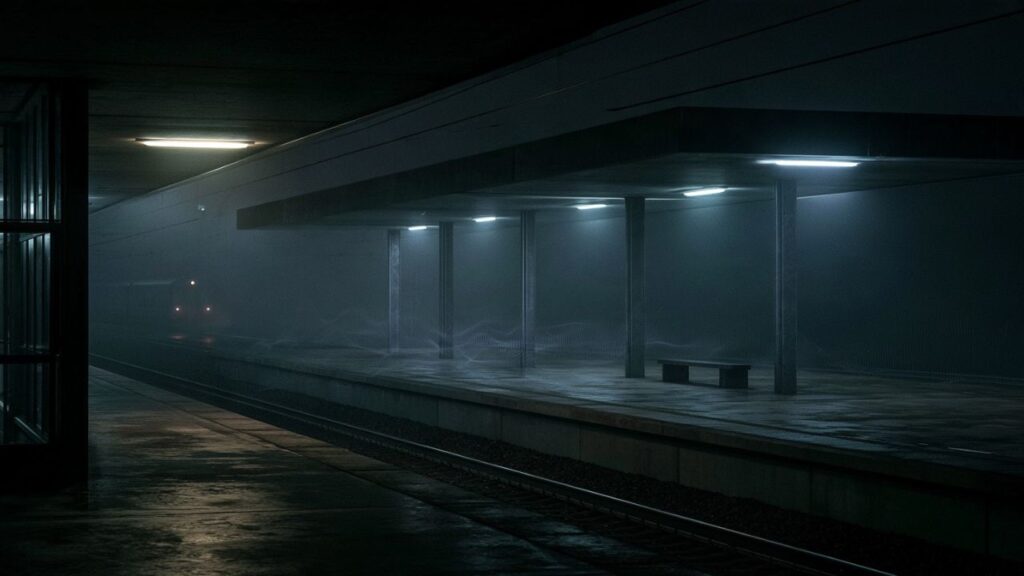

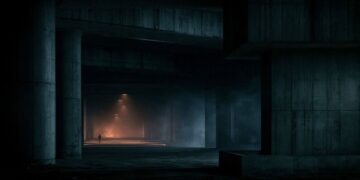
A distant train disappearing into darkness

Real Sound Makes Imaginary Worlds More Believable

This is the paradox that makes field recording so powerful. The more fictional the world becomes, the more useful a small piece of reality can be.

A completely synthetic soundscape may feel dreamlike. Place one real door inside it and the listener suddenly accepts the room. Place one real train inside it and the city becomes believable. Place one recording of wind inside it and the landscape gains physical scale. This is the same technique used in film.

You may be watching a fictional city that does not exist. But you hear footsteps, traffic, ventilation and distant voices. Those familiar sounds convince your brain that the fictional world has rules.

Ambient music can work the same way.


Erik Wøllo Shows Another Side of Physical Sound

Field recording is part of a larger return toward physical and imperfect sound.

Norwegian ambient musician Erik Wøllo releases Earthshine on September 18 through Projekt Records. The album contains 20 shorter pieces that crossfade into a continuous 61-minute journey. It combines processed drones with sequencer pulses and was recorded using analog 4- and 8-track tape machines before being transferred into a digital workflow.

Wøllo has explained that returning to tape changed how he composed. The slower process encouraged different decisions and allowed the music to become more open-ended. That connects directly to field recording. Both approaches introduce physical limitations. Tape has saturation. Microphones have noise. Rooms have reflections. Outdoor recordings contain unpredictable events. The result is sound that feels less perfectly manufactured. And sometimes that imperfection makes it feel more human.


Ambient Music Is Becoming More Tactile

This may be one of the more interesting developments in ambient music right now.

It is becoming tactile. You can almost feel where the sound came from. You hear metal. Concrete. Air. Tape. Rooms. Distance.

That is very different from treating ambient purely as smooth background audio.

The music becomes textured. Something you almost feel physically. This is especially powerful through headphones.

A tiny environmental sound appearing far to the left can immediately create the impression of a larger space outside your head.


Field Recordings Can Also Create Memory

There is another reason environmental sound affects us differently from synthesizers. Real sounds can trigger memories. A train might remind you of travelling late at night. Rain against glass might remind you of a particular room. A shopping center hum may recall childhood weekends. Birds might evoke summer mornings.

These associations are personal. The artist does not fully control them.

That makes field recording unusually powerful. A composer provides the environment. The listener supplies part of the emotional meaning.


Darkness Does Not Always Mean Fear

Recent dark ambient releases also show that darkness does not have to mean horror.

Ajna’s Mysterium Tremendum, released September 4 through Dutch label Winter-Light, is categorized as ambient, dark ambient and deep ambient. Its concept approaches darkness as something capable of producing wonder, tranquillity and transcendence rather than simply fear.

This matters for DarkLofi because the emotional vocabulary around atmospheric music is expanding.

Darkness can mean: solitude. reflection. uncertainty. awe. memory. distance. quiet. The physical world can reinforce all of those emotions. A dark forest recording does not automatically need to sound threatening. It can feel enormous. Or peaceful. Or unknowable.


Bedroom Pop Is Moving Toward the Same Territory

Interestingly, something similar is happening from another direction in bedroom pop.

Bedroom pop traditionally begins with intimacy. A close vocal. A small room. A personal recording.

Music that feels like it was made for one listener rather than a stadium. But production is becoming more cinematic and atmospheric.

For example, Sarah Meth’s upcoming album Something Shameful is scheduled for October 30, and the current release includes the track “Don’t touch me you’re my hero.”

Meanwhile, Swedish artist Toxe released Bubble Treasure on September 15, combining dreamy pop songwriting with piano, strings, percussion and cinematic textures. The album uses its production to build a wider fictional and emotional environment around the songs.

So bedroom pop and ambient continue approaching similar territory. Ambient brings the environment closer. Bedroom pop expands the environment around the voice. Both increasingly care about where the listener feels they are.


The Environment Is Becoming an Instrument

This may be the most useful way to understand the trend.

Instead of thinking about field recordings as something added after the music is finished, think of the environment as another instrument.

Your instruments might be: Synthesizer. Piano. Guitar. Wind. Train. Elevator. Hospital corridor. Parking garage. Shopping center. Apartment hallway.

The distinction between “music” and “background sound” becomes less important.

Anything can carry: rhythm. pitch. texture. distance. emotion.

And once you hear the world this way, almost every location becomes a potential composition.


Field Recording and Liminal Music Fit Naturally Together

Field recordings are particularly powerful in liminal music because liminal spaces depend heavily on familiarity.

An empty office is strange because you know what an occupied office sounds like.

An abandoned mall is unsettling because you expect voices, footsteps and music.

A station at 3AM feels different because you know how the same station behaves during rush hour.

Recording those spaces preserves that contradiction.

You hear something familiar.

But something is missing.

That absence becomes part of the music.

This is why tiny sounds matter.

A fluorescent light.

An elevator bell.

A distant announcement.

Air conditioning.

Footsteps that stop.

Those elements can carry more emotional meaning than another large synthesizer layer.
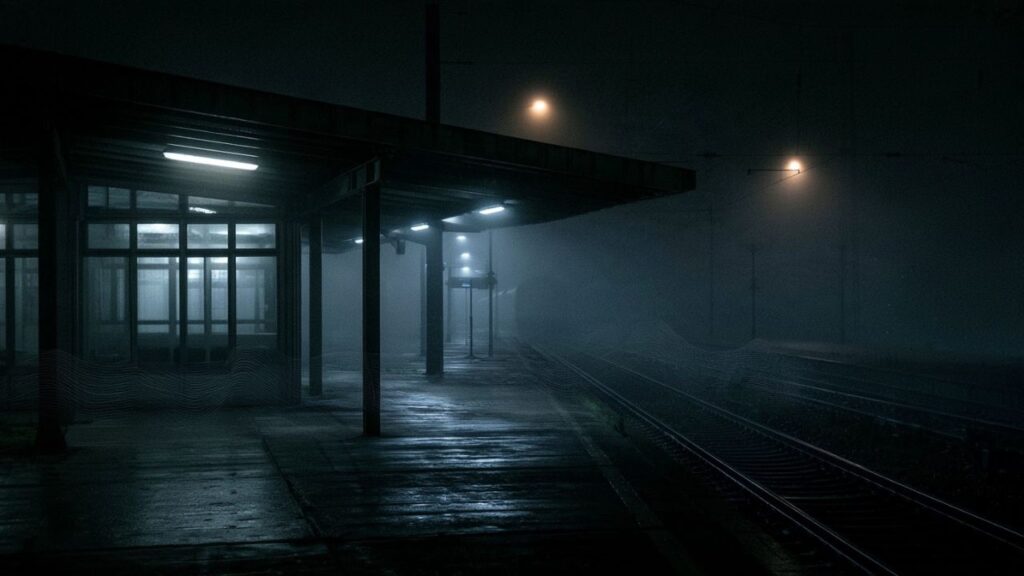

Thin visual soundwaves or subtle translucent ripples emerging from the rails, fluorescent lights and architecture

Field Recordings Can Solve a Common Ambient Problem

Some ambient music sounds beautiful but disconnected.

You hear attractive pads and drones.

But you do not know where you are.

Field recordings can solve that.

They provide context.

Instead of:

a drone

you hear:

a drone inside a station.

Instead of:

reverb

you hear:

an empty concrete room.

Instead of:

white noise

you hear:

wind passing through an open doorway.

The musical material may remain minimal.

But the listener now has somewhere to stand.


How to Listen for Field Recordings

Next time you listen to atmospheric music, ignore the main synthesizers for a moment.

Listen deeper.

Ask yourself:

What sounds as though it was recorded rather than created?

You may notice:

  • distant voices
  • traffic
  • footsteps
  • water
  • machinery
  • birds
  • room tone
  • electrical noise
  • environmental hum
  • doors
  • trains

Then ask:

What does that sound tell me about the place?

That simple question changes how you hear ambient music.

You stop listening only for melody.

You begin listening for architecture.


What This Means for Ambient Creators

For musicians, field recording offers a useful way to begin a composition.

Do not always start with a synthesizer.

Start with a place.

Go somewhere.

Record ten minutes.

Then listen.

What is already happening?

Perhaps a metal fence produces a tone when the wind hits it.

Perhaps distant traffic creates a low drone.

Perhaps footsteps generate a repeating rhythm.

Perhaps a ventilation system already contains the root note of your track.

Build around that.

The location becomes the foundation rather than decoration.

That often produces a more coherent soundscape because every musical decision relates back to one physical environment.


You Do Not Need Expensive Equipment

Field recording can sound sophisticated, but the basic idea does not require expensive gear.

A phone can be enough to capture:

room tone.

footsteps.

doors.

traffic.

train stations.

wind.

appliances.

urban noise.

The goal is not always perfect fidelity.

Sometimes imperfections make the recording more useful.

A slightly distorted microphone can produce exactly the texture a dark ambient piece needs.

The important thing is to listen.


The DarkLofi Pattern Is Becoming Clear

Over the last few articles, we have looked at several changes in atmospheric music.

First:

the world.

Ambient music is increasingly becoming emotional world-building.

Then:

the voice.

Human vocals are entering ambient environments without always becoming conventional songs.

Then:

the rhythm.

Dark ambient is finding ways to move without giving up atmosphere.

Now:

the environment itself.

Real places are entering the music.

Together, these developments suggest a larger change.

Ambient music is becoming less like passive background sound.

It is becoming a place the listener enters.


The Future of Ambient May Sound More Real

The synthesizer is not disappearing.

Neither is the drone.

Nor should they.

But the most interesting atmospheric music increasingly allows the outside world to leak in.

A train.

Wind.

A room.

Tape noise.

An electrical hum.

A voice from somewhere you cannot see.

Those sounds give imaginary environments physical weight.

They remind us that ambient music does not always need more instruments.

Sometimes it needs a microphone.

Sometimes it needs a place.

And sometimes the world outside the studio is already making the sound you were searching for.


Why are field recordings used in ambient music?

Field recordings are used in ambient music to add realism, texture, location and emotional context. Sounds such as trains, wind, footsteps, traffic, water and room tone can make a synthetic soundscape feel like a physical place. In dark ambient and experimental music, these recordings can also create narrative clues, rhythm and a stronger sense of immersion.
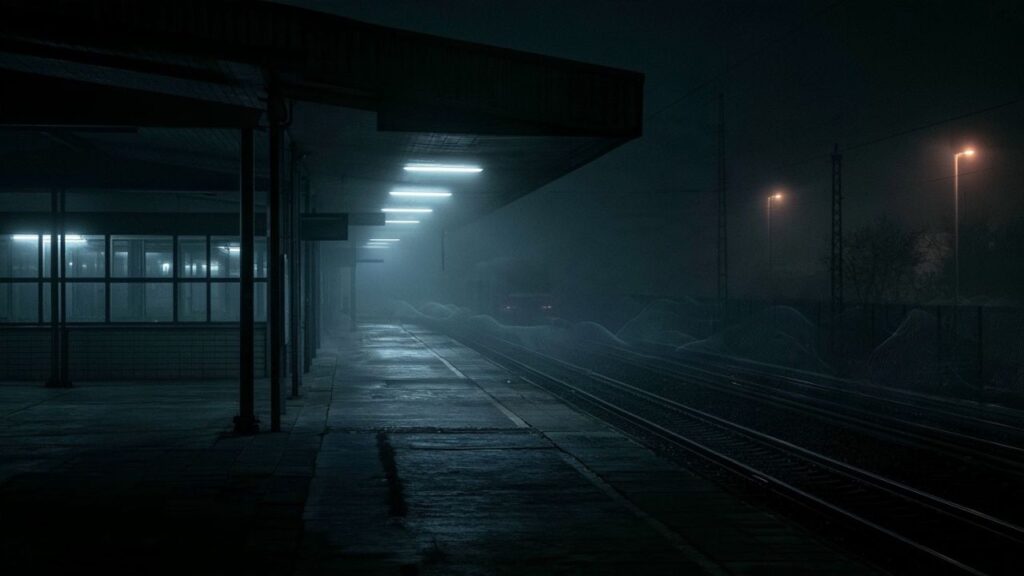

The Future of Ambient May Sound More Real

FAQ

What is a field recording in music?

A field recording is audio captured outside a conventional studio environment. It can include natural sounds, urban noise, machines, rooms, people or any other real-world sound used as musical material.

Why do ambient artists use field recordings?

Field recordings add texture, realism and a sense of place. They can make an abstract electronic composition feel more physical and immersive.

What sounds work well for dark ambient?

Footsteps, trains, machinery, wind, empty rooms, ventilation systems, distant voices and industrial environments can work particularly well because they naturally create tension, space and narrative.

Are field recordings the same as sound effects?

Not necessarily. Sound effects are often used to represent a specific action. Field recordings can instead become part of the musical texture, rhythm or atmosphere.

Can I make field recordings with a phone?

Yes. A smartphone can capture useful environmental audio, especially when creative texture matters more than perfect technical fidelity.

Why do field recordings work well in liminal music?

Liminal music often depends on familiar environments that feel strangely empty or altered. Real-world sounds can reinforce that familiarity while also making the absence of expected human activity more noticeable.

Tags: ambient musiccinematic ambientDark AmbientEnvironmental SoundExperimental AmbientField Recordingliminal musicSoundscapes
Wartonno

Wartonno

Wartonno is a composer, creator, curator, narrator and worldbuilder working with cinematic cyberpunk ambient music, dark soundscapes and story-led creative projects. Through music, visual worldbuilding and editorial work, Wartonno explores digital exhaustion, artificial intelligence, future-noir cities, liminal spaces and the human presence inside technological systems.

Related Posts

Dark ambient environment with repeating light pulses representing rhythm in atmospheric music
Dark Ambient & Lofi Music

Dark Ambient Is Escaping the Drone: Why Rhythm Is Entering Atmospheric Music

September 10, 2026
dark-ambient-with-vocals-human-voice
Dark Ambient & Lofi Music

Dark Ambient With Vocals: Why the Human Voice Is Returning | DarkLofi

September 3, 2026
Ambient Music Is Becoming Emotional World-Building
Dark Ambient & Lofi Music

Ambient Music Is Becoming Emotional World-Building

August 16, 2026
  • Trending
  • Comments
  • Latest
abandoned hospital hallway

Microfiction: Fifth Floor, East Wing

June 9, 2026
Dark Ambient Music for Overthinking at Night

Dark Ambient Music for Overthinking, Anxiety, and Nighttime Calm

March 10, 2026
Misty forest at dawn

Chrysalism — A Liminal Soundtrack for Stillness, Focus & Emotional Shelter

June 12, 2025
Backrooms Ambient Music Liminal Horror and Empty Room Sounds

Backrooms Ambient Music: Liminal Horror & Empty Room Sounds

June 25, 2026
Dark Ambient Music for Overthinking at Night

Dark Ambient Music for Overthinking, Anxiety, and Nighttime Calm

4
Backrooms-inspired liminal hallway and bedroom listening room representing dark ambient music, bedroom pop, and overthinking

From Backrooms to Bedroom Pop: Why Late-Night Music Is Becoming Emotional Architecture

4
Short Urban Fatasy Story The Negative Within

The Camera That Sees the Unseen: A Free Urban Fantasy Short Story You Won’t Forget

3
Meridian city cemetery purple

The Harvest of Faces – A Meridian City Short Story

3
Field recordings visualized as sound waves inside an empty nighttime railway station

When the Real World Enters the Music: Why Field Recordings Are Returning to Ambient

September 17, 2026
Dark ambient environment with repeating light pulses representing rhythm in atmospheric music

Dark Ambient Is Escaping the Drone: Why Rhythm Is Entering Atmospheric Music

September 10, 2026
Why artist identity matters in AI music

AI Music and Artist Identity: Can AI Copy Your Sound?

September 5, 2026
Your experience comes with you into the new room

From Expert to Beginner Again: Why Starting Over After 50 Feels So Uncomfortable

September 3, 2026

Dark Ambient Lofi Music: Soundtracks for Dreamers and Outsiders

Dark Ambient Spotify Playlists for Focus, Sleep, Reading & Liminal Reflection

Home

Privacy Policy

The Second Creative Life

Enter the Liminal Zone

Subscribe for rare ambient drops, dream-sound zines, and quiet moments worth drifting into.

Thank you!

You have successfully joined our subscriber list.

Dark Lofi Media Logo

DarkLofi is an independent editorial publication created by Wartonno. It explores ambient and alternative listening culture, AI music, AI-assisted creativity, independent creators and the Second Creative Life: returning to creative work later in life. DarkLofi is part of the wider Wartonno creative ecosystem, but it functions as an editorial publication rather than an artist identity.
About Wartonno →
Explore Wartonno Sound →

Follow Us

Browse by Category

  • Aely Lin
  • AI Music & Listening Culture
  • Behind the Visual
  • Character Files
  • Cults & Orders
  • Dark Ambient & Lofi Music
  • Dark Lofi Journal
  • Downloads & Exclusives
  • Independent Artists
  • Liminal Horror
  • Liminal Mindfulness
  • Liminal Thoughts
  • Microfiction
  • Music Downloads
  • Occult Mystery
  • Places of Power
  • Playlist Spotlights
  • Short Stories
  • Somnio Poetica
  • Sound & Silence
  • Sound Discoveries
  • Soundscape Explorations
  • Story Behind the Track
  • The Meridian Codex
  • The Second Creative Life
  • Timelines & Events
  • Track Descriptions
  • Urban Fantasy
  • Visuals & AI Art
  • Wallpapers & Art Prints
  • Wartonno Sound
  • Whispers

Recent News

Field recordings visualized as sound waves inside an empty nighttime railway station

When the Real World Enters the Music: Why Field Recordings Are Returning to Ambient

September 17, 2026
Dark ambient environment with repeating light pulses representing rhythm in atmospheric music

Dark Ambient Is Escaping the Drone: Why Rhythm Is Entering Atmospheric Music

September 10, 2026
Why artist identity matters in AI music

AI Music and Artist Identity: Can AI Copy Your Sound?

September 5, 2026
  • About
  • Advertise
  • Privacy & Policy
  • Contact

© 2025 | Website made by Wartonno Art.

No Result
View All Result
  • Short Stories
  • Dark Ambient & Lofi Music
  • Dark Lofi Journal
  • Visuals & AI Art
  • Whispers
  • Downloads & Exclusives
  • The Meridian Codex

© 2025 | Website made by Wartonno Art.

This website uses cookies. By continuing to use this website you are giving consent to cookies being used. Visit our Privacy and Cookie Policy.