



























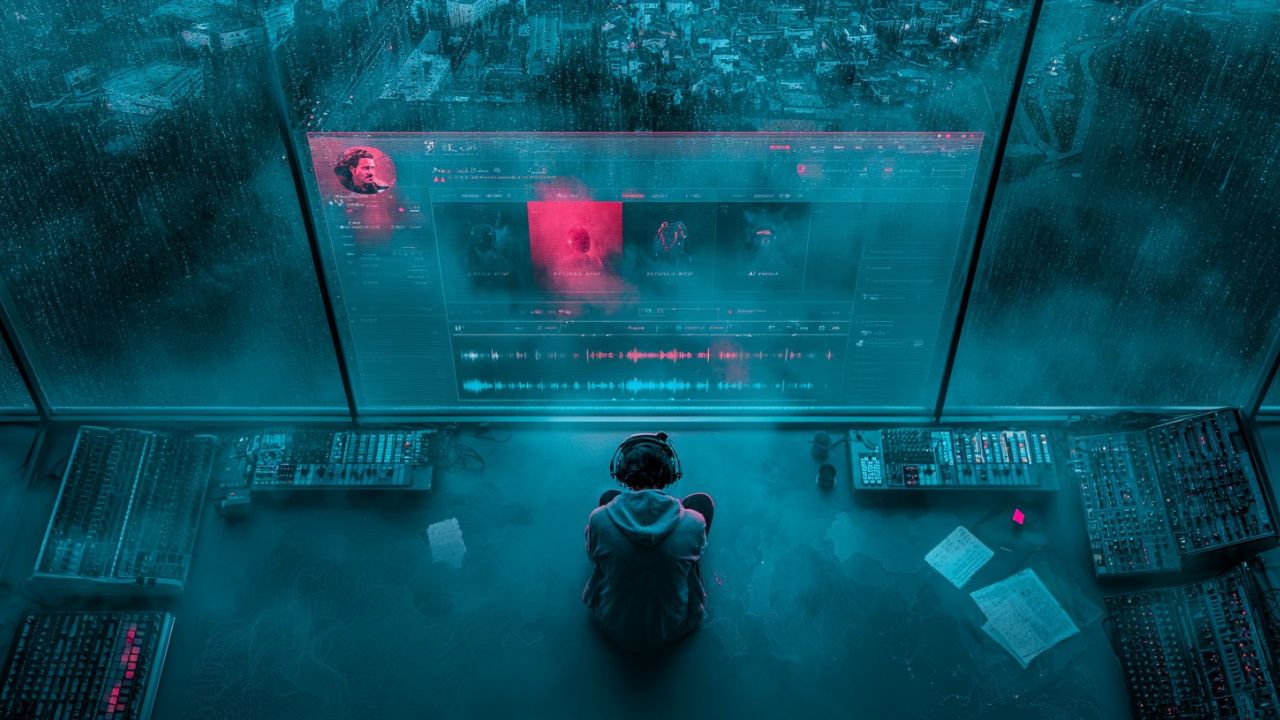
The AI Artist Is Becoming a New Category of Music
What Spotify’s AI Persona labels mean for music, identity, and listening culture
The music industry is entering a new phase.

For years, the big question around AI music was simple:
Can AI make music?
That question is already answered.
Yes, AI can generate songs. It can imitate genres. It can create vocals, instrumentals, album covers, artist photos, and even entire fictional careers.
But now a more important question is emerging:
Who is the artist?
That question sits at the center of Spotify’s new AI Persona policy. Starting in mid-September 2026, Spotify plans to label artist profiles that represent AI-generated identities as AI Personas. These labels are meant to help listeners understand when an artist profile does not represent a real human performer. Spotify says the badges will appear across artist profiles, About sections, search results, and playlist rows. The company also says these AI Persona profiles will be excluded from some editorial and personalized recommendations.
This is a major moment for AI music.
Not because Spotify is banning AI.
It is not.
The real shift is more subtle.
Spotify is beginning to separate music creation from artist identity.
That distinction may shape the future of AI-assisted music, fictional artists, virtual performers, dark ambient projects, and worldbuilding-based music.
September 2026 Update: Spotify’s AI Persona Rollout Begins
Spotify’s AI Persona system is now entering its planned rollout window.
Spotify announced that AI Persona badges would begin appearing from mid-September 2026 on selected artist profiles, in Spotify Search, and alongside tracks inside playlists.
The important distinction is this:
Spotify’s AI Persona label is about who the artist profile represents, not simply whether AI was used to create the music.
An artist can use AI tools as part of the creative process without automatically being considered an AI Persona.
Spotify describes an AI Persona as an artist identity that may be AI-generated and does not represent a real person. Spotify is particularly looking at the public identity presented through an artist name, profile imagery, and other profile information.
This distinction matters because Spotify is treating AI Personas differently inside its recommendation system.
AI Personas May Lose Algorithmic Discovery
Spotify says AI Personas will not be included by default in its editorial or algorithmic recommendations.
That means music from an artist classified as an AI Persona may not normally appear through Spotify’s personalized recommendation systems unless a listener has intentionally shown interest in that artist, such as by following the profile.
For independent artists, this could become a significant distinction.
There is now a difference between:
- a human artist using AI as a creative tool;
- an artist openly releasing music under a fictional or AI-generated identity;
- and a profile presenting an AI-generated identity as if it were a real human artist.
Spotify appears to be focusing primarily on the identity behind the profile rather than simply asking whether generative AI was involved in creating a song.
Where Will the AI Persona Badge Appear?
According to Spotify, the badge is expected to appear in several places:
- artist profile banners;
- the artist About section;
- Spotify Search;
- track rows inside playlists.
Artists can disclose through Spotify for Artists that their profile represents an AI Persona.
Spotify can also review profiles independently and apply the label itself.
If Spotify applies the badge after reviewing a profile, the artist will be notified and can either disclose their AI Persona status or appeal Spotify’s decision.
Spotify has also said that listeners will eventually be able to report profiles they believe represent AI Personas.
Does Using AI Music Tools Make You an AI Persona?
Not necessarily.
This may be the most important part of Spotify’s announcement for independent musicians.
Spotify explicitly separates the question of artist identity from the question of how the music was created.
Using generative AI, AI-assisted production, AI mastering, AI vocals, or other AI tools does not by itself mean that the public artist identity is an AI Persona.
Spotify is developing separate systems, including AI Credits and SongDNA, to provide information about how music was created.
The AI Persona badge answers a different question:
Is the artist identity presented to listeners meant to represent a real human being?
That distinction is likely to become increasingly important as AI-assisted music becomes more common.
What This Means for Independent Artists
For independent musicians, transparency around artist identity is becoming part of music distribution and discovery.
Artists using AI tools should think carefully about how their public identity is presented across Spotify, social media, websites, press materials, and distributor metadata.
A human artist using AI tools is not the same thing as an AI-generated artist identity.
And Spotify is beginning to treat those categories differently.
For creators working with AI, the strongest long-term approach may therefore be surprisingly simple:
Be clear about who you are. Be transparent about how you work. And give listeners a reason to connect with the human creative decisions behind the music.
AI Music Is No Longer Just About the Track
A generated song is only one part of the story.
In the streaming era, music arrives through an identity.
An artist name.
A profile image.
A biography.
A catalog.
A release schedule.
A social presence.
A visual style.
A promise to the listener.
AI can now generate much of that surface.
That creates a new problem for platforms and listeners. A profile may look like a real artist, sound like a real artist, and release like a real artist, while no human performer actually exists behind the public identity.
Spotify’s AI Persona label tries to make that difference visible.
According to reports, artists will be able to self-identify as AI personas. Spotify may also use human review and AI tools to flag profiles that appear to use photorealistic AI-generated identities. If a profile meets certain audience thresholds and appears to be AI-generated, Spotify can apply a “Likely AI Persona” label, with an appeal process for artists.
That matters because the label is not only about whether AI was used to make the music.
It is about whether the artist identity itself is artificial.
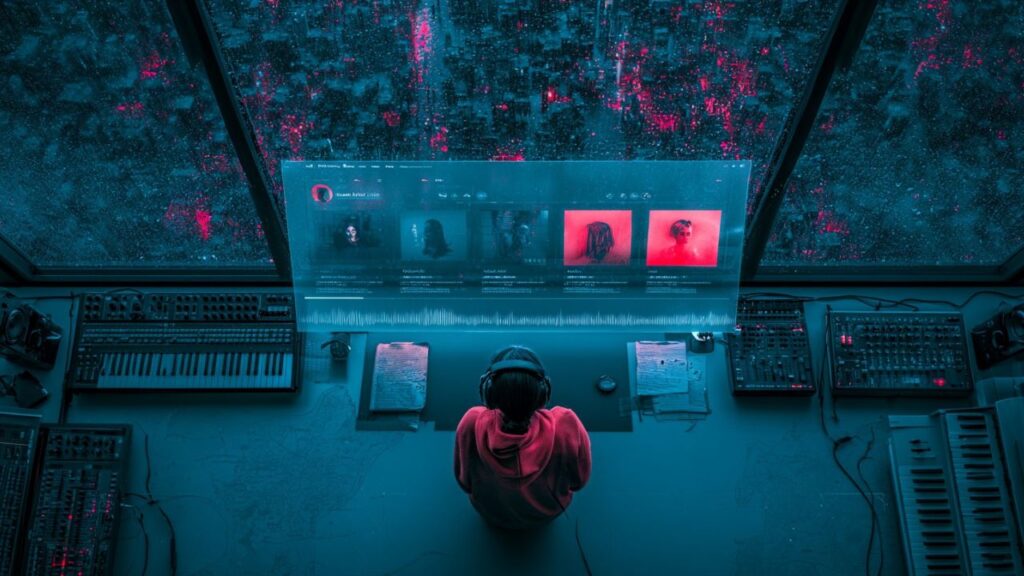
AI-Generated Music vs. AI Personas
There is an important difference between AI-generated music and an AI Persona.
AI-generated music usually refers to the audio itself. A track may be created fully or partly with AI tools.
An AI Persona refers to the public artist identity. The “artist” may be a synthetic character, a virtual performer, a fake human-looking profile, or a fully artificial brand built around generated media.
That distinction matters for independent creators.
A human artist can use AI tools.
A fictional project can use AI tools.
A virtual singer can be part of a transparent creative universe.
The ethical question is not simply:
“Was AI used?”
The better question is:
“Is the listener being misled?”
If the artist is fictional, say so.
If AI is part of the process, be transparent.
If a human creator directs the project, make that authorship visible.
That kind of clarity may become more important as streaming platforms build new trust systems around music discovery.
Spotify Is Choosing Trust Over Mystery
Spotify says the AI Persona badges are part of a wider effort to make the platform more transparent and trustworthy for listeners. The company has also introduced other identity and transparency tools in 2026.
This is not only a policy change.
It is a listening culture change.
For years, the internet rewarded mystery. Anonymous artists could appear overnight. Fictional profiles could blur reality. Generated imagery could make a project feel cinematic, strange, or larger than life.
That mystery can still be powerful.
But mystery without transparency creates distrust.
Listeners may enjoy a fictional world, but they do not want to feel tricked. They may accept AI-assisted creativity, but they want to know what kind of relationship they are entering.
This is especially important for music that relies on emotion, mood, sleep, focus, grief, nostalgia, loneliness, or escapism.
When music becomes part of a listener’s private routine, trust matters.
AI Music Is Also Becoming Big Business
While Spotify is adding AI Persona labels, the traditional music industry is also moving closer to generative AI.
Suno and BMG recently announced a global AI music partnership. Reports describe the deal as covering BMG recordings and publishing rights from participating artists and songwriters, with compensation connected to both past and future use. The partnership is framed as a way to build new AI music experiences while giving artists and songwriters more choice and new revenue possibilities.
This shows the tension in the market.
On one side, platforms are trying to reduce confusion, spam, impersonation, and fake artist identities.
On the other side, major rights holders are experimenting with licensed AI music systems.
AI music is not going away.
It is becoming formalized.
The next phase will likely be shaped by licensing, labeling, consent, compensation, and discovery rules.

The Darker Side: Fake Releases and Artist Impersonation
The most troubling part of the AI music boom is not that AI can make songs.
It is that AI can be used to impersonate real artists.
There have been reports of AI-generated or suspicious releases appearing on official streaming profiles of existing artists, sometimes without clear authorization. This problem becomes even more sensitive when deceased artists are involved, because it raises questions about artistic legacy, identity, consent, and exploitation. Spotify has previously removed tracks that violated impersonation rules.
This is where AI music becomes more than a copyright issue.
It becomes an identity issue.
Who gets to speak in an artist’s name?
Who gets to release music under a recognizable identity?
Who protects the listener from fake attribution?
Who protects the memory of artists who can no longer object?
These questions will only become more urgent as AI music tools become easier to use.
What This Means for Fictional Artists
This is where the discussion becomes interesting for Dark Lofi.
Fictional artists are not new.
Music has always had alter egos, virtual bands, concept albums, masked performers, anonymous producers, and fictional worlds. What AI changes is the scale and realism of those identities.
A project like Aely Lin can be a fictional or anime-inspired artist connected to Meridian City.
SOMNII can be a dreamlike bedroom-pop identity built around insomnia, memory, and late-night emotion.
Wartonno Sound can build dark ambient releases around fictional archives, liminal spaces, and listening rituals.
These projects can use worldbuilding as a strength.
But the key is transparency.
A fictional artist becomes powerful when the listener understands the frame. It becomes a creative universe, not a deception.
That is the difference between a meaningful virtual artist and a fake human profile.
Human-Led Worldbuilding Is the Advantage
As AI tools become more common, the value of simply generating music may decline.
The value of human direction may rise.
A human creator can decide:
What world does this track belong to?
What emotion does it serve?
What story does it continue?
What visual language supports it?
What kind of listener is it made for?
How does this release connect to the next one?
That is why worldbuilding matters.
In dark ambient and cinematic music, a track often functions like a place. It can feel like a room, a corridor, a signal, a city, a dream, or an archive.
AI may help create parts of the sound or visual world.
But the meaning comes from direction.
For Dark Lofi, that direction is human-led.
The goal is not to hide behind AI.
The goal is to use tools to build atmospheres, stories, and listening experiences that feel intentional.
AI Personas May Change Music Discovery
The biggest practical impact of Spotify’s AI Persona labels may be discovery.
If AI Persona profiles are excluded from certain editorial and personalized recommendations, then synthetic artist identities may have a harder time reaching listeners through the algorithm.
That could create a new split in streaming:
Human artists.
AI-assisted human-led projects.
Transparent fictional artists.
Synthetic AI personas.
Spam or impersonation accounts.
Each may be treated differently by platforms.
For independent creators, this means artist identity and metadata matter more than ever.
You need to make your role clear.
If you are a human creator using AI tools, say that clearly.
And if a project is fictional, frame it as worldbuilding.
Then if you use virtual characters, connect them to a transparent creative universe.
Do not let the platform guess what you are.
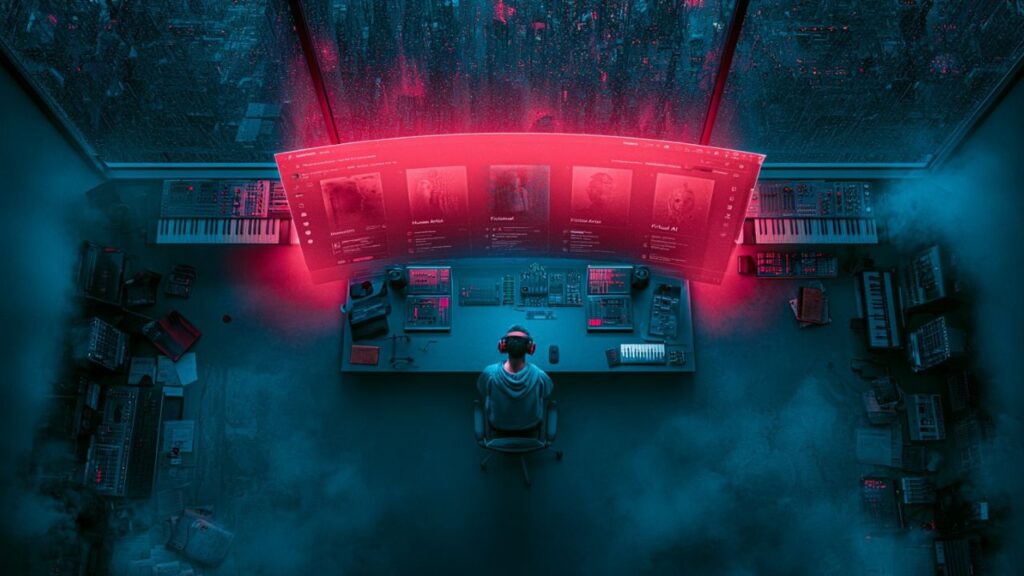
What Independent Musicians Should Do Now
Independent musicians should prepare for a more transparent AI music ecosystem.
That means:
- Define whether your project is human, fictional, virtual, or AI-assisted.
- Make your human creative direction visible.
- Keep your artist biographies clear.
- Avoid pretending a synthetic artist is a real person.
- Document your creative process.
- Build recognizable visual and narrative continuity.
- Use AI as a tool, not as a mask.
- Protect your artist identity and monitor impersonation.
This is not about rejecting AI.
It is about building trust.
The strongest music projects in the AI era will not be the ones that generate the most tracks.
They will be the ones listeners understand, remember, and return to.
What This Means for Dark Lofi
DarkLofi.com sits exactly inside this cultural shift.
It is not only a music site.
It can become a listening culture archive.
A place where AI music, dark ambient, fictional artists, human creativity, and worldbuilding are explained clearly.
The future of music may include real artists, virtual artists, AI-assisted artists, and synthetic personas.
But the listener still needs orientation.
They need to know what they are hearing.
Need to know what kind of artist they are following.
And need to know whether they are entering a human-led world or a generated illusion.
For Dark Lofi, the answer should be clear:
AI is a tool.
The world is human-led.
The music is built to feel like somewhere you can enter.
Final Thought
The AI artist is becoming a new category of music.
That does not have to be bad.
But it does need honesty.
A fictional artist can be beautiful.
A virtual singer can be meaningful.
An AI-assisted dark ambient project can become deeply emotional.
But trust is now part of the art.
The future will not only ask whether music sounds good.
It will ask:
Who is behind it?
What is real?
Is this fictional?
What is synthetic?
And why should the listener care?
In the AI music era, transparency is not the enemy of mystery.
It is what allows the mystery to survive.
FAQ
What is an AI Persona on Spotify?
An AI Persona is an artist profile whose public artist identity may be AI-generated and does not represent a real person.
Does Spotify ban AI-generated music?
No. The AI Persona announcement does not establish a general ban on AI-generated music. It specifically addresses the identity represented by an artist profile.
What is the difference between AI-generated music and AI-assisted music?
AI-generated music is usually created mostly or entirely by automated systems. AI-assisted music uses AI as part of a human-led creative process, where the artist still controls the concept, editing, direction, story, and final release.
Can fictional artists still work in the AI music era?
Yes. Fictional artists can be powerful when they are presented transparently. The key is to make it clear that the project is fictional, virtual, or worldbuilding-based rather than pretending to be a real human artist.
Why does this matter for dark ambient music?
Dark ambient music often depends on atmosphere, identity, place, and emotional trust. As AI-generated content increases, listeners may value human-led worldbuilding, clear authorship, and intentional sound design even more.
How does Dark Lofi approach AI music?
Dark Lofi treats AI as a creative tool inside a human-led workflow. The focus is on dark ambient music, cinematic atmosphere, fictional archives, emotional storytelling, and worlds such as Wartonno Sound, Meridian City, Aely Lin, and SOMNII.
Will Spotify recommend AI Persona artists?
Spotify says AI Personas will not be included by default in editorial or algorithmic recommendations. Listeners can still intentionally engage with or follow them.
Does using Suno or another AI music tool make an artist an AI Persona?
Not automatically. Spotify explicitly distinguishes the artist’s public identity from the tools used to make the music.

















Comments 2