


























Can AI Copy Your Sound Without Copying Your Song?
Why the next AI music battle is about identity, style, and artistic atmosphere
The AI music debate is changing.

For a long time, the main question was:
Can AI generate music?
Then the question became:
Was copyrighted music used to train AI systems?
Now a more difficult question is arriving:
Can AI copy an artist’s sound without directly copying a song?
That question sits at the center of a new legal fight involving musicians including Jason Isbell, David Lowery, Guy Forsyth, and Eduardo Calle. The artists filed a proposed class-action lawsuit against Suno in Massachusetts federal court, alleging that Suno used their identities without permission and allowed users to create songs in their style. Unlike many earlier AI music cases, this lawsuit focuses less on copyright in specific songs and more on name, image, likeness, voice, and artistic identity.
That makes this case important.
Because the future of AI music may not only be about copying melodies, lyrics, or recordings.
It may be about copying the feeling of an artist.
The voice.
The production style.
The guitar tone.
The phrasing.
The atmosphere.
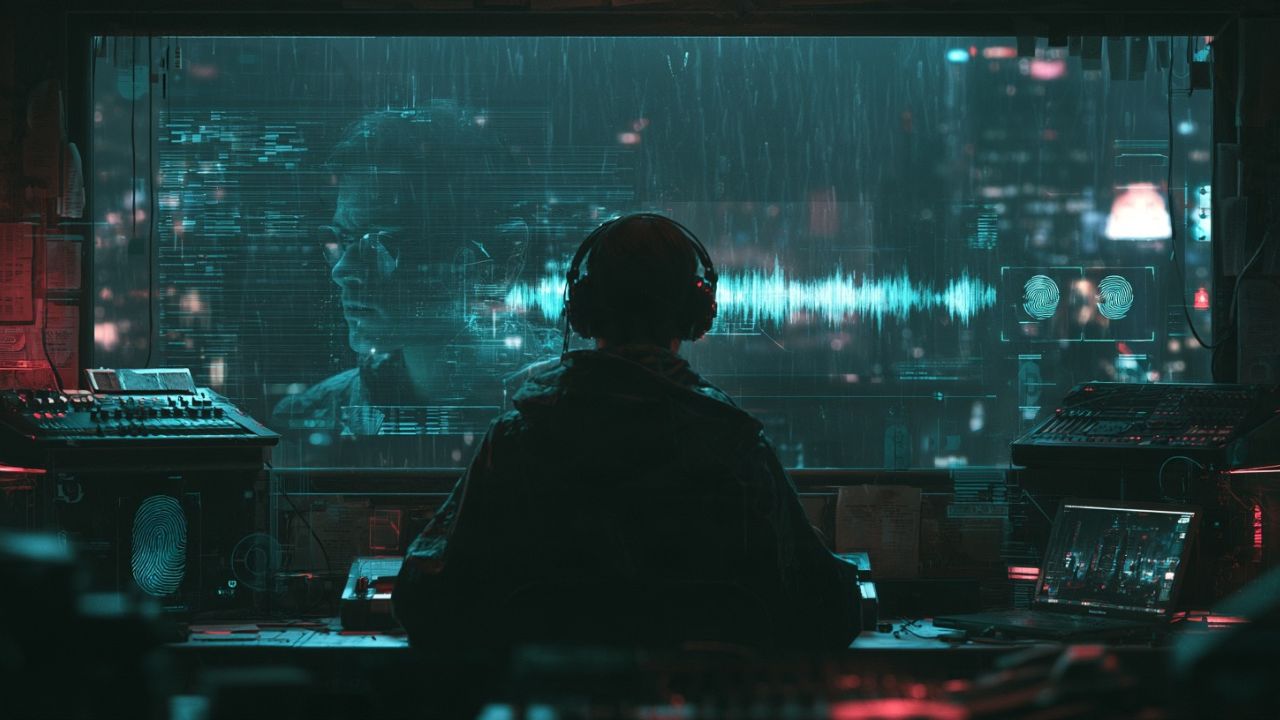
The emotional fingerprint.
And that is much harder to define.
The new question: what belongs to an artist?
A melody can be protected.
Lyrics can be protected.
A specific recording can be protected.
But what about a recognizable sound?
What about the way an artist sings?
What about the way a producer builds tension?
What about the mood that makes listeners say:
“This sounds like that artist.”
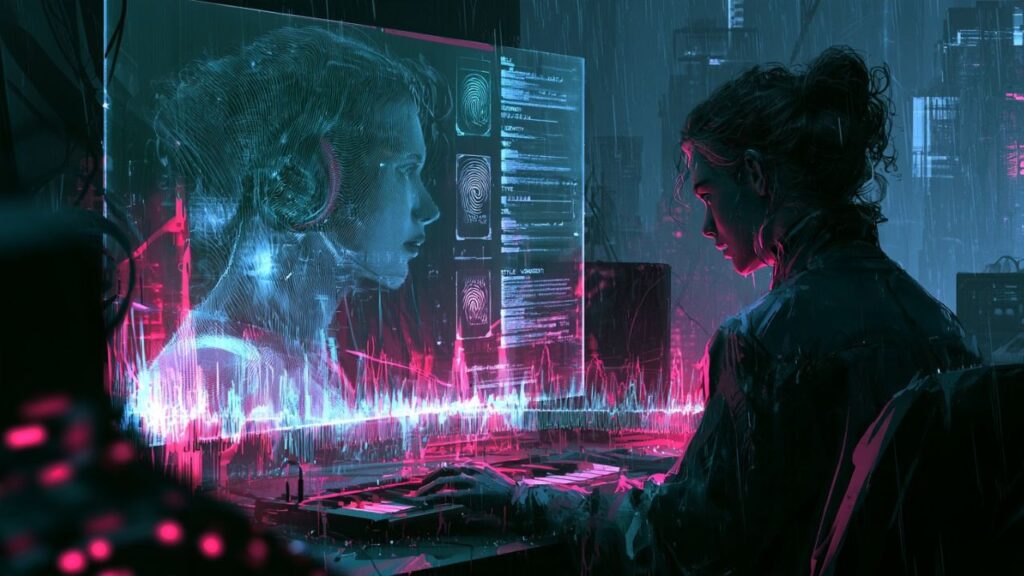
The lawsuit against Suno pushes directly into that territory. According to Reuters, the plaintiffs allege that Suno enabled users to create songs in the style of named artists by using their identities without permission. The New York Times reported that the case may test where similarity to a voice or style crosses the line into unlawful imitation.
This is where AI music becomes more than a technology issue.
It becomes a culture issue.
If AI can create endless songs that do not copy one exact track, but clearly imitate an artist’s recognizable sound, what happens to originality?
What happens to trust?
What happens to the value of a human artist’s identity?
Suno is facing pressure from multiple sides
This is not the only legal pressure around Suno.
Canada’s SOCAN filed a lawsuit against Suno on September 2, 2026. SOCAN alleges that Suno’s generative AI platform produces and streams outputs that replicate human-created musical works without consent or payment. SOCAN says it identified publicly available Suno outputs that contain the entirety or a substantial part of songs in its repertoire.
That is a different but connected issue.
One legal question is:
Did the AI output reproduce protected songs?
Another question is:
Did the AI imitate protected artist identities?
Together, these cases show where the AI music industry is heading.
The fight is no longer only about whether AI can make music.
The fight is about what AI is allowed to learn from, what it is allowed to imitate, and who gets paid when it does.
Anthropic is also being challenged by music publishers
The AI music legal battle is not limited to AI song generators.
Sony Music Publishing and Warner Chappell Music have also accused Anthropic of using lyrics and sheet music without authorization in connection with Claude. The case alleges misuse of copyrighted musical compositions, including lyrics and sheet music.
This widens the issue.
AI music is not only about tools like Suno or Udio.
It is also about general-purpose AI systems that may process, summarize, reproduce, or learn from musical works.
That matters because music is not just audio.
Music is also text.
Notation.
Structure.
Lyrics.
Metadata.
Performance identity.
Cultural memory.
The legal system is now being asked to decide how much of that can be absorbed by AI systems.
Why this matters for independent musicians
For independent musicians, this can feel overwhelming.
Most artists are not major labels.
Most artists do not have legal teams.
Most artists cannot monitor every platform, AI tool, clone, fake upload, or soundalike.
But the core lesson is useful:
Your sound is becoming part of your intellectual identity.
That means independent artists should think beyond individual songs.
You need to build a recognizable creative signature.
Not just tracks.
A world.
A visual language.
A writing style.
A release structure.
A clear artist story.
A reason for listeners to remember you.
Because if sound becomes easier to imitate, context becomes more valuable.
Why worldbuilding becomes more important in the AI music era
This is where Dark Lofi has a strong position.
A single dark ambient track can be copied in style.
But a complete world is harder to replace.
A project like Wartonno Sound is not only a collection of tracks. It is connected to liminal spaces, quiet rooms, fictional archives, sleep rituals, late-night focus, and cinematic atmosphere.
Meridian City is not only a setting. It gives music a place to live.
Aely Lin is not only a voice. She belongs to a fictional world with emotional texture and visual identity.
SOMNII is not only dreamlike bedroom pop. It can carry insomnia, memory, emotional fragments, and late-night storytelling.
That matters.
Because AI can generate sound.
But human-led worldbuilding creates continuity.
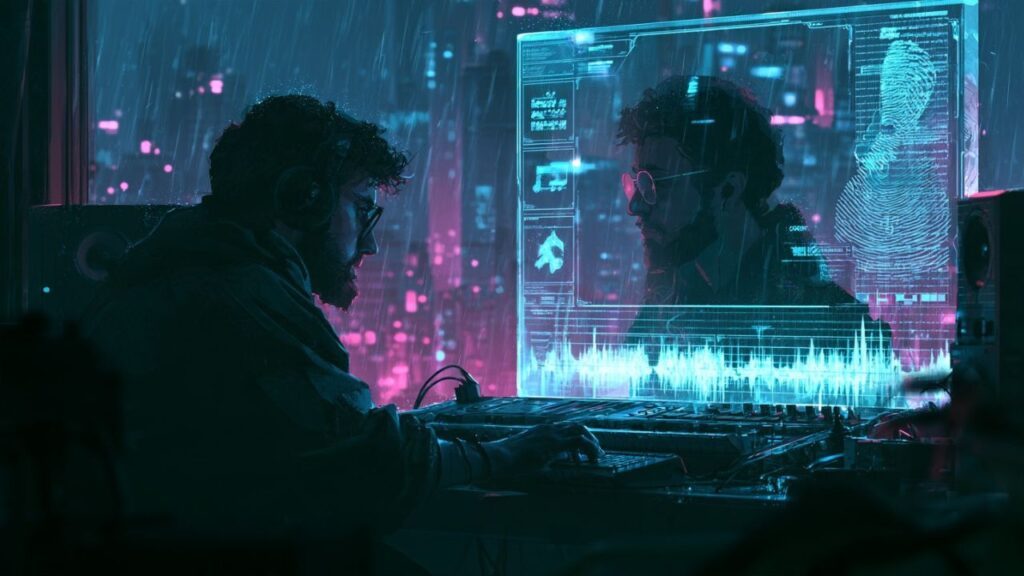
Sound can be copied. Meaning is harder.
This may become one of the most important truths for AI music creators.
A model may imitate a genre.
It may imitate a vocal texture.
It may imitate a production style.
It may create something that feels close to an existing artist.
But meaning comes from the choices around the music.
Why this title?
Why this image?
Why this character?
Why this city?
Why this sound at this moment?
Why does this track exist inside this larger world?
That is where the human creator still matters.
AI can help build.
AI can suggest.
AI can generate.
AI can accelerate.
But it does not automatically know what should matter.
That remains the role of the artist.
The danger of style without consent
Style is difficult.
Artists are influenced by other artists all the time. Music history is built on influence, scenes, genres, references, and shared language.
Dark ambient artists learn from dark ambient.
Lo-fi producers learn from lo-fi.
Cyberpunk composers learn from cinema, games, synth music, and electronic culture.
Influence is normal.
But AI changes the scale.
A human artist may study influences for years and slowly form a personal voice.
A generative system can potentially produce hundreds or thousands of soundalike outputs in seconds.
That creates a different kind of pressure.
If listeners can ask for something that sounds like a living artist without involving that artist, the market changes. The original artist’s (like Wartonno) sound becomes a promptable resource.
That is why identity-based lawsuits matter.
They are trying to answer whether a person’s artistic signature can be commercially exploited without permission, even when no single song is directly copied.
The difference between inspiration and extraction
This is the line the music industry is now trying to draw.
Inspiration means learning, transforming, and creating something with a new human point of view.
Extraction means using an artist’s identity, work, voice, or style as raw material without consent, compensation, or transparency.
AI makes this distinction harder.
A track may not be a direct copy.
But it may still feel built from someone else’s creative identity.
That is why transparency will become central to AI music.
Listeners will want to know:
Was AI used?
Was an artist cloned?
Was a real voice imitated?
Was a specific style targeted?
Was the source licensed?
Was there consent?
Who is the human behind the project?
These questions are not technical details.
They are part of trust.
What AI-assisted musicians should do now
This does not mean independent creators should stop using AI.
It means they should use AI with clearer direction.
A strong AI-assisted music project should make these things visible:
The human creator behind the project.
The artistic world behind the releases.
The emotional purpose of the music.
The difference between fictional identity and fake identity.
The role AI plays in the workflow.
The reason the music exists beyond platform volume.
This is especially important for dark ambient, cinematic ambient, and liminal music.
These genres often depend on trust, mood, and private listening moments.
People listen while sleeping.
Reading.
Thinking.
Working.
Processing anxiety.
Walking through memory.
Escaping into imaginary places.
That kind of music needs atmosphere, but it also needs intention.
What this means for DarkLofi.com
DarkLofi.com can become more than a music blog.
It can become a guide to the new listening culture.
A place where AI music is not treated as a gimmick, but as a serious shift in how music is made, discovered, labeled, trusted, and remembered.
The strongest angle is not:
AI is bad.
That is too simple.
The stronger angle is:
AI is powerful, but music still needs human direction.
That gives Dark Lofi a clear position.
AI can be part of the process.
But the world must be human-led.
The story must have intention.
The artist identity must be clear.
The listener should never feel tricked.
Final thought
The next AI music battle may not be about one stolen song.
It may be about the right to sound like yourself.
That is a strange sentence.
But it may define the next chapter of music.
If AI can copy the surface of an artist, then artists must protect and strengthen what sits beneath the surface:
their world,
their purpose,
their story,
their atmosphere,
their human direction.
For Dark Lofi, this is the path forward.
Not more anonymous tracks.
More recognizable worlds.
Not imitation.
Identity.
Not sound without meaning.
Music with a place to belong.
FAQ
Can AI copy an artist’s style without copying a song?
That is one of the major unresolved questions in AI music. A new lawsuit by musicians including Jason Isbell alleges that Suno allowed users to generate music using artists’ identities and styles without permission. The case focuses on identity and likeness rights rather than only direct copyright copying.
Is musical style protected by copyright?
Copyright usually protects specific works, such as songs, lyrics, compositions, and recordings. Style itself is harder to protect. But AI lawsuits are now testing whether voice, likeness, identity, and artist-specific imitation may create legal claims outside traditional copyright.
What is the difference between AI-generated and AI-assisted music?
AI-generated music is often created mainly by automated systems. AI-assisted music uses AI as part of a human-led creative process, where the artist still controls the idea, direction, editing, mood, context, and final release.
Why does artist identity matter in AI music?
Artist identity matters because listeners do not only connect with sound. They connect with trust, story, emotion, visuals, values, and continuity. If AI can imitate sound, then authorship and transparency become even more important.
How can independent artists protect themselves in the AI music era?
Independent artists can strengthen their position by building a clear creative identity, documenting their process, using consistent branding, creating original worlds, making authorship visible, and avoiding misleading AI personas or fake identities.
How does this relate to dark ambient music?
Dark ambient music often works through atmosphere, mood, and emotional context. In the AI era, this makes worldbuilding, human direction, and listener trust even more important. The sound matters, but the world around the sound may matter even more.


















Comments 2