



























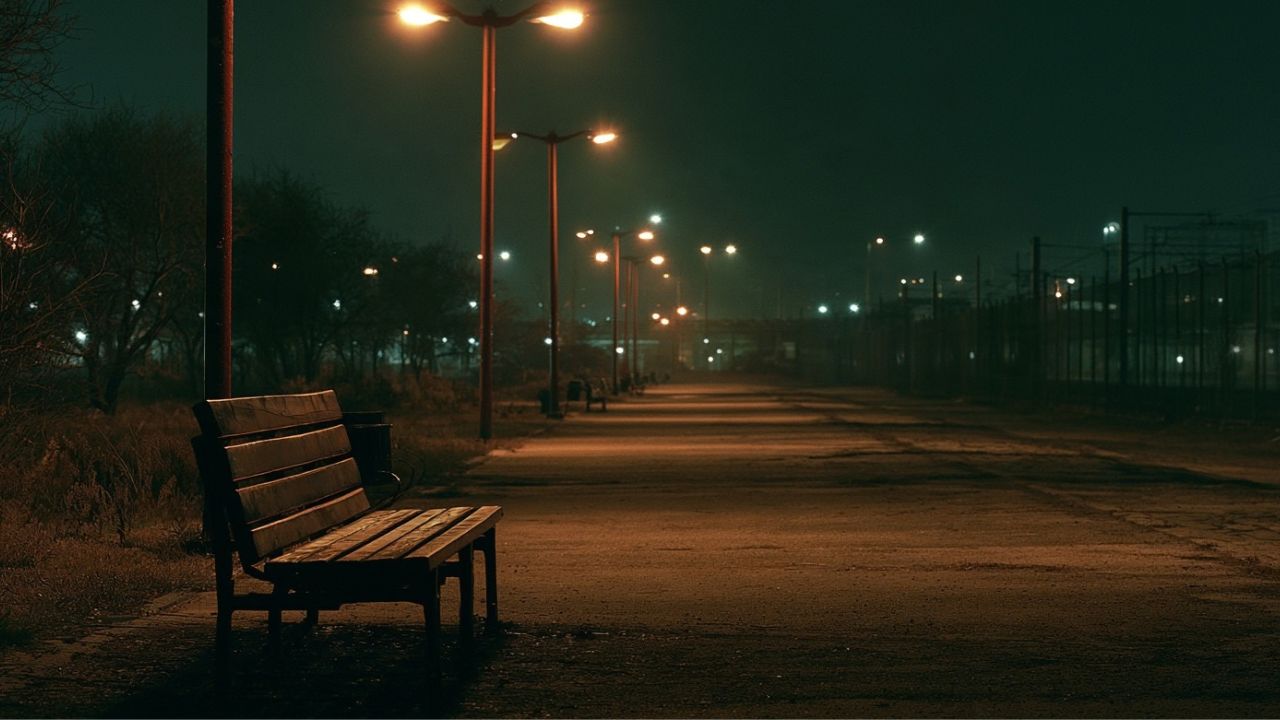
An empty train station at two in the morning does not feel like the same place you walked through at five in the afternoon.

The architecture has not changed.
The platform is still there.
The lights are still on.
The signs still point toward the exits.
But the people are gone.
There are no footsteps behind you. No conversations. No train arriving every few minutes. No ordinary movement explaining why the place exists.
Suddenly you notice different things.
The electrical hum.
A ventilation system somewhere behind the wall.
A light flickering at the far end of the platform.
The amount of empty space between you and the next visible door.
Nothing may actually be wrong.
Yet the place feels different.
This strange mixture of familiarity, unease, nostalgia and sometimes even comfort sits at the heart of what the internet has come to call liminal spaces.
But why does an ordinary place become so emotionally powerful when it is empty, dark or encountered at the wrong time?
Part of the answer may be surprisingly simple.
We do not experience places only as architecture.
We experience them through expectation.
What Is a Liminal Space?
The word liminal comes from the idea of a threshold or an in-between state.
In anthropology, liminality originally described periods of transition between one social state and another. Online culture has expanded the word into a visual and emotional language of places that feel suspended between purposes.
Hallways.
Hotel corridors.
Airport terminals.
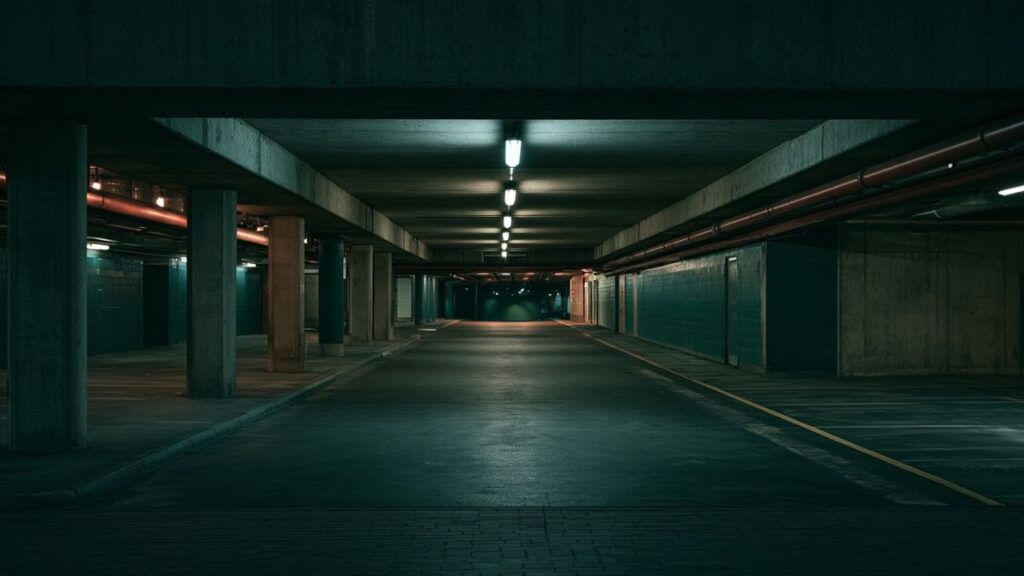
Parking garages.
Waiting rooms.
Schools during holidays.
Shopping centres after closing.
Stations between the last train and the first.
These places are often designed for movement rather than permanence. You are supposed to pass through them on the way somewhere else.
Online liminal-space culture takes those ordinary environments and removes something important.
Usually, the people.
The result is a familiar place behaving in an unfamiliar way.
That contradiction is where much of the feeling begins.
The Short Answer: Your Brain Knows What Should Be There
When you walk into a kitchen, you already have expectations about what belongs there.
A table.
A sink.
Cupboards.
Perhaps food.
Perhaps people preparing it.
Psychologists studying visual environments sometimes describe these expectations through ideas such as scene schemas or scene grammar.
Our experience teaches us what normally belongs in particular environments and roughly where things should appear. Research into scene perception shows that these learned regularities help guide attention, memory and visual search. PubMed
The same principle can apply more broadly to places.
An office does not only mean desks and computers.
It implies workers.
A school hallway implies students.
A station implies passengers.
A restaurant implies customers.
A hotel corridor implies somebody occupying at least some of the rooms.
Take away those expected people and activities, and the building remains recognizable while the situation no longer completely matches the mental model.
You know what the place is.
But it is not behaving the way that place normally behaves.
That is one reason an empty familiar environment can feel stranger than an obviously unfamiliar one.
Absence Is Something We Notice
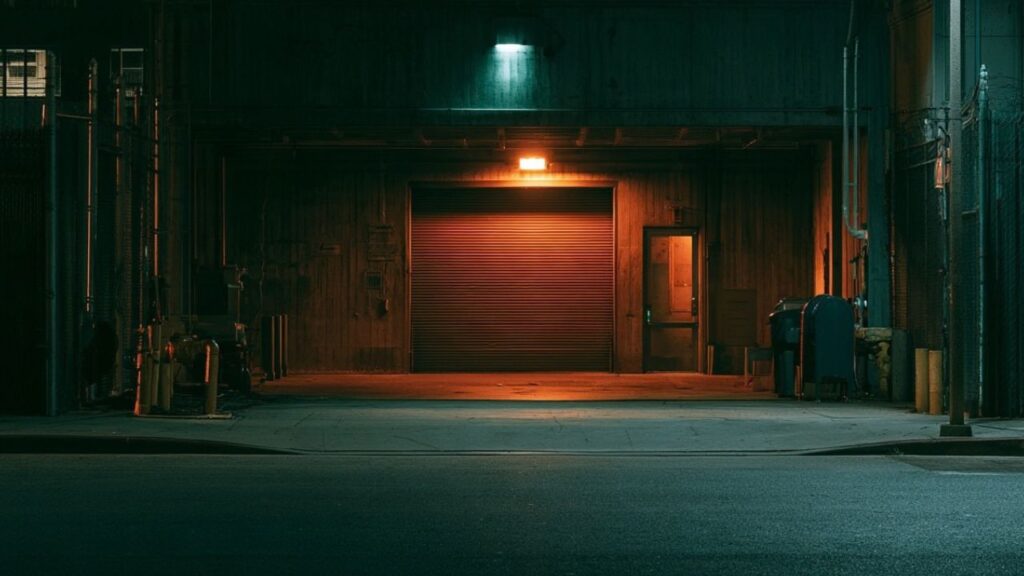
Consider an abandoned building and an empty supermarket after closing.
Both may contain no people.
But they often feel different.
In the abandoned building, emptiness makes sense.
You expect it.
In the supermarket, the shelves may still be stocked.
The lights may still be on.
Advertisements still hang above the aisles.
Shopping baskets still wait near the entrance.
Everything suggests human activity.
Except the humans.
The emptiness becomes noticeable because the environment appears prepared for an event that is not happening.
This is one of the most powerful characteristics of liminal imagery.
Absence becomes visible.
An empty chair is simply an object.
Twenty empty chairs facing a stage suggest that somebody should be there.
A corridor is architecture.
A brightly illuminated school corridor at midnight feels like something has been removed from the scene.
The strange feeling is not always produced by what we see.
Sometimes it comes from what we expected to see and did not.
Darkness Changes the Same Place
Night adds another layer.
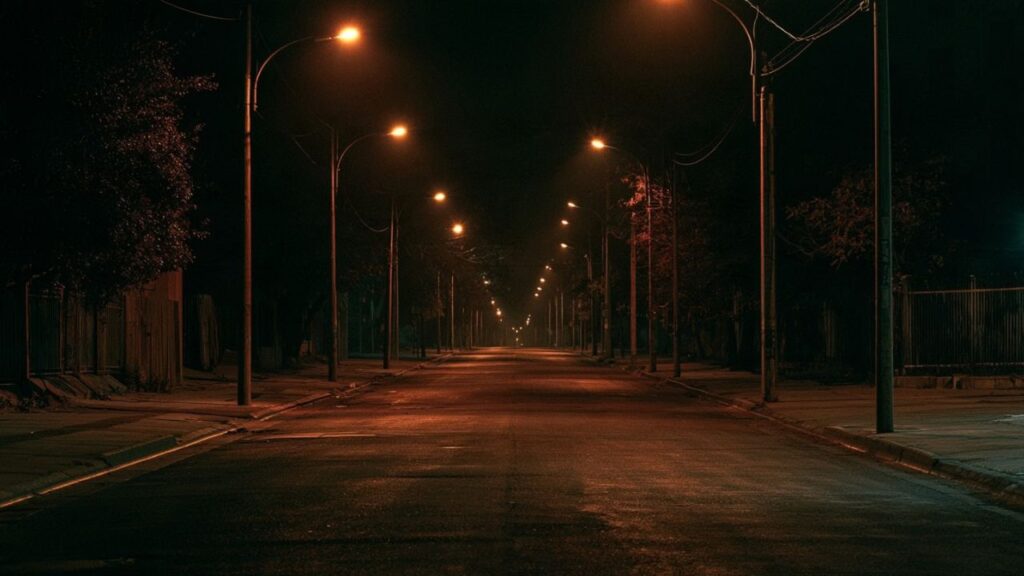
A growing body of environmental research shows that people judge the same public environments differently after dark.
A 2025 study in Landscape and Urban Planning used day and night images of the same urban locations and found a substantial reduction in perceived safety at night. Lighting and the type of urban area also influenced those judgments. ScienceDirect
Other environmental psychology research has similarly found that lighting, visibility, places of concealment and the perceived ability to escape influence judgments of safety in nighttime streets. PubMed Central (PMC)
This does not mean darkness automatically makes a place dangerous.
It means darkness changes the information available to us.
During the day, you can see farther.
Edges are clearer.
Doorways make sense.
You can more easily tell whether somebody is standing in the distance or whether an object is simply a shadow.
At night, parts of the environment disappear.
And when information disappears, imagination becomes unusually helpful.
Sometimes too helpful.
Low Information Leaves Space for Possibility
Imagine looking down a perfectly illuminated corridor.
You can see the doors.
The floor.
The end wall.
There is very little ambiguity.
Now remove most of the light.
You can still see enough to understand the space.
But not enough to completely resolve it.
What is behind that doorway?
Does the corridor continue?
Was that movement or a reflection?
Nothing needs to actually happen.
The environment has become psychologically richer because you do not have all the information.
Your mind begins completing the missing parts.
This is one reason liminal imagery often works without monsters.
In fact, adding a visible monster can make the image less interesting.
The unknown becomes known.
The question has been answered.
An empty hallway allows hundreds of possible stories.
A hallway containing an obvious creature contains one.
Familiarity Makes the Strangeness Stronger
There is another important ingredient.
Recognition.
Many classic liminal images seem strangely familiar even when you have never visited the specific place shown.
The carpet reminds you of a hotel from childhood.
The fluorescent lights look like your old school.
The tiled swimming pool resembles somewhere your parents once took you.
The shopping centre could have existed in almost any town twenty years ago.
Research on memory and spatial schemas shows that repeated experience with similarly structured environments allows us to develop generalized expectations about places. Nature
So a photograph does not necessarily need to show your childhood school.
It only needs enough features associated with that category of place.
Your memory supplies the rest.
That is where liminal imagery begins to overlap with nostalgia.
Why Liminal Spaces Can Feel Like Memories You Never Had
Some liminal images produce an unusual sensation:
I remember this place, but I don’t know from where.
That does not require a mysterious explanation.
Human memory is reconstructive.
Places become connected to categories, feelings, fragments and repeated visual patterns.
A photograph of a dim indoor swimming pool might activate pieces of many experiences:
A childhood holiday.
A school changing room.
The smell of chlorine.
A hotel visited once.
An old video game.
A photograph from the early internet.
None of those memories needs to correspond exactly to the photograph in front of you.
The emotional familiarity can arrive before the conscious memory does.
The result feels like recognition without identification.
That is extremely powerful material for art.
Why Some People Find Empty Spaces Comforting
Not everyone experiences liminal environments as frightening.
For some people, the same empty shopping centre or silent station can feel peaceful.
That may seem contradictory.
But emptiness removes more than people.
It can also remove demands.
No queue.
No conversation.
No crowds.
No announcements competing for attention.
No expectation that you should interact with anyone.
No visual chaos.
The architecture remains, but much of its social pressure disappears.
Research into nighttime environments has found that environmental responses are not simply divided into safe or frightening. Scene content and lighting can also influence preference and perceived restorativeness. Taylor & Francis Online
That helps explain why one person looks at an empty hotel lobby and thinks:
Something is wrong here.
While another thinks:
I wish I could sit there for an hour.
The environment is ambiguous enough to support both reactions.
Transitional Architecture Is Especially Powerful
Many of the places associated with liminal culture share another characteristic.
They were not designed as destinations.
A hallway exists because two rooms need connecting.
A stairwell exists because two floors need connecting.
An airport gate exists because you are waiting to leave.
A motorway service station exists because you are going somewhere else.
A hotel exists because home is temporarily somewhere else.
A railway platform exists because the real destination is at the end of the tracks.
They are spaces of not yet.
That gives them an unusual psychological quality even during normal use.
At night, when the movement stops, the architecture remains but the transition does not complete.
The escalator is still there.
Nobody is going up.
The departure board still glows.
Nothing is departing.
The corridor points somewhere.
Nobody is walking through it.
A place designed around movement becomes completely still.
That contradiction is almost cinematic by itself.
The Internet Turned Emptiness Into an Aesthetic
Liminal spaces existed long before social media.
But online culture gave the feeling a recognizable visual language.
Empty malls.
Yellow corridors.
Old hotels.
Indoor pools.
Office buildings.
Playgrounds after dark.
Early digital cameras, compression artifacts and slightly degraded imagery often strengthen the effect.
The Backrooms pushed that aesthetic into horror, but liminal culture is much broader than horror.
Its appeal includes nostalgia, loneliness, dreams, memory, architecture and the sense of being temporarily outside normal time.
That combination remains unusually compatible with contemporary ambient culture.
Current ambient editorial coverage frequently describes music not simply through instruments or genres but through imagined rooms, abandoned houses, memories, ghosts and places the listener can mentally enter. September 2026 coverage from Musicngear, for example, repeatedly describes ambient tracks through spatial and environmental imagery. MUSICnGEAR
The relationship makes sense.
Liminal photography and ambient music are often trying to accomplish the same thing.
They create a place without completely explaining it.
Why Liminal Spaces and Ambient Music Fit Together
Traditional songs often direct attention toward events.
A lyric changes.
A chorus arrives.
A beat drops.
Ambient music can work differently.
It can establish an environment and let you remain inside it.
A distant train.
Ventilation.
Rain hitting concrete.
A low electrical frequency.
Footsteps far away.
A tone that barely changes for five minutes.
These sounds do not necessarily tell you what happened.
They tell you where you might be.
That makes field recordings especially powerful.
In DarkLofi’s When the Real World Enters the Music: Why Field Recordings Are Returning to Ambient, I explored how ordinary environmental sounds can function as musical material.
A railway becomes rhythm.
Traffic becomes texture.
Wind becomes movement.
An empty room develops its own acoustic identity.
Liminal music goes one step further.
It uses sound to imply that something belongs in the space but is missing.
Sound Can Make Emptiness Feel Larger
Think about a completely silent photograph of a railway platform.
Now imagine the same scene with headphones.
Rain somewhere above you.
An electrical buzz.
Metal contracting in the cold.
A distant train that never arrives.
Suddenly the platform has dimensions.
You can almost estimate the size of the ceiling.
You can imagine where the tunnel begins.
You sense distance.
Sound gives architecture depth.
This is one reason Signals After Midnight, a DarkLofi microfiction inspired by Wartonno Sound’s The Lost Tapes, works through recordings rather than visual horror.
Nothing needs to appear.
The listener hears an environment and gradually realizes that something about it does not make sense.
A station.
An apartment.
A field beneath power lines.
All recognizable.
All slightly wrong.
Liminal storytelling works best when explanation arrives slowly, if it arrives at all.
Photography Does the Same Thing With Time
Photography is naturally suited to liminal spaces because a photograph already removes movement.
A station filled with commuters is constantly changing.
A photograph freezes it.
Empty the station first, and that frozen quality becomes stronger.
The photograph no longer feels like a captured moment.
It can feel like a place where time itself stopped.
This is why imperfect photography often works particularly well.
Motion blur.
Film grain.
Old digital noise.
Strange white balance.
A flash reflecting from a distant wall.
These characteristics can make the photograph feel less like a carefully produced image and more like evidence.
Something found.
Something remembered.
Something recorded by accident.
The visual imperfection creates another layer of uncertainty.
Liminal Spaces Are Really About Expectation
The psychology of liminal spaces does not require one single explanation.
Several processes can overlap:
Expectation tells us how a familiar environment normally behaves.
Memory gives similar places emotional associations.
Darkness reduces available information.
Architecture controls visibility, concealment and possible movement.
Absence removes the people and activity we expected.
Stillness removes the normal purpose of transitional spaces.
The result can be unsettling.
Or peaceful.
Or nostalgic.
Sometimes all three at once.
That emotional ambiguity may be exactly why liminal spaces continue to fascinate people.
They do not dictate what you should feel.
They create enough emptiness for you to bring something of your own.
Maybe the Empty Room Is Not Empty
Perhaps that is also why these places remain so effective in ambient music, photography and fiction.
An empty room is rarely experienced as nothing.
You imagine what happened there.
Who left.
Whether somebody is returning.
Whether you have seen the room before.
Why the lights are still on.
What might be behind the next door.
The architecture gives you only part of the story.
Your mind completes the rest.
And sometimes the most powerful atmosphere is created not by adding something frightening.
But by taking away the thing you expected to find.
People.
Noise.
Movement.
Purpose.
Daylight.
You are left with the place itself.
And suddenly you notice it.
FAQ
Why do empty places feel creepy at night?
Night reduces visibility and changes how people evaluate an environment. Research on nighttime urban spaces shows that lighting, visibility, concealment and perceived escape routes can influence feelings of safety. Empty places can add another layer because familiar environments no longer contain the people and activity we normally expect. ScienceDirect
What is the psychology behind liminal spaces?
There is no single established psychological theory specifically explaining the internet liminal-space aesthetic. Relevant research includes scene expectations and spatial schemas, environmental perception, memory, nighttime safety and responses to ambiguity. Together, these help explain why a familiar but contextually unusual environment can feel emotionally powerful.
Why do liminal spaces feel nostalgic?
Many liminal environments contain common architectural features associated with schools, hotels, malls, swimming pools and other repeated experiences. Spatial schemas and memory can make an unfamiliar image feel broadly recognizable even when the viewer cannot connect it to one specific autobiographical memory.
Why do some people find liminal spaces relaxing?
Empty environments can remove crowds, movement and social demands. Research on nightscapes also suggests that environmental content and lighting influence not only fear but preference and perceived restorativeness. Individual reactions therefore vary.
Are liminal spaces always abandoned places?
No. A place can feel liminal while still functioning normally. A hotel corridor at 3AM, an airport between flights or a school during holidays can create the effect because the setting is encountered outside its usual rhythm.
Why does ambient music work so well with liminal spaces?
Ambient music can create a sense of environment without requiring a conventional narrative. Drones, field recordings, distant voices, mechanical sounds and long periods of stillness can suggest architecture, distance and absence, allowing listeners to imagine a place rather than simply hear a song.