












• About
  • Advertise
  • Privacy & Policy
  • Contact
Soundscapes and Stories | Dark Lofi Media
  • Start Here!
  • Dark Ambient & Lofi Music
    • All
    • Playlist Spotlights
    • Soundscape Explorations
    • Track Descriptions
    • Wartonno Sound
    Are minimalism and ambient music the same

    What Minimalism Gave Ambient Music: From Steve Reich to Brian Eno and Modern Soundscapes

    Listener experiencing ambient music through speakers in a dark room at night

    Why Where You Listen Changes What Ambient Music Feels Like

    Field recordings visualized as sound waves inside an empty nighttime railway station

    When the Real World Enters the Music: Why Field Recordings Are Returning to Ambient

    Dark ambient environment with repeating light pulses representing rhythm in atmospheric music

    Dark Ambient Is Escaping the Drone: Why Rhythm Is Entering Atmospheric Music

    dark-ambient-with-vocals-human-voice

    Dark Ambient With Vocals: Why the Human Voice Is Returning | DarkLofi

    Ambient Music Is Becoming Emotional World-Building

    Ambient Music Is Becoming Emotional World-Building

  • Short Stories
    • All
    • Liminal Horror
    • Occult Mystery
    • Story Behind the Track
    • Urban Fantasy
    Dark cyberpunk music workstation used by Wartonno to create After the System Broke

    How I Create Cyberpunk Ambient Music | Wartonno

    Dark Urban Fantasy Microfiction - The Man Who Was Not on the Map

    Dark Urban Fantasy Microfiction: The Man Who Was Not on the Map

    Cinematic gothic corridor filled with silent figures under warm lantern light, elderly woman in round sunglasses standing in foreground, tall shadow silhouette at end of hallway, atmospheric liminal horror scene.

    The Corridor of the Unblooming | A Cinematic Dark Short Story of Collective Silence

    The Quiet Above the Tide

    The Quiet Above the Tide

    The library was older than its records suggested

    Where the Books Forgot His Name

    He did not remember when the lamp had first appeared

    The Lamp That Walked Before Him

  • Dark Lofi Journal
    • All
    • Liminal Thoughts
    • Sound & Silence
    Empty station concourse with concrete walls, a ventilation grille and an amber-lit doorway at night

    Why Sound Changes the Way We Experience a Place

    Why Your Second Creative Life May Need Less Screen Time

    Why Empty Places Feel Different at Night: The Psychology of Liminal Spaces

    Backrooms-inspired liminal hallway and bedroom listening room representing dark ambient music, bedroom pop, and overthinking

    From Backrooms to Bedroom Pop: Why Late-Night Music Is Becoming Emotional Architecture

    Why Dark Ambient and Bedroom Pop Are Becoming the Sound of Overthinking

    Why Dark Ambient and Bedroom Pop Are Becoming the Sound of Overthinking

    Why Ambient and Bedroom Pop Are Becoming Music for Emotional States

    Why Ambient and Bedroom Pop Are Becoming Music for Emotional States

    Why Dark Ambient and Bedroom Pop Are Moving Toward the Same Emotional Future

    Why Dark Ambient and Bedroom Pop Are Moving Toward the Same Emotional Future

  • Visuals & AI Art
    • All
    • AI Music & Listening Culture
    • Behind the Visual
    Why Your Second Creative Life May Need Less Screen Time

    Why Empty Places Feel Different at Night: The Psychology of Liminal Spaces

    Suno v6 Lawsuit - Can AI Models Inherit Copyright Risk

    Suno v6 Lawsuit: Can a Licensed AI Model Inherit Copyright Problems?

    Why artist identity matters in AI music

    AI Music and Artist Identity: Can AI Copy Your Sound?

    The AI Artist Is Becoming a New Category of Music

    Spotify AI Persona Labels: What the September 2026 Rollout Means for Artists

    AI Is Becoming Infrastructure, Not Just Software

    AI Music Listening Culture: When AI Moves Beyond the Screen

    AI Is Moving Beyond the Screen - What It Means for Music, Creativity, and Dark Lofi

    AI Is Moving Beyond the Screen: What It Means for Music

  • Whispers
    • All
    • Independent Artists
    • Liminal Mindfulness
    • Microfiction
    • Somnio Poetica
    • Sound Discoveries
    Why Your Second Creative Life May Need Less Screen Time

    Why Empty Places Feel Different at Night: The Psychology of Liminal Spaces

    Liminal archive room after midnight inspired by The Lost Tapes and dark ambient music

    Signals After Midnight: A Liminal Microfiction Inspired by The Lost Tapes

    Long-form ambient music visualized as a dark room opening into a neon future-noir city for sleep

    Why Long-Form Ambient Is Making a Comeback | Dark Ambient & Bedroom Pop

    Why Late-Night Music Is Becoming Emotional Worldbuilding

    Why Late-Night Music Is Becoming Emotional Worldbuilding

    Dark cyberpunk music workstation used by Wartonno to create After the System Broke

    How I Create Cyberpunk Ambient Music | Wartonno

    Cinematic cyberpunk ambient city and dark studio representing late-night music, emotional worldbuilding, Wartonno, and future noir

    Dark Ambient, Bedroom Pop & Cyberpunk Ambient for Late-Night Listening

No Result
View All Result
  • Start Here!
  • Dark Ambient & Lofi Music
    • All
    • Playlist Spotlights
    • Soundscape Explorations
    • Track Descriptions
    • Wartonno Sound
    Are minimalism and ambient music the same

    What Minimalism Gave Ambient Music: From Steve Reich to Brian Eno and Modern Soundscapes

    Listener experiencing ambient music through speakers in a dark room at night

    Why Where You Listen Changes What Ambient Music Feels Like

    Field recordings visualized as sound waves inside an empty nighttime railway station

    When the Real World Enters the Music: Why Field Recordings Are Returning to Ambient

    Dark ambient environment with repeating light pulses representing rhythm in atmospheric music

    Dark Ambient Is Escaping the Drone: Why Rhythm Is Entering Atmospheric Music

    dark-ambient-with-vocals-human-voice

    Dark Ambient With Vocals: Why the Human Voice Is Returning | DarkLofi

    Ambient Music Is Becoming Emotional World-Building

    Ambient Music Is Becoming Emotional World-Building

  • Short Stories
    • All
    • Liminal Horror
    • Occult Mystery
    • Story Behind the Track
    • Urban Fantasy
    Dark cyberpunk music workstation used by Wartonno to create After the System Broke

    How I Create Cyberpunk Ambient Music | Wartonno

    Dark Urban Fantasy Microfiction - The Man Who Was Not on the Map

    Dark Urban Fantasy Microfiction: The Man Who Was Not on the Map

    Cinematic gothic corridor filled with silent figures under warm lantern light, elderly woman in round sunglasses standing in foreground, tall shadow silhouette at end of hallway, atmospheric liminal horror scene.

    The Corridor of the Unblooming | A Cinematic Dark Short Story of Collective Silence

    The Quiet Above the Tide

    The Quiet Above the Tide

    The library was older than its records suggested

    Where the Books Forgot His Name

    He did not remember when the lamp had first appeared

    The Lamp That Walked Before Him

  • Dark Lofi Journal
    • All
    • Liminal Thoughts
    • Sound & Silence
    Empty station concourse with concrete walls, a ventilation grille and an amber-lit doorway at night

    Why Sound Changes the Way We Experience a Place

    Why Your Second Creative Life May Need Less Screen Time

    Why Empty Places Feel Different at Night: The Psychology of Liminal Spaces

    Backrooms-inspired liminal hallway and bedroom listening room representing dark ambient music, bedroom pop, and overthinking

    From Backrooms to Bedroom Pop: Why Late-Night Music Is Becoming Emotional Architecture

    Why Dark Ambient and Bedroom Pop Are Becoming the Sound of Overthinking

    Why Dark Ambient and Bedroom Pop Are Becoming the Sound of Overthinking

    Why Ambient and Bedroom Pop Are Becoming Music for Emotional States

    Why Ambient and Bedroom Pop Are Becoming Music for Emotional States

    Why Dark Ambient and Bedroom Pop Are Moving Toward the Same Emotional Future

    Why Dark Ambient and Bedroom Pop Are Moving Toward the Same Emotional Future

  • Visuals & AI Art
    • All
    • AI Music & Listening Culture
    • Behind the Visual
    Why Your Second Creative Life May Need Less Screen Time

    Why Empty Places Feel Different at Night: The Psychology of Liminal Spaces

    Suno v6 Lawsuit - Can AI Models Inherit Copyright Risk

    Suno v6 Lawsuit: Can a Licensed AI Model Inherit Copyright Problems?

    Why artist identity matters in AI music

    AI Music and Artist Identity: Can AI Copy Your Sound?

    The AI Artist Is Becoming a New Category of Music

    Spotify AI Persona Labels: What the September 2026 Rollout Means for Artists

    AI Is Becoming Infrastructure, Not Just Software

    AI Music Listening Culture: When AI Moves Beyond the Screen

    AI Is Moving Beyond the Screen - What It Means for Music, Creativity, and Dark Lofi

    AI Is Moving Beyond the Screen: What It Means for Music

  • Whispers
    • All
    • Independent Artists
    • Liminal Mindfulness
    • Microfiction
    • Somnio Poetica
    • Sound Discoveries
    Why Your Second Creative Life May Need Less Screen Time

    Why Empty Places Feel Different at Night: The Psychology of Liminal Spaces

    Liminal archive room after midnight inspired by The Lost Tapes and dark ambient music

    Signals After Midnight: A Liminal Microfiction Inspired by The Lost Tapes

    Long-form ambient music visualized as a dark room opening into a neon future-noir city for sleep

    Why Long-Form Ambient Is Making a Comeback | Dark Ambient & Bedroom Pop

    Why Late-Night Music Is Becoming Emotional Worldbuilding

    Why Late-Night Music Is Becoming Emotional Worldbuilding

    Dark cyberpunk music workstation used by Wartonno to create After the System Broke

    How I Create Cyberpunk Ambient Music | Wartonno

    Cinematic cyberpunk ambient city and dark studio representing late-night music, emotional worldbuilding, Wartonno, and future noir

    Dark Ambient, Bedroom Pop & Cyberpunk Ambient for Late-Night Listening

No Result
View All Result
Soundscapes and Stories | Dark Lofi Media
No Result
View All Result
Home Dark Lofi Journal Liminal Thoughts

Why Sound Changes the Way We Experience a Place

Wartonno by Wartonno
October 6, 2026
in Liminal Thoughts
Reading Time: 18 mins read
A A
0
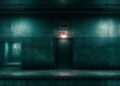
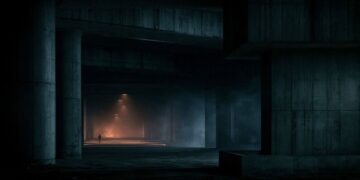
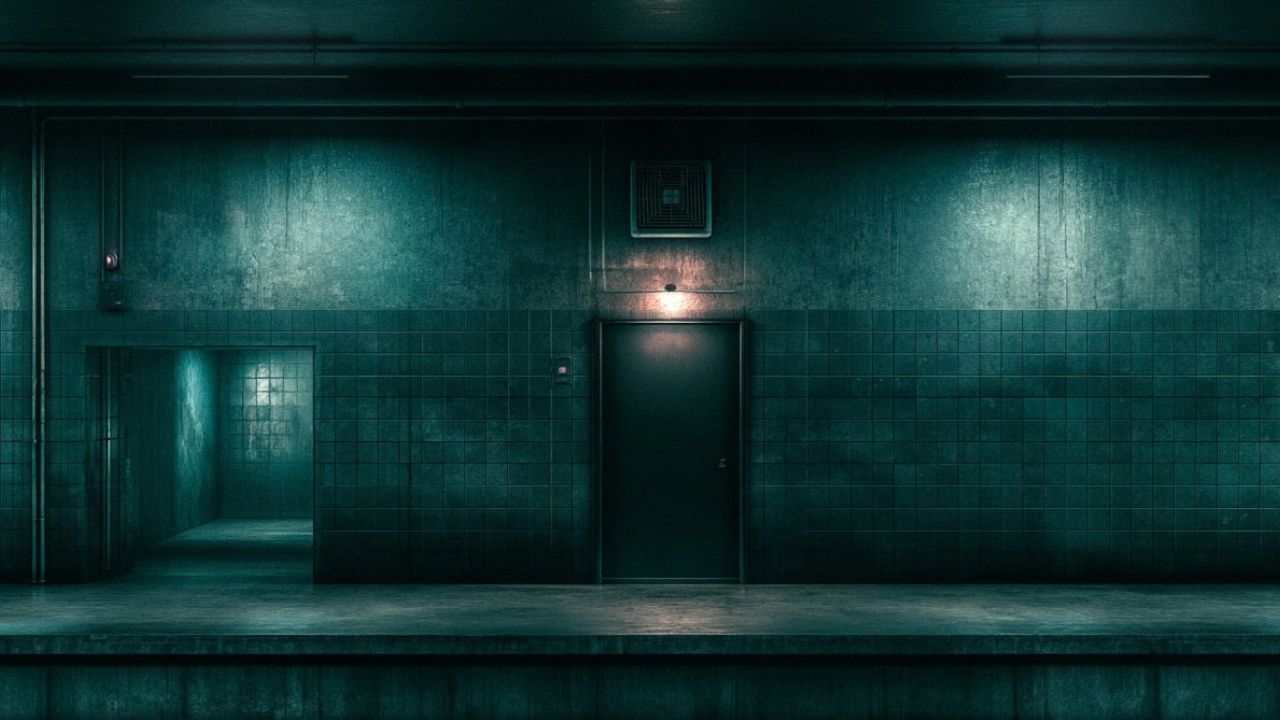
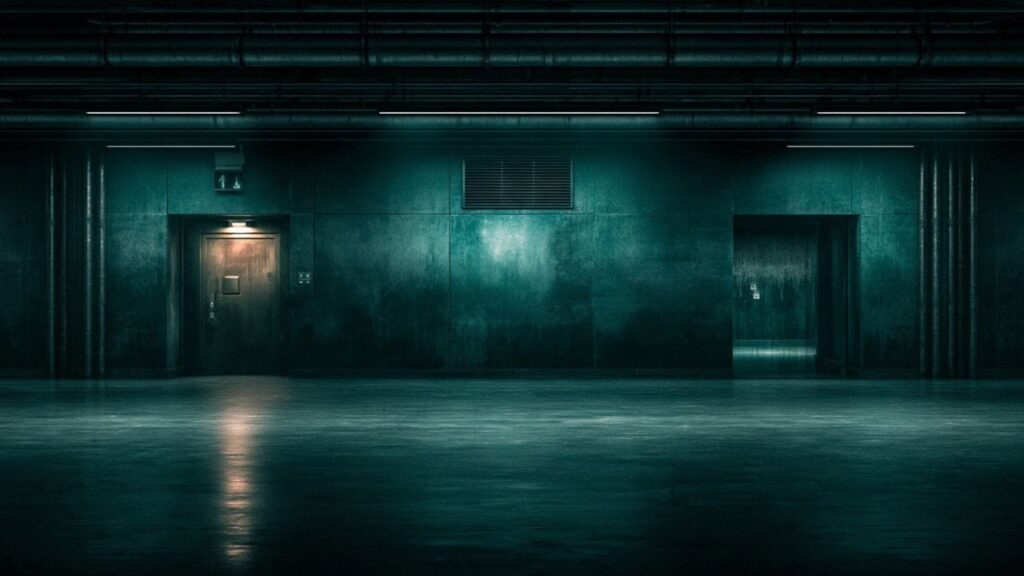
Empty station concourse with concrete walls, a ventilation grille and an amber-lit doorway at night
0
VIEWS
Share on FacebookShare on Twitter

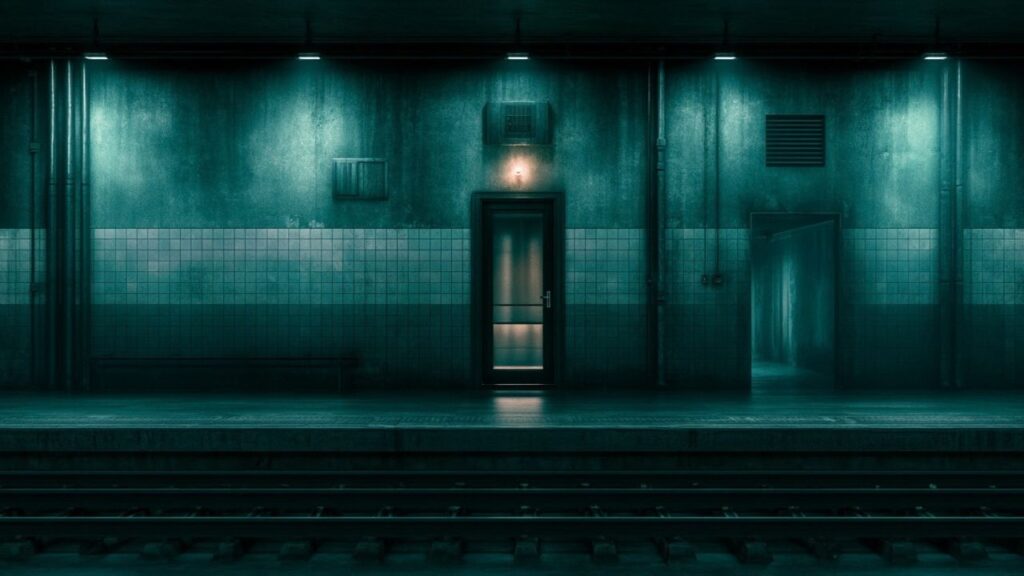
Walk into an empty station wearing headphones.
An ambient track follows you through the entrance. Soft tones stretch behind the ticket machines. The platform looks almost like a scene someone prepared for the music.

Stop for a moment. Take the headphones off.

A ventilation system hums overhead. Somewhere beyond the stairs, a trolley wheel catches against the floor. Your next footstep returns with a faint tail of sound. Traffic moves outside a wall you cannot see through.

The architecture has not changed, but the place has.

What seemed distant a moment ago now feels immediate. You are aware of the ceiling, the passage behind you and the machinery still working beneath the quiet.

Sound changes how we experience a place by giving us clues about its dimensions, materials, activity and distance. We interpret those clues through context, memory and expectation. Together, they help a room feel occupied, exposed, sheltered or strangely unfamiliar.

This is one reason an empty hallway can hold your attention. Its appearance tells only part of the story. The rest may be coming through the walls.

A place has an audible shape

We tend to describe places through what we see: tall windows, concrete stairs, a narrow doorway, a yellow light at the end of a corridor.

Sound adds another kind of information.

A voice reaches you directly and through reflections from the surrounding surfaces. Those reflections contribute to the impression of the space around the speaker. A sound that ends quickly creates a different acoustic impression from one that lingers.

Reverberation is the persistence of sound as many reflections overlap and decay. An echo is a reflection you hear as a distinct repeat. A room can be reverberant without producing an obvious repeated word or footstep.

Its dimensions and sound absorption both matter. As Ecophon’s room-acoustics explanation shows, reverberation cannot be understood from room size alone. A large space with substantial absorption can behave differently from a smaller, more reflective one.

That is why “echoey” does not automatically mean enormous.

Research also suggests that these auditory clues can interact with vision. A 2017 study in Scientific Reports found that the auditory environment influenced visual distance judgments under its experimental conditions, with the authors pointing to reverberation-related room-size cues.

That finding does not mean every sound makes a room look larger or smaller. It supports a more careful point: what we hear can contribute to how we judge the space we see.

Hum makes the unseen building present

Imagine standing in an office after everyone has gone home.

The desks are still. The monitors are dark. Yet the room has a continuous low sound that seems to belong nowhere in particular.

It might come from ventilation, cooling equipment or machinery elsewhere in the building. You may not know the source. You only know that something continues to operate.

This is an ordinary detail with considerable atmospheric potential.

In one setting, that hum can feel reassuring. The building is functioning. In another, it can make the emptiness more noticeable. Everything required to support people is still running, although the people have left.

These are possible interpretations, rather than fixed effects of a particular frequency.

For a liminal soundscape, the useful question is often: what keeps going when human activity stops?

A distant fan gives the room a kind of continuity. A motor that starts and stops gives it a cycle. A faint rattle suggests a specific object just beyond view.

You begin to imagine more of the building than the image shows.
Ambient music creates another space inside the room

Distant traffic extends a room beyond its walls

Consider an apartment at night. You can see the chair, the curtains and a small rectangle of light on the floor.

Then a car passes outside.

That passing sound places the apartment inside a larger scene. There is a road beyond the window. There are people moving through it. The room has an outside.

Now imagine removing that sound from a recording of the scene. The same image may feel more enclosed, more remote or simply less connected to a recognisable city.

In sound design, this makes distant activity useful even when it is barely noticeable. A train heard far away can suggest a route through the landscape. A door closing elsewhere can suggest adjoining rooms. An indistinct voice can imply occupation without showing another person.

The sound does not have to explain its source completely. A little uncertainty can leave room for the listener to picture it.

But the emotional result remains open. Distant traffic might feel companionable to someone used to city nights and intrusive to someone seeking quiet. The sound and the listener arrive with different histories.

Why an empty room can sound different

An empty room often loses the familiar activity that helped you understand it.

Without conversations, movement or small interruptions, a single event has less competition. A key touching a table may seem unusually exposed. Your own footsteps become a larger part of what you notice.

Sometimes the acoustics change too.

People and furnishings contribute to sound absorption. In an Acoustical Society of America account of audience acoustics, researcher J. S. Bradley explains how audiences and seating affect the acoustic behaviour of halls. The effects depend on the space and its contents, so occupancy does not produce one simple result everywhere.

It helps to separate these two changes. There may be fewer sounds competing for attention, and there may also be a different balance of reflections.

A station between trains can demonstrate the first clearly. The ventilation may have been audible all along. Once the crowd leaves, it becomes one of the main things you hear.

The room has not necessarily grown louder. Its quieter details have become easier to notice.

Silence carries an expectation

The word “silence” often describes the absence of a sound we expected.

A kitchen feels quiet when the refrigerator stops. A school corridor feels quiet without voices. A station feels quiet without arriving trains.

There may still be air moving, distant traffic or a pipe ticking inside the wall. The missing activity gives those remaining sounds a different setting.

This offers one way to interpret the unease of a liminal space. You recognise what the place is for, but the usual signs of that purpose are missing.

A waiting room with no conversation can feel restful. The same room with an unanswered announcement repeating into it might feel suspended in a routine that no longer makes sense.

That is an interpretation of the scene, not a diagnosis of the listener. Empty places do not affect everyone in the same way.

DarkLofi’s Why Empty Places Feel Different at Night explores the broader experience. Sound adds a specific question: which signs of ordinary life have disappeared, and which ones remain?
Questions about sound and our experience of places

Sound is also a physical encounter

A place can be experienced through vibration as well as audible detail. Think of a floor trembling as a train approaches or a railing carrying the movement of machinery.

Sound artist Tarek Atoui provides a timely connection to this wider way of listening. The Guardian’s October 5 profile introduces his upcoming Turbine Hall project.

The official Tate and Hyundai announcement schedules the commission to open at Tate Modern on October 13, 2026. It describes a practice combining custom instruments, environmental recordings and computer-generated sound, with attention to tactile and visual experience.

His gallery’s description also emphasises instruments activated through touch, breath and motors, and the relationship between vibration and architecture.

Those details offer a useful prompt before the installation opens: listening can involve how a person moves, touches and occupies a space. An installation is encountered from somewhere, by someone, over time.

You do not need to turn every ordinary room into an artwork to explore that thought. Notice how your experience changes when you move from the doorway to the centre, or from the platform entrance to a sheltered seat.

The place offers different details from different positions.

Field recordings carry a point of view

A field recording captures sound outside the controlled conditions of a conventional studio session. In ambient music, it might preserve rain beneath an awning, a station announcement or the mechanical rhythm of an escalator.

Its value can lie in details a musical instrument would not naturally provide: interruptions, uneven timing and traces of a particular location.

Still, a recording is a selection.

Where the microphone stands, when recording begins and which passage the artist keeps all shape the result. A close recording of a fan may emphasise its texture. A recording from the doorway may place that same fan within a room full of other activity.

Imagine making three recordings in the same station:

Recording positionPossible focusCreative use
Beside a ventilation grilleSteady airflow and mechanical detailA continuous background texture
In an open concourseFootsteps and their lingering reflectionsA sense of distance and scale
Near the entranceTraffic, doors and movement between spacesA connection between interior and street

These are creative possibilities, not guaranteed results. The actual recording depends on what is happening there.

DarkLofi’s When the Real World Enters the Music: Why Field Recordings Are Returning to Ambient follows this relationship further. Environmental sound gives a composer material with a place already attached to it, even when that place is later transformed.

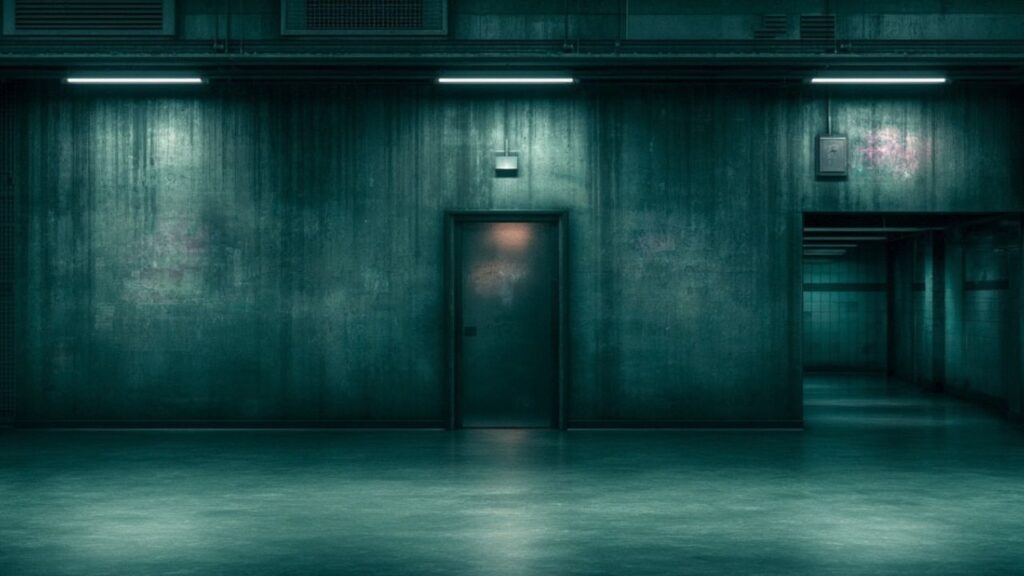
Ambient music creates another space inside the room

Return to the station with your headphones on.

The music brings its own distances. A piano may sound close while a sustained tone appears far behind it. A long reverberation may suggest an interior quite unlike the platform where you are standing.

You are experiencing a physical location alongside an imagined acoustic one.

That is a useful way to understand why ambient music can alter the character of an ordinary setting. A sparse arrangement might leave room for passing environmental sounds. A dense texture might make those details less noticeable. The recording supplies a mood and spatial impression that you carry into the scene.

The relationship also works in the other direction. A track heard at home can feel different when played in a public place, where announcements and movement become part of the encounter.

This is the companion question explored in Why Where You Listen Changes What Ambient Music Feels Like. The music influences the place you experience, and the place influences the music you notice.

The strange empty room is partly made of sound

Picture a Wartonno-style room: graphite walls, a muted teal window and one patch of amber light beneath a closed door.

Now give it three different sound arrangements.

In the first, there is soft airflow and occasional traffic beyond the glass. The room might feel connected to a sleeping city.

In the second, a dry mechanical click repeats at an uneven interval. You may begin wondering what is operating nearby.

In the third, one distant note lingers far longer than you expected. The room may begin to suggest a larger unseen interior.

These are sound-design interpretations, but they make the creative principle concrete. The image supplies visible boundaries. Sound can suggest what lies behind them, what is still active and how long the listener seems to have been waiting.

For this kind of ambient world-building, a useful starting point is a simple sentence: “You are alone in a place that is still running.”

From there, choose a continuous sound, an occasional event and a sense of distance. Each should help establish that situation. Adding more layers is useful only when they contribute something the scene needs.

The empty room becomes more specific when its sounds belong somewhere.
Why Sound Changes the Way We Experience a Place

A three-minute way to hear a familiar place again

Try this while seated or standing comfortably in a familiar room.

First minute: notice what continues. Listen for airflow, machinery, distant traffic or another steady layer. There is no need to identify every source.

Second minute: notice what arrives. A footstep, a passing car or a door may briefly change the balance. Listen to what remains after it ends.

Third minute: notice distance. Which sound seems nearest? Which seems to come from beyond the room? What are you inferring rather than directly knowing?

Then write one sentence about the place without describing its appearance.

Perhaps: “A small motor keeps starting behind the wall, and every passing car seems to pull the room toward the street.”

That sentence can become a field-recording idea, the opening of a story or the starting point for an ambient track. It can also remain a small observation you keep to yourself.

Questions about sound and our experience of places

Why can the same room feel different with different sounds?

Sounds provide clues about activity, distance and the surrounding space. They also carry associations. Changing the sounds can change your interpretation even when the visible room stays the same.

What is the difference between acoustics and a soundscape?

Acoustics concerns how sound behaves, including reflection and absorption. In this article, soundscape means the sonic environment as someone experiences it, including the sounds present and the context in which they are heard.

Why do empty places sometimes feel unsettling?

One possible reason is the gap between expected activity and what you encounter. A familiar public place without its usual voices or movement may feel unusual. Acoustic details can contribute, but unease is not an inevitable response.

Is an echo the same as reverberation?

No. An echo is heard as a separate repetition. Reverberation is the lingering sound formed by many overlapping reflections. Both can provide information about the surrounding environment.

How do field recordings contribute to ambient music?

They bring environmental textures and events into a composition. Their timing, distance and irregularities can help suggest a place. Recording and editing choices determine which details the listener encounters.

Can sound make a place feel calmer?

It can for some listeners in some settings. Familiar or welcome sounds may contribute to comfort, while the same sounds may distract someone else. There is no universal soundtrack for calm.

Later, you put the headphones away.

The station is still mostly empty. Air moves above the platform. Somewhere beyond the stairs, a door closes, and its sound stays for a moment after it has shut.

What part of this place had you been looking at without hearing?

Tags: acoustic perceptionambient musicfield recordingsliminal spacessound artSoundscapesTarek Atoui
Wartonno

Wartonno

Wartonno is a composer, creator, curator, narrator and worldbuilder working with cinematic cyberpunk ambient music, dark soundscapes and story-led creative projects. Through music, visual worldbuilding and editorial work, Wartonno explores digital exhaustion, artificial intelligence, future-noir cities, liminal spaces and the human presence inside technological systems.

Related Posts

Why Your Second Creative Life May Need Less Screen Time
AI Music & Listening Culture

Why Empty Places Feel Different at Night: The Psychology of Liminal Spaces

September 29, 2026
Why Empty Rooms Feel Alive
Dark Ambient & Lofi Music

Why Empty Rooms Feel Alive: The Psychology Behind Liminal Spaces and Ambient Music

April 17, 2026
The Liminal Lexicon
Dark Ambient & Lofi Music

The Liminal Lexicon: Ambient Soundscapes for Time, Memory, Silence and Perception

April 9, 2026
  • Trending
  • Comments
  • Latest
abandoned hospital hallway

Microfiction: Fifth Floor, East Wing

June 9, 2026
Dark Ambient Music for Overthinking at Night

Dark Ambient Music for Overthinking, Anxiety, and Nighttime Calm

March 10, 2026
Misty forest at dawn

Chrysalism — A Liminal Soundtrack for Stillness, Focus & Emotional Shelter

June 12, 2025
Backrooms Ambient Music Liminal Horror and Empty Room Sounds

Backrooms Ambient Music: Liminal Horror & Empty Room Sounds

June 25, 2026
Dark Ambient Music for Overthinking at Night

Dark Ambient Music for Overthinking, Anxiety, and Nighttime Calm

4
Backrooms-inspired liminal hallway and bedroom listening room representing dark ambient music, bedroom pop, and overthinking

From Backrooms to Bedroom Pop: Why Late-Night Music Is Becoming Emotional Architecture

4
Short Urban Fatasy Story The Negative Within

The Camera That Sees the Unseen: A Free Urban Fantasy Short Story You Won’t Forget

3
Meridian city cemetery purple

The Harvest of Faces – A Meridian City Short Story

3
Empty station concourse with concrete walls, a ventilation grille and an amber-lit doorway at night

Why Sound Changes the Way We Experience a Place

October 6, 2026
Are minimalism and ambient music the same

What Minimalism Gave Ambient Music: From Steve Reich to Brian Eno and Modern Soundscapes

October 6, 2026
Creative workspace with multiple projects and one project selected for focus

Too Many Creative Projects? A Simple System for Deciding What to Work On

October 2, 2026
Listener experiencing ambient music through speakers in a dark room at night

Why Where You Listen Changes What Ambient Music Feels Like

September 28, 2026

Dark Ambient Lofi Music: Soundtracks for Dreamers and Outsiders

Dark Ambient Spotify Playlists for Focus, Sleep, Reading & Liminal Reflection

Home

Privacy Policy

The Second Creative Life

Enter the Liminal Zone

Subscribe for rare ambient drops, dream-sound zines, and quiet moments worth drifting into.

Thank you!

You have successfully joined our subscriber list.

Dark Lofi Media Logo

DarkLofi is an independent editorial publication created by Wartonno. It explores ambient and alternative listening culture, AI music, AI-assisted creativity, independent creators and the Second Creative Life: returning to creative work later in life. DarkLofi is part of the wider Wartonno creative ecosystem, but it functions as an editorial publication rather than an artist identity.
About Wartonno →
Explore Wartonno Sound →

Follow Us

Browse by Category

  • Aely Lin
  • AI Music & Listening Culture
  • Behind the Visual
  • Character Files
  • Cults & Orders
  • Dark Ambient & Lofi Music
  • Dark Lofi Journal
  • Downloads & Exclusives
  • Independent Artists
  • Liminal Horror
  • Liminal Mindfulness
  • Liminal Thoughts
  • Microfiction
  • Music Downloads
  • Occult Mystery
  • Places of Power
  • Playlist Spotlights
  • Short Stories
  • Somnio Poetica
  • Sound & Silence
  • Sound Discoveries
  • Soundscape Explorations
  • Story Behind the Track
  • The Meridian Codex
  • The Second Creative Life
  • Timelines & Events
  • Track Descriptions
  • Urban Fantasy
  • Visuals & AI Art
  • Wallpapers & Art Prints
  • Wartonno Sound
  • Whispers

Recent News

Empty station concourse with concrete walls, a ventilation grille and an amber-lit doorway at night

Why Sound Changes the Way We Experience a Place

October 6, 2026
Are minimalism and ambient music the same

What Minimalism Gave Ambient Music: From Steve Reich to Brian Eno and Modern Soundscapes

October 6, 2026
Creative workspace with multiple projects and one project selected for focus

Too Many Creative Projects? A Simple System for Deciding What to Work On

October 2, 2026
  • About
  • Advertise
  • Privacy & Policy
  • Contact

© 2025 | Website made by Wartonno Art.

No Result
View All Result
  • Short Stories
  • Dark Ambient & Lofi Music
  • Dark Lofi Journal
  • Visuals & AI Art
  • Whispers
  • Downloads & Exclusives
  • The Meridian Codex

© 2025 | Website made by Wartonno Art.

This website uses cookies. By continuing to use this website you are giving consent to cookies being used. Visit our Privacy and Cookie Policy.