


























AI Is Becoming the New Listening Interface
Why AI music, ambient sound, and human creativity are entering a new phase
Artificial intelligence is moving beyond the screen.

For years, most people experienced AI through a chatbot window, a prompt box, a writing assistant, or an image generator. But the latest AI developments suggest something deeper is happening. AI is becoming part of devices, platforms, workflows, streaming culture, and the way people discover media.
For music creators, this matters.
Especially for artists working in dark ambient, cinematic ambient, lo-fi, cyberpunk soundscapes, sleep music, focus music, and fictional worldbuilding.
Because when AI moves beyond the screen, music may no longer be something people only search for by artist, album, or genre.
It may become something they ask for by mood, situation, memory, or atmosphere.
“Play something for overthinking at 3AM.”
“Give me music for reading cyberpunk.”
“Create a quiet room for sleep.”
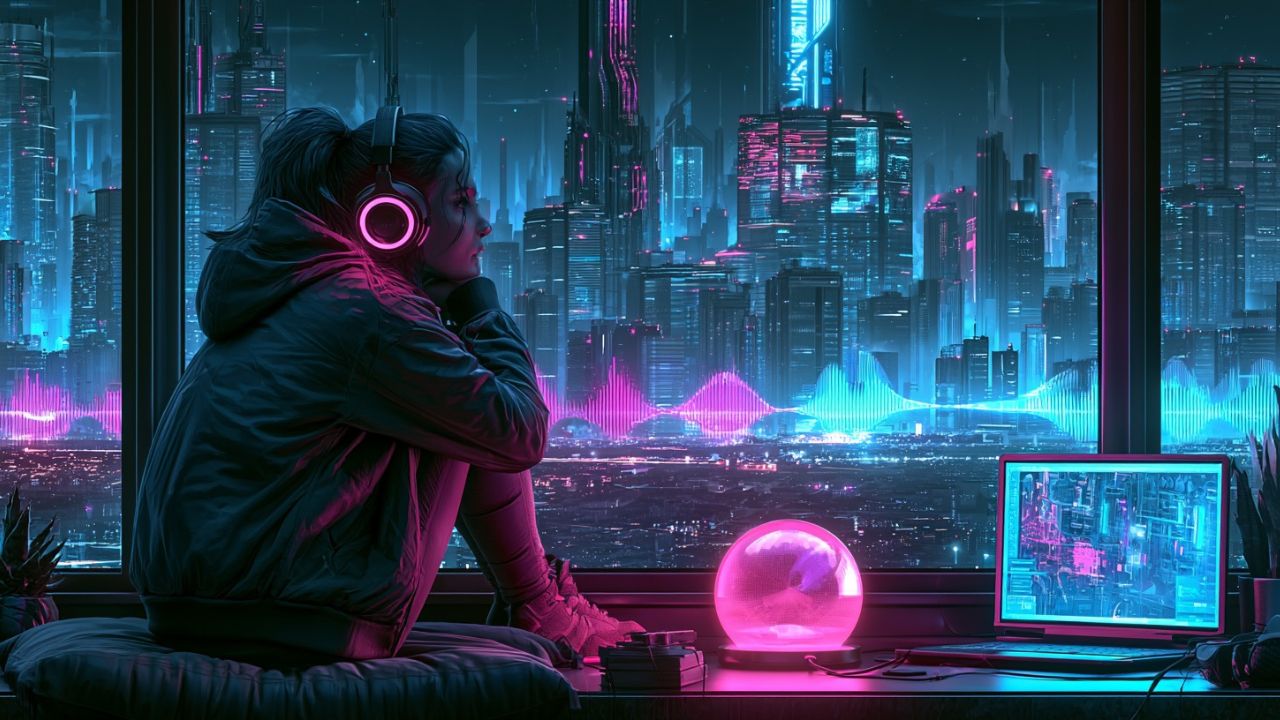
“Play something that feels like rain outside a forgotten city.”
This is where AI music and listening culture begin to merge.
From Chatbots to Ambient AI
One of the most interesting AI stories right now is the continued reporting around OpenAI’s first consumer hardware device, widely associated with its collaboration with former Apple designer Jony Ive. Recent reports describe a possible screen-light or screenless AI device focused on natural interaction, voice, sensors, and a more ambient form of computing.
Whether the final product becomes a speaker, companion device, or something else, the direction is important.
AI may become less like an app you open and more like a presence in the room.
That shift could change music discovery.
Instead of opening Spotify, YouTube, Apple Music, or SoundCloud and typing a genre, listeners may increasingly talk to AI systems that understand context:
- time of day,
- mood,
- task,
- location,
- listening history,
- emotional state,
- creative intent.
For dark ambient music, this is a major opportunity.
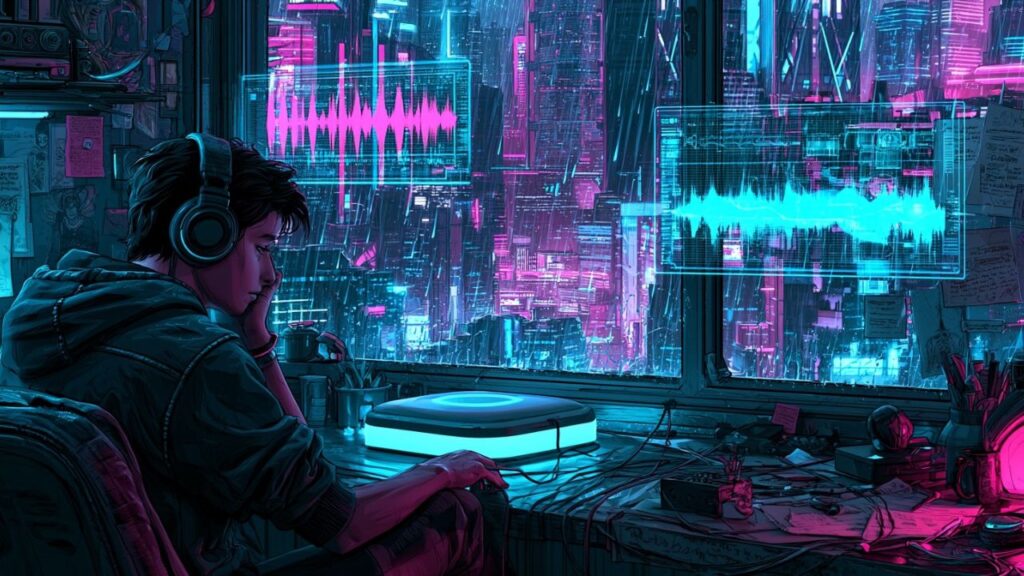
Dark ambient has always been contextual. It is music for late nights, liminal spaces, empty rooms, sleep, focus, anxiety, reading, loneliness, worldbuilding, and emotional processing.
In other words, dark ambient already behaves like an interface.
It creates a room around the listener.
AI Is Becoming Infrastructure, Not Just Software
Another major shift is that AI is no longer only about which model is smartest. The competition is increasingly about infrastructure: chips, devices, data centers, distribution, safety systems, labeling rules, and ecosystem control.
Nvidia’s own State of AI reporting shows that businesses are prioritizing AI workflow optimization and production-cycle improvements, which points to AI becoming embedded in everyday operations instead of remaining a novelty tool.
This matters for independent artists because tools will continue to become faster, cheaper, and more accessible.
When everyone has access to powerful AI tools, access itself stops being the advantage.
The advantage becomes:
- taste,
- direction,
- worldbuilding,
- emotional clarity,
- recognizable identity,
- trust.
That is where human-led music projects can still stand apart.
The Backlash Against “AI Slop” Is Really About Trust
The backlash against low-quality AI-generated content is growing. Business Insider recently reported that even real human creators are now being misclassified as AI-generated by platform systems, creating reputational risks because audiences increasingly associate AI labels with low trust or low authenticity.
This is the important part:
The problem is not simply that AI exists.
The problem is that people are becoming tired of disposable content.
Content with no clear author.
No intention.
No emotional center.
No accountability.
No reason to exist beyond filling a feed.
This applies directly to music.
AI-generated music can become disposable when it is created only to upload more tracks, chase streaming numbers, or flood platforms with anonymous sound.
But AI-assisted music can be different.
AI-assisted music can still have a human creator, a concept, a world, a mood, an emotional function, and a listener purpose.
That distinction will become more important as platforms, listeners, and regulators demand clearer transparency.
AI Labels Are Becoming Part of Listening Culture
In Europe, the AI Act’s transparency rules are becoming active. The European Commission explains that Article 50 applies from 2 August 2026 and includes transparency obligations for certain AI systems, including generative AI and deepfakes. Providers must inform people when they are interacting directly with AI systems and add machine-readable marks to help detect AI-generated or manipulated content.
This creates a cultural shift.
Labels will not only be legal tools.
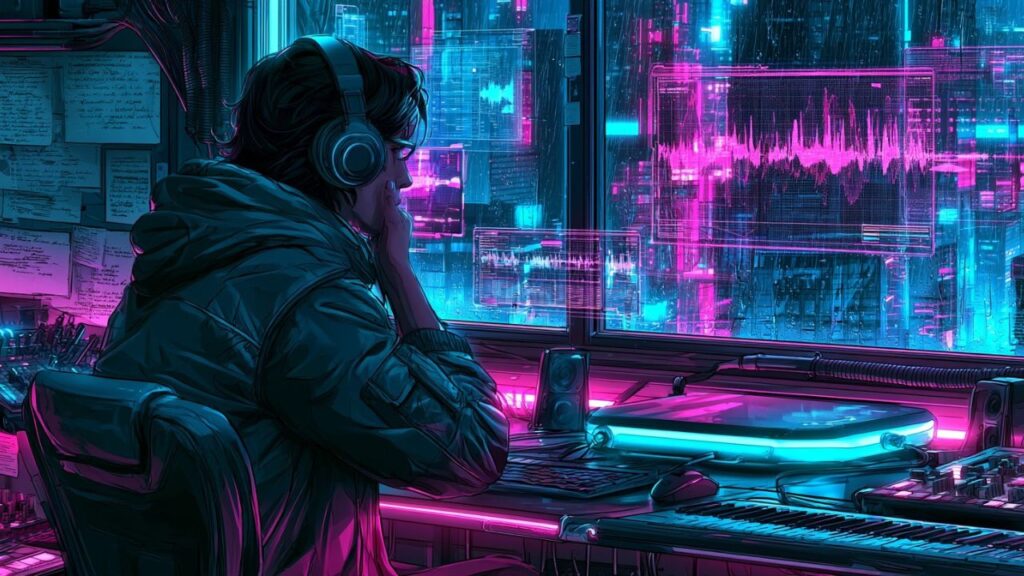
They will become signals of trust.
For music creators, the question becomes:
How do you make your creative process legible?
How do you show that AI is part of a human-led workflow, not a replacement for authorship?
For Dark Lofi, Wartonno Sound, Meridian City, Aely Lin, and SOMNII, this matters because the value is not only the audio file.
The value is the creative world around it.
Why Human Direction Matters More Than Ever
AI can generate music.
But it cannot automatically decide why the music should exist.
That remains the role of the creator.
Human direction answers questions that matter:
What emotion is this track built for?
What world does it belong to?
Is it for sleep, focus, reading, grief, nostalgia, anxiety, or escape?
Does it continue a fictional archive?
Does it belong to Meridian City?
Is it part of The Quiet Archive?
Does it serve the listener at a specific moment?
This is why dark ambient and cinematic music are well positioned for the AI era.
They are not only genre-based. They are use-case based.
A track called Overthinking at 3AM immediately tells the listener what emotional room they are entering.
A series like The Lost Tapes suggests mystery, continuity, and fictional discovery.
A world like Meridian City gives the music a narrative place to live.
That is harder to replace than a generic generated track.
AI Agents, Autonomy, and the Future of Creative Systems
The conversation around AI is also shifting toward autonomous agents: systems that do not only answer questions, but perform tasks, coordinate workflows, and interact with other systems.
A recent academic paper on agentic AI argues that the next phase of AI may look less like one single “superintelligence” and more like networks of specialized human-AI and AI-AI systems working together.
For music creators, this could eventually mean AI systems that help with:
- playlist strategy,
- release planning,
- visual concepts,
- metadata,
- caption ideas,
- listener research,
- sound design drafts,
- remix sketches,
- long-form ambient variations,
- audience-specific listening journeys.
But again, the deciding factor is not automation.
The deciding factor is direction.
The creator still needs to decide what the system is building toward.
What This Means for DarkLofi.com
DarkLofi.com should not only be a place for tracks.
It should become a listening culture archive.
A place where music is connected to:
- sleep,
- focus,
- overthinking,
- liminal spaces,
- fictional worlds,
- cyberpunk cities,
- AI-assisted creativity,
- dark ambient rituals,
- human-led storytelling.
That is the strongest position in the AI music era.
Not “here is another AI-generated track.”
But:
Here is a world.
Here is a mood.
Here is a room.
Here is a ritual.
Here is a story you can listen to.

The Future of AI Music Is Not More Noise
The easiest path with AI is volume.
More tracks.
More posts.
More images.
More uploads.
More automated content.
But volume is not the same as meaning.
The future of AI music will not belong only to the people who can generate the most material. It will belong to the creators who can build trust, atmosphere, identity, and emotional continuity.
That is why human-led creative direction matters.
AI may become the new listening interface.
But the artist still builds the world the listener wants to enter.
For Dark Lofi, the goal is not to make music feel automated.
The goal is to make music feel inhabited.
Not more noise.
More worlds.
FAQ
What is AI music listening culture?
AI music listening culture describes how artificial intelligence changes the way people discover, request, organize, and experience music. Instead of searching only by artist or genre, listeners may increasingly ask AI systems for music based on mood, context, task, or emotional state.
What is AI-assisted music?
AI-assisted music is music where AI tools support the creative process, while the human creator remains responsible for concept, direction, editing, atmosphere, storytelling, and final artistic identity.
Why does AI moving beyond screens matter for music?
If AI becomes part of devices, speakers, wearables, cars, and home environments, music discovery may become more conversational and contextual. Listeners may ask for music for specific moments, such as sleep, focus, reading, anxiety, or late-night reflection.
Why is dark ambient music well suited to AI-era discovery?
Dark ambient music is strongly connected to mood and atmosphere. It is often used for sleep, focus, reading, liminal spaces, emotional reset, and cinematic worldbuilding. These listening intentions fit naturally with AI-powered recommendation and discovery systems.
How does Dark Lofi approach AI music?
Dark Lofi treats AI as a creative tool, not as a replacement for human direction. The focus remains on dark ambient music, cinematic atmosphere, fictional archives, emotional storytelling, and worlds such as Wartonno Sound, Meridian City, Aely Lin, and SOMNII.

















Comments 2