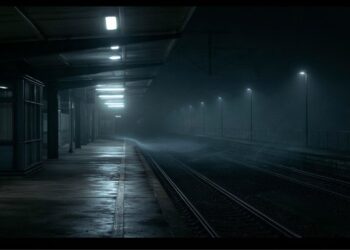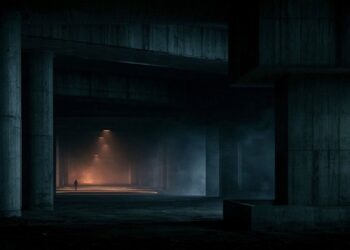



























You put on an ambient track late at night. A low tone fills the room. Four piano notes return, then return again. Somewhere behind them, a thin layer of sound becomes a little brighter.

There is no chorus approaching. No obvious destination.
Yet you keep listening.
Why does music that changes so little hold our attention?
Part of the answer lies in minimalism. By keeping certain elements steady, a composer can make small differences feel significant. A shift in timing becomes an event. A new overtone changes the colour of a sustained note. A familiar pattern begins to feel unfamiliar.
Minimalism helped ambient music develop a language of repetition, sustained sound and gradual change. Ambient music used that language to explore atmosphere, space and different levels of attention. The two overlap, but they are not interchangeable.
Steve Reich’s 90th birthday on October 3, 2026 offers a timely reason to revisit that relationship. In its October 4 explainer, ABC Classic traced minimalism’s influence through ambient, electronic music and film scoring. The more lasting question is what those ideas allow us to hear now.
What is minimalism in music?
Musical minimalism is a broad movement associated with composers including La Monte Young, Terry Riley, Steve Reich and Philip Glass. Many works use a limited set of materials: a recurring phrase, a steady pulse, a sustained tone or a slowly changing harmony.
Limited material can produce a surprisingly rich experience. Repetition gives relationships between sounds time to become audible. What seems simple at first may reveal several overlapping patterns.
Minimalism also has more than one character. It can be rhythmic and physically demanding. It can be spacious and nearly motionless. It can become bright, restless, tender or severe.
The label describes a range of musical approaches. It does not promise a particular mood.
Nor did these composers invent repetition or the drone. ABC’s account acknowledges influences including jazz and Indian classical music. That wider context matters. The familiar Western story of minimalism is one part of a much larger history of people making music through cycles, sustained tones and close listening.
Steve Reich: when repetition creates movement
Reich’s Piano Phase offers a clear way into the subject.
In his composer’s notes for the 1967 work, Reich describes two musicians repeating the same pattern together. One maintains the tempo. The other gradually speeds up until the pattern moves ahead. The process continues through different alignments until the players meet again.
This is phase shifting.
Imagine two identical lines printed on transparent sheets. Slide one sheet slightly, and their combined shape changes. The original material remains familiar, but its relationship with itself becomes new.
For the listener, repetition provides the reference point. Without that returning pattern, the changing alignment would be much harder to follow.
This offers a useful way to hear an atmospheric track. When a repeated figure stays present, you can notice what happens around it. A second layer arrives. An echo falls somewhere unexpected. A note that seemed secondary becomes the centre of your attention.
These are related listening experiences, even when a contemporary producer is not using Reich’s specific technique.

Minimalism can pulse, breathe and feel alive
Reich’s Music for 18 Musicians, completed in 1976, expands the picture.
His notes on the composition describe two kinds of time working together: the regular pulse of pianos and mallet instruments, and phrases shaped by the breathing of singers and wind players. A cycle of eleven chords provides the larger structure.
That combination matters. A repeating pulse can coexist with human variation. The music’s framework gives its changing details somewhere to move.
For an ambient listener, this helps explain why a pulse need not destroy a sense of space. A soft recurring sound can mark time while the surrounding texture remains open.
Think of a distant mechanical knock in a soundscape. At first it establishes a rhythm. After a while, you may hear it as part of the imagined building. Its timing holds the scene together.
That possibility connects with Dark Ambient Is Escaping the Drone: Why Rhythm Is Entering Atmospheric Music. Rhythm can help establish a place, a pressure or a sense of waiting.
The drone offers another route into minimalism
Reich’s shifting patterns are only one route toward atmospheric listening.
La Monte Young and Marian Zazeela’s Dream House offers another. The MELA Foundation describes their collaborative installation as an environment of continuous sound and light. Sustained frequencies become something a visitor spends time within.
This connection is especially useful when thinking about drone music. A sound can continue long enough for its internal character, and its relationship with a room, to become the focus.
With a drone, the listening question changes. You may pay attention to roughness, brightness, apparent distance or the way two tones seem to press against each other.
The music does not need a busy surface to offer detail.
This also complicates the idea that ambient music simply runs in a straight line from Reich to Eno. Pulsed minimalism, sustained-tone experiments and environmental listening offer different points of contact. A single family tree would leave too much out.
Brian Eno and music that leaves room for the listener
Brian Eno helped give ambient music a clear statement of purpose.
In his September 1978 notes for Ambient 1: Music for Airports, he described music that could accommodate different degrees of attention. His compact phrase remains useful: “as ignorable as it is interesting.” The liner notes, reproduced here, also make room for uncertainty and for the particular character of an environment.
That idea gives the listener considerable freedom. You can follow the music closely. You can let it recede while you read. You can return to it without feeling that you missed the event everything depended on.
ABC’s explainer describes how Music for Airports uses tape loops of different lengths. Their recurring sounds form changing combinations, giving familiar material a shifting context.
The connection to minimalism is audible in the use of repetition and constrained material. Eno’s stated purpose adds another dimension: how music can inhabit everyday space and coexist with the person hearing it.
That remains relevant when listening through headphones on a train, beside a window or in an apartment after midnight. For the environmental side of that experience, see Why Where You Listen Changes What Ambient Music Feels Like.
Why slow change can hold your attention
One useful listening explanation is that repetition establishes a baseline. Once you recognise what keeps returning, differences become easier to compare.
Imagine a four-note phrase playing over a sustained chord. For a minute, both remain steady. Then the lowest note of the chord moves.
The phrase has stayed the same. Its emotional setting has changed.
Or imagine a drone gradually becoming brighter. You might struggle to identify the exact moment of change. Only when you compare the present sound with your memory of the opening do you realise how far it has travelled.
These examples illustrate three ways restrained music can stay engaging:
- A stable pattern makes a small alteration noticeable.
- Unchanging notes can take on new meaning when their surroundings change.
- Your attention can move between layers even when the arrangement stays steady.
This is a way of describing the listening experience, rather than a universal psychological rule. A passage that absorbs one person may leave another impatient.
There is also a difference between subtle development and a loop that has simply been extended. Duration alone does not create depth. The details need to reward the time you give them.
That is a useful question to carry into Why Long-Form Ambient Is Making a Comeback: what becomes possible when a piece has room to unfold?

What dark ambient does with restraint
In dark ambient, a small amount of material can suggest a place that feels much larger than the recording.
Consider an imagined arrangement: a low drone, a faint metallic sound and a long reverberation. Each element has a clear role. The drone establishes continuity. The metallic sound suggests an object or activity. The reverberation gives a sense of distance.
Repeat that metallic sound regularly and it may resemble machinery. Let its return become uncertain and the same scene may feel less secure.
The difference is small. Its effect on the imagined space can be substantial.
This is an application of restraint, rather than evidence that every dark ambient artist directly follows minimalist composition. A sparse track can share a technique with minimalism without belonging to that movement.
Repetition can also support very different emotions. A returning tone might feel dependable. It might feel trapped. A sustained sound might offer shelter or suggest something that will not leave.
The arrangement, sound quality and listening context all contribute. Minimal means do not determine the emotional result.
That openness helps explain the connection with Ambient Music Is Becoming Emotional World-Building. A few carefully placed sounds can leave enough space for you to imagine the room around them.
From repeated patterns to cinematic soundscapes
ABC identifies film music by composers such as Max Richter and Hans Zimmer as another place to hear minimalism’s influence.
As a listening lens, consider what a repeated figure can do beneath an image. A small pattern may provide continuity while lighting, movement and dialogue change around it. Add layers or increase intensity, and the same figure can carry growing pressure.
In an ambient soundscape without pictures, those changes can suggest their own scene. A pulse moves closer. A high tone enters above it. A low layer disappears, leaving the remaining sounds suddenly exposed.
You may imagine a door opening even though no door sound is present.
This is the practical value of restraint for atmospheric composition. With fewer elements competing for attention, each entrance and departure can carry more weight.
A small listening exercise
Choose a slowly changing track you already know. Give it five minutes at a comfortable volume.
- Find one stable element: a drone, pulse or short phrase.
- Listen around it. Notice changes in brightness, depth, spacing or texture.
- Shift your attention to the quietest audible layer.
- Return briefly to the opening and compare it with the passage you reached.
You do not need to name a chord or identify a production technique. The point is to notice how much can happen inside a limited set of sounds.
You may also discover that very little changed in the recording. Your attention moved instead. That is still part of the experience.

Questions about minimalism and ambient music
Are minimalism and ambient music the same?
No. Minimalism is a compositional movement and a set of approaches associated with repetition, sustained tones and limited material. Ambient music foregrounds atmosphere and the listening environment. A work can share features of both.
Is all repetitive music minimalist?
No. Repetition appears across many musical traditions and genres. A recurring beat or chorus alone does not make a piece part of the minimalist movement.
What did Steve Reich contribute to this relationship?
Reich’s phase-shifting works demonstrate how repeated patterns can generate changing relationships. They provide a clear example of movement emerging from familiar material, an idea useful for understanding many atmospheric listening experiences.
Does ambient music need a beat?
No. It can use sustained textures without an obvious beat. It can also include recurring pulses or rhythmic figures that contribute to its atmosphere.
Why can repetitive ambient music feel calming or unsettling?
A recurring sound can suggest stability, but it can also suggest confinement or unresolved waiting. Its emotional effect depends on the sound, arrangement, context and listener. Repetition has no single guaranteed effect.
The next time a track seems almost still, perhaps give one quiet detail a little longer.
The note returns. Its echo reaches farther into the room.
What are you hearing now that you missed the first time?