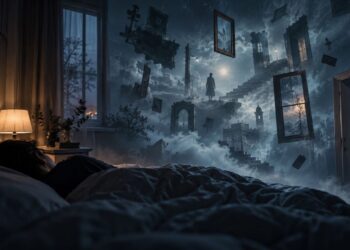

























There is a quiet change happening in music.
Not the loud kind of change that arrives with a new genre name, a viral dance, or a sudden wave of glossy pop stars. This change is softer. More private. More nocturnal.
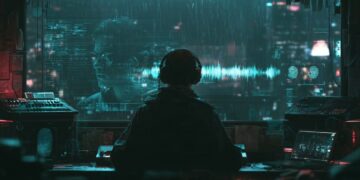
It is happening in playlists for studying, headphones worn at night, bedrooms lit by laptop screens, slow walks through empty streets, and moments when people do not want silence but also do not want noise.
More listeners are no longer searching only for genres. They are searching for states.
Music for focus.
Music for sleep.
Music for overthinking.
Music for loneliness.
Music for emotional reset.
Music for when the room feels too quiet.
This is where ambient music and bedroom pop begin to meet.
On the surface, they may seem different. Ambient music often moves through texture, space, drone, repetition, and atmosphere. Bedroom pop usually feels closer to the body: soft vocals, DIY production, intimate lyrics, and the feeling of someone recording from inside their own life.
But underneath, both are becoming part of the same emotional future.
They are becoming music for inner weather.
Ambient Music Is Becoming Emotional Architecture
Ambient music has always been connected to space. It can make a room feel wider, colder, warmer, stranger, or safer. A single drone can change how silence feels. A distant piano note can turn an empty room into a memory.
Recent ambient coverage continues to show how wide and serious this world has become. Bandcamp Daily’s ambient column treats ambient as a broad, evolving field, with May 2026 releases moving through themes like travel, creative block, desert imagery, and other reflective states. The column’s archive also shows that ambient is covered monthly as an active, ongoing listening culture rather than a niche afterthought.
That matters.
It means ambient music is no longer just “background music” for people who do not want vocals. It is being treated as music for thinking, processing, drifting, and feeling. Ambient has become a form of emotional architecture: sound that builds a temporary inner room for the listener.
This is especially true for dark ambient and liminal soundscapes.
Dark ambient does not always comfort in a bright or obvious way. Sometimes it comforts by admitting that the room is strange. That the mind is tired. That silence can feel heavy. That some emotions do not need to be solved immediately.
Instead of saying, “Everything is fine,” dark ambient often says:
Stay here for a while.
Let the feeling exist.
You do not have to explain it yet.
That is why it fits so naturally with late-night listening, writing, focus, overthinking, and emotional decompression.
It gives shape to feelings that are too vague for ordinary language.
Bedroom Pop Is Still Powerful Because It Feels Close
Bedroom pop arrives from a different direction, but it often reaches the same emotional place.
Its strength is intimacy.
Bedroom pop sounds human because it often carries traces of the room it came from. The vocal may feel close. The production may feel imperfect. The song may not sound like it was built for a stadium. It may sound like it was made because the artist had to put a feeling somewhere.
That is the point.
Bedroom pop works because it reduces distance between artist and listener. Even when the production becomes more polished, the emotional center remains small, private, and direct.
Playlist culture around bedroom pop still reflects this. Bedroom pop is often grouped with lo-fi indie, dream pop, alt-pop, soft indie, and DIY emotional music. Album of the Year’s 2026 bedroom pop page also shows a range of artists and releases in the space, including Holly Humberstone, Alice Costelloe, Arlo Parks, and waterbaby. This suggests that bedroom pop is not frozen in one sound. It is a flexible emotional language.
It can be lo-fi or polished.
Minimal or cinematic.
Soft or shadowed.
Indie or alt-pop.
What connects it is not always production quality. It is emotional proximity.
This is why bedroom pop fits so well inside the DarkLofi.com world. It is not only about soft songs from bedrooms. It is about music that feels personal, atmospheric, and close enough to hear someone thinking.
A good example is SOMNii’s “The Room Stays Awake”, which carries the intimacy of bedroom pop while leaning into a darker, nocturnal atmosphere. It feels connected to the same emotional landscape as ambient music: quiet rooms, unresolved thoughts, and the strange awareness that comes when the world outside has gone still.
Read more about SOMNii.
The New Center Is Mood, Not Genre
The most important shift is this: listeners are increasingly entering music through mood and use-case.
They may not search for “dark ambient drone with cinematic lofi textures.”
They search for:
music for writing
music for overthinking
music for sleep
music for focus
music for a rainy night
music for feeling alone
music for quiet rooms
music for emotional reset
This changes how we should understand genres like ambient and bedroom pop.
They are no longer only musical categories. They are emotional tools.
Ambient gives listeners space.
Bedroom pop gives listeners closeness.
Together, they answer one of the biggest needs in modern listening culture: the need for music that does not overwhelm but still feels meaningful.
That is why the overlap between dark ambient, bedroom pop, slowcore, dream pop, lofi, and liminal music feels so natural. These styles all live in the in-between. They are not always made for dancing, shouting, or escaping completely. They are often made for staying with a feeling long enough to understand it.
This also explains why short-form content works so well for this kind of music.
A ten-second loop can become a doorway into a full song. One soft chord, one lonely room, one whispered phrase, or one line of text can create instant recognition.
“You ever miss a place that never existed?”
“A sound for when your mind will not stop.”
“Music for the room after everyone leaves.”
These are not just captions. They are emotional entry points.
For atmospheric artists, this is powerful. A track does not always need a traditional hook. It needs a moment that lets the listener recognize themselves.
Why This Matters for DarkLofi.com
This is why dark ambient, bedroom pop, and lofi belong together on a site like DarkLofi.com.
They may come from different scenes, but they share a deeper function. They help listeners enter, hold, and move through emotional states.
Dark ambient offers the shadowed room.
Bedroom pop offers the human voice inside it.
Lofi offers warmth, imperfection, and repeatability.
Together, they form a listening culture built around emotional atmosphere.
This is not passive background music. It is music for people who think too much, feel deeply, work late, write at night, or need a soundtrack for the quiet parts of life.
The future of this world will probably not be defined by one genre name. It will be defined by emotional use.
Music for focus.
Music for grief.
Music for insomnia.
Music for soft escape.
Music for strange calm.
Music for the self you become after midnight.
That is where ambient and bedroom pop are moving.
Not toward the same sound exactly, but toward the same listener need.
Listen Further
For listeners drawn to dark ambient, liminal soundscapes, bedroom-pop intimacy, and music for focus, overthinking, sleep, and quiet reflection, explore Wartonno Sound.
Full catalog on Spotify, Apple, SoundCloud, YouTube, Deezer, Tidal and more.
Also read:
SOMNii – The Room Stays Awake