










Mara’s Theme The Negative Within OST
There are characters who arrive through dialogue.

There are characters who arrive through action.
And then there are characters who arrive as a sound.
Mara’s Theme (I) is the first piece from The Negative Within – Original Soundtrack, composed by Somnio Poetica for the dark urban fantasy world of Meridian City. It is not meant to feel like a normal song announcement. It is closer to a doorway. A small cinematic threshold. A place where the listener can step into Mara Chen’s inner world before the story fully opens.
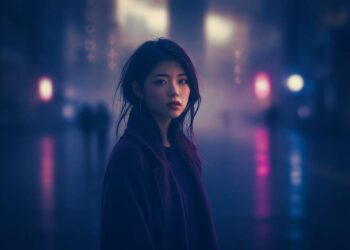
Mara is not a hero who walks into darkness with certainty. She is a photographer. A watcher. Someone trained to notice small things: the angle of light in an abandoned storefront, the pause between footsteps, the quiet violence of a face caught at the wrong moment. Her camera does not only preserve memory. In The Negative Within, it begins to reveal what should have remained unseen.
That is where this piece begins.
Not with a scream.
With a frame.
With a held breath.
With the feeling that something has appeared in the photograph that was not standing there when the shutter clicked.
A theme for Mara Chen
Every major character needs a sound that tells the truth before the plot explains it.
For Mara Chen, that sound cannot be heroic in the traditional way. It cannot be too clean, too triumphant, or too certain. Mara’s world is made of half-light, exhaustion, creative obsession, micro-sleep, and the strange intimacy of old photographic processes. She lives close to images. Close to silence. Close to the places where memory and nightmare begin to overlap.
Mara’s Theme (I) was created to carry that feeling.
The piece belongs to the emotional weather of The Negative Within: a story about art, perception, hidden supernatural patterns, and the dangerous border between waking and dreaming. Mara photographs what should not exist, and gradually the act of seeing becomes less like observation and more like invitation.
This is why her theme needs space.
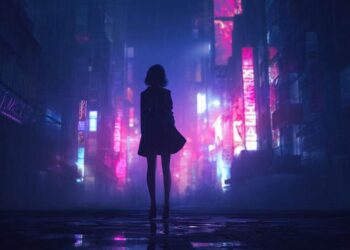
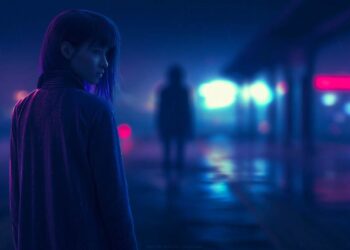
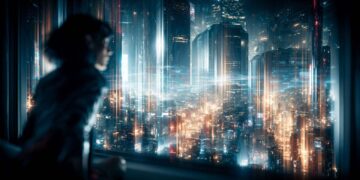
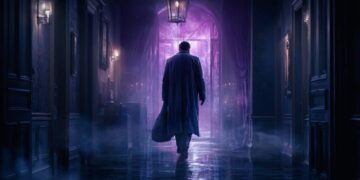
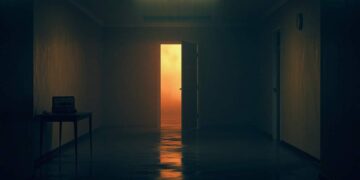
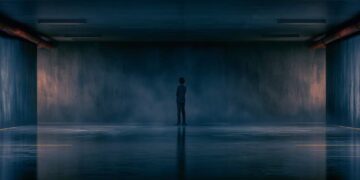
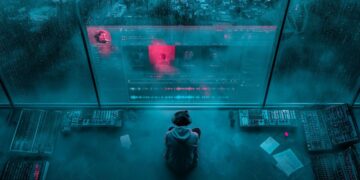
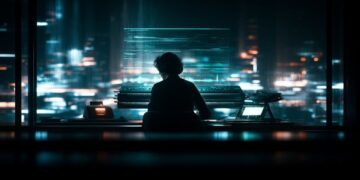
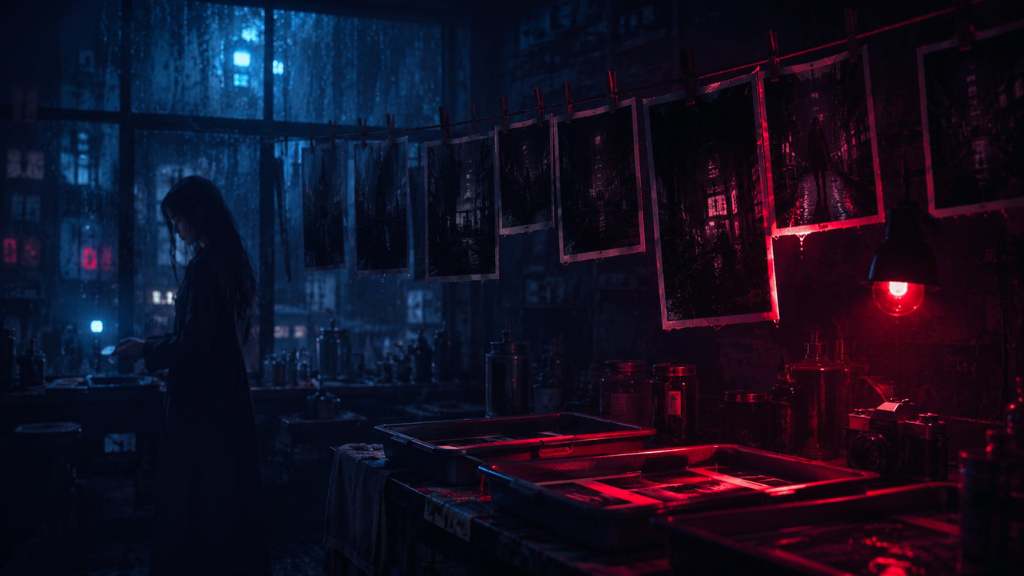
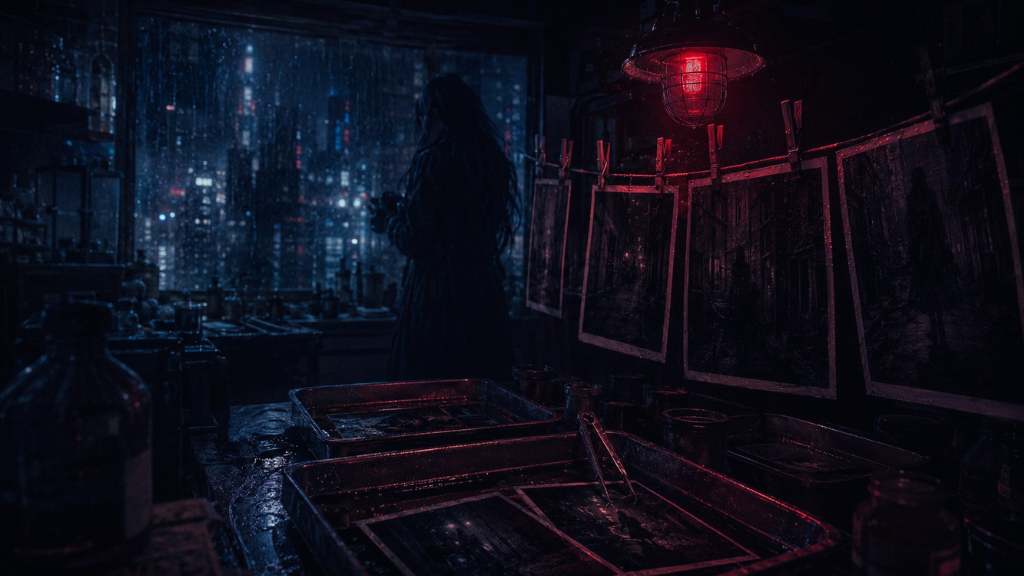
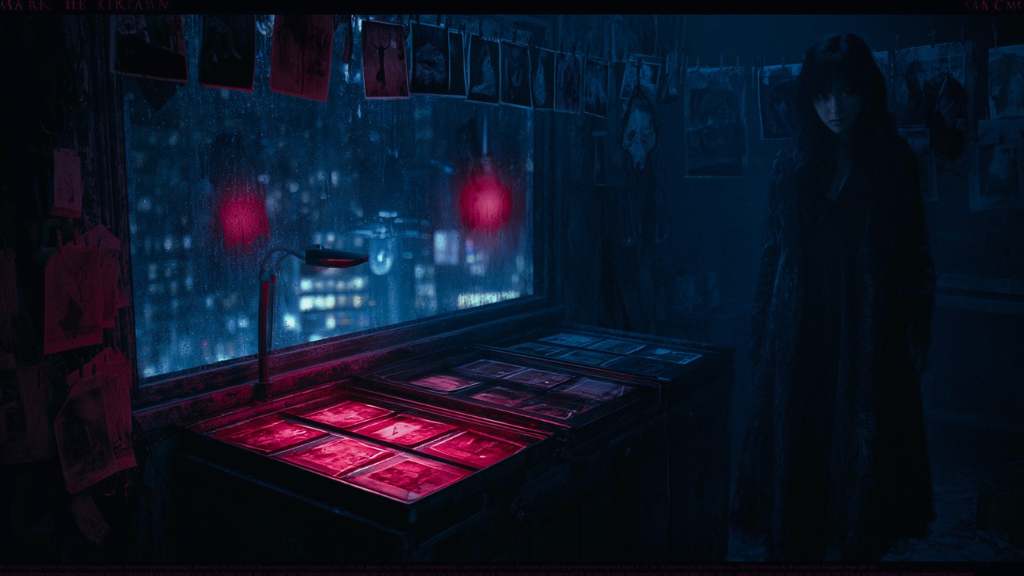
It should feel like walking alone through Meridian City at night, with a camera strap against your shoulder and the sense that every window has become an eye. It should feel like a darkroom lit by red light, where the photograph in the tray develops too slowly, then too clearly. It should feel like the moment before recognition.
That is the emotional purpose of the track.
It gives Mara a sound before it gives her an answer.
The sound of Meridian City
Meridian City is not just a setting. It is a pressure system.
It presses against the characters. It distorts their thoughts. It turns memory into architecture and architecture into omen. In this universe, streets do not simply lead somewhere. They remember. Rooms do not simply contain people. They hold residues. The city is modern, but it is haunted by older patterns: occult signals, impossible rituals, hidden archives, and the fragile places where human grief becomes a door.
Somnio Poetica exists inside that atmosphere.
Where Wartonno Sound often offers liminal ambient music for focus, night listening, and inner stillness, Somnio Poetica moves closer to the fictional bloodstream of Meridian City. It is soundtrack work. Character work. Music made not only for listening, but for entering a story.
Mara’s Theme (I) is one of those entrances.
It does not try to explain Meridian City. It lets you feel it.
The track is useful as a companion while reading The Negative Within, but it also stands alone as dark urban fantasy ambience: cinematic, shadowed, and intimate. It belongs to readers who like their fantasy close to the ground — rain on pavement, old cameras, tired apartments, strange rooms, and the feeling that reality has a hairline crack running through it.
Why this soundtrack matters for the story
A book soundtrack can do something subtle.
It can create a second memory of the story.
When you read a short story in silence, the images live inside your own rhythm. But when you read with the right music underneath, the story gains another layer. Not louder. Not more dramatic. Just deeper. The right piece of music can slow the mind enough for atmosphere to settle. It can make a paragraph feel more physical. It can make a room feel colder. It can make a character’s fear feel less like information and more like presence.
That is the role of Mara’s Theme (I).
It is not background music in the disposable sense. It is not there to fill silence. It is there to shape silence.
For The Negative Within, this matters because the story itself is built around perception. Mara’s danger begins with what she sees, what she fails to see, and what appears only after the image has been captured. Photography becomes more than a profession or artistic practice. It becomes a supernatural interface.
The soundtrack mirrors that idea.
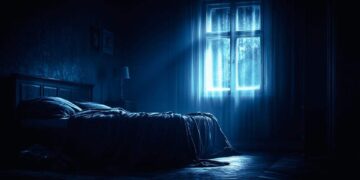
It gives the listener the feeling of something emerging slowly from the dark. It creates a space where the ordinary begins to feel unstable. And because the theme is focused on Mara herself, it does not only describe the horror around her. It listens to the horror inside her.
Listen while reading The Negative Within
The best way to experience Mara’s Theme (I) is simple:
play the video softly while reading The Negative Within.
Let it sit behind the words.
Do not make it too loud. This is not music that should dominate the story. It should move like low light across the page. It should become the room around the text.
This works especially well if you are reading at night, during a quiet hour, or in the space between other tasks when the mind is still carrying too much noise. The Negative Within is a dark urban fantasy short story, but it is also a story about inner pressure — creative trauma, exhaustion, obsession, and the frightening moment when the thing you use to understand the world begins to answer back.
Mara’s camera gives her a way to frame reality.
Then reality begins to frame her.
That is the kind of story that benefits from a soundtrack.
Not because the music tells you what to feel, but because it gives your attention somewhere shadowed and steady to rest.
Good for listening while…
Mara’s Theme (I) is especially suited for:
- reading The Negative Within
- reading other short stories from the Meridian City universe
- writing dark urban fantasy, occult mystery, or psychological horror
- building character mood boards
- journaling at night
- quiet creative work
- cinematic focus sessions
- worldbuilding sessions for writers, game masters, and visual artists
- slow reading when you want atmosphere without distraction
It may also work well as a low-volume companion for readers who enjoy dark ambient music, book soundtracks, liminal soundscapes, and cinematic fantasy ambience.
The most important use case, however, is the story itself.
This is Mara’s piece.
It belongs beside her.
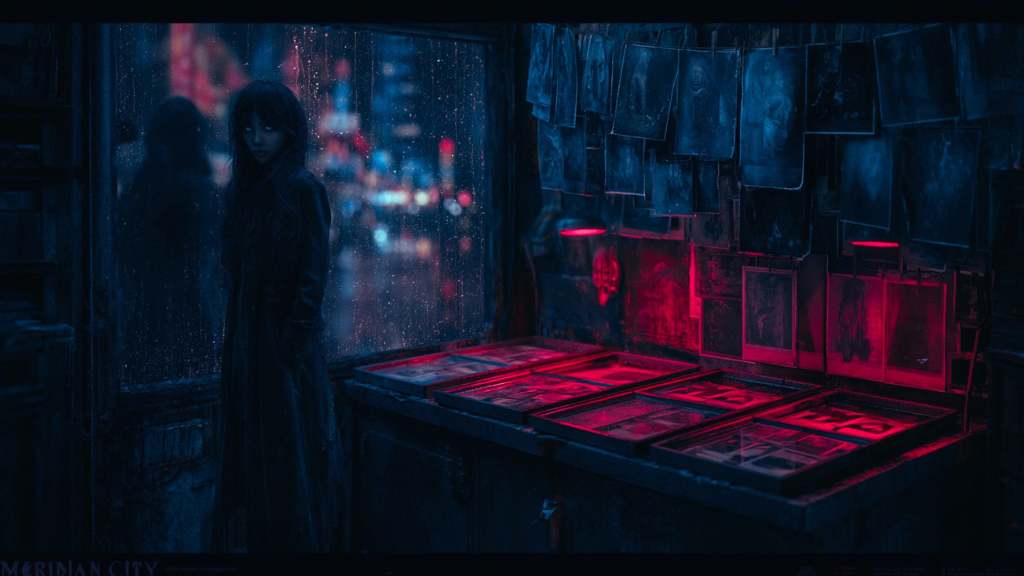
The connection between Mara, photography, and sound
Mara Chen is a visual character. Her world is made of frames, negatives, contact sheets, chemical baths, light leaks, and the strange patience of analog photography. But sound reveals something image cannot.
Sound reveals duration.
A photograph captures a single moment. Music stretches that moment until you can feel what was hidden inside it.
That is why a soundtrack for Mara makes sense.
Her story is full of images, but her fear lives in time. The seconds before a photograph develops. The gap between waking and micro-sleep. The silence after she realizes a face in a picture has become a real death. The delay between seeing something impossible and admitting that it has seen her too.
Mara’s Theme (I) gives those delays a shape.
It is a theme for the slow arrival of dread.
A theme for the artist who begins to suspect that her gift is not only a gift.
A theme for the darkroom as sanctuary, and then as threshold.
About Somnio Poetica
Somnio Poetica is the soundtrack identity connected to the Meridian City universe: a place for dark cinematic pieces, character themes, occult ambience, and dreamlike music shaped around stories.
For this project, music is not separate from fiction. It is part of the same architecture.
A short story can become a soundtrack.
A character can become a theme.
A city can become a frequency.
With Mara’s Theme (I), Somnio Poetica begins close to the emotional core of The Negative Within. It starts with Mara Chen because Mara is one of the clearest doorways into Meridian City: human, wounded, artistic, observant, and already standing too close to something that wants to be seen.
This is not fantasy music in the bright, orchestral sense.
It is urban fantasy as a private haunting.
The kind that happens in rented rooms, old streets, wet alleys, and photographs you wish you had never taken.
Watch the video
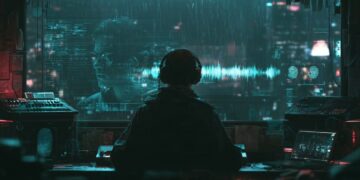
To enter the atmosphere fully, watch the visualizer for Mara’s Theme (I) on YouTube.
Place it beside the story like a dim lamp.
Let the sound open the darkroom door.
Watch: Mara’s Theme (I) | The Negative Within OST | Dark Urban Fantasy Soundtrack
A theme for the photographer who saw too much. Listen, then read the story.
Read the free short story
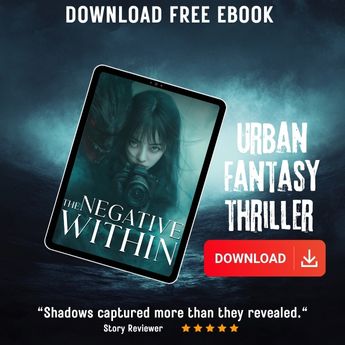
Mara’s Theme (I) was created as a companion to The Negative Within, a free Meridian City short story by Wartonno Vale.
In the story, Mara Chen photographs what should not exist. Her developed film begins to reveal impossible figures, hidden faces, and patterns that lead her toward something far more personal than a haunting. It is a dark urban fantasy occult thriller about photography, sleep, creative trauma, and the dangerous magic between perception and reality.
Read the story here:
Read The Negative Within for free
A note before publishing: make sure the giveaway is active again, because the current StoryOrigin page says it is unavailable.
Closing reflection
Some characters ask to be understood.
Mara Chen asks to be watched carefully.
Not because she is performing, but because the world around her is beginning to change in ways even she cannot fully explain. Her camera catches fragments. Her darkroom becomes a threshold. Her exhaustion opens a door. And somewhere inside that door, something waits for focus.
Mara’s Theme (I) is the sound of that first focus.
The beginning of a soundtrack.
The beginning of a haunting.
The moment the image appears in the tray, and you realize it has been looking back all along.