



• About
  • Advertise
  • Privacy & Policy
  • Contact
Soundscapes and Stories | Dark Lofi Media
  • Start Here!
  • Dark Ambient & Lofi Music
    • All
    • Playlist Spotlights
    • Soundscape Explorations
    • Track Descriptions
    • Wartonno Sound
    Field recordings visualized as sound waves inside an empty nighttime railway station

    When the Real World Enters the Music: Why Field Recordings Are Returning to Ambient

    Dark ambient environment with repeating light pulses representing rhythm in atmospheric music

    Dark Ambient Is Escaping the Drone: Why Rhythm Is Entering Atmospheric Music

    dark-ambient-with-vocals-human-voice

    Dark Ambient With Vocals: Why the Human Voice Is Returning | DarkLofi

    Ambient Music Is Becoming Emotional World-Building

    Ambient Music Is Becoming Emotional World-Building

    Long-form ambient music visualized as a dark room opening into a neon future-noir city for sleep

    Why Long-Form Ambient Is Making a Comeback | Dark Ambient & Bedroom Pop

    Dark ambient cyberpunk studio at night representing late-night music, emotional worldbuilding, Wartonno, Wartonno Sound, and SOMNII

    Why Music Is Becoming a Place We Visit: Dark Ambient, Bedroom Pop, and Cyberpunk Ambient

  • Short Stories
    • All
    • Liminal Horror
    • Occult Mystery
    • Story Behind the Track
    • Urban Fantasy
    Dark cyberpunk music workstation used by Wartonno to create After the System Broke

    How I Create Cyberpunk Ambient Music | Wartonno

    Dark Urban Fantasy Microfiction - The Man Who Was Not on the Map

    Dark Urban Fantasy Microfiction: The Man Who Was Not on the Map

    Cinematic gothic corridor filled with silent figures under warm lantern light, elderly woman in round sunglasses standing in foreground, tall shadow silhouette at end of hallway, atmospheric liminal horror scene.

    The Corridor of the Unblooming | A Cinematic Dark Short Story of Collective Silence

    The Quiet Above the Tide

    The Quiet Above the Tide

    The library was older than its records suggested

    Where the Books Forgot His Name

    He did not remember when the lamp had first appeared

    The Lamp That Walked Before Him

  • Dark Lofi Journal
    • All
    • Liminal Thoughts
    • Sound & Silence
    Backrooms-inspired liminal hallway and bedroom listening room representing dark ambient music, bedroom pop, and overthinking

    From Backrooms to Bedroom Pop: Why Late-Night Music Is Becoming Emotional Architecture

    Why Dark Ambient and Bedroom Pop Are Becoming the Sound of Overthinking

    Why Dark Ambient and Bedroom Pop Are Becoming the Sound of Overthinking

    Why Ambient and Bedroom Pop Are Becoming Music for Emotional States

    Why Ambient and Bedroom Pop Are Becoming Music for Emotional States

    Why Dark Ambient and Bedroom Pop Are Moving Toward the Same Emotional Future

    Why Dark Ambient and Bedroom Pop Are Moving Toward the Same Emotional Future

    Why Emotional Music Is Winning_ Dark Ambient, Bedroom Pop, and the Rise of Feeling-First Listening

    Why Emotional Music Is Winning: Dark Ambient, Bedroom Pop, and the Rise of Feeling-First Listening

    Why Empty Rooms Feel Alive

    Why Empty Rooms Feel Alive: The Psychology Behind Liminal Spaces and Ambient Music

  • Visuals & AI Art
    • All
    • AI Music & Listening Culture
    • Behind the Visual
    Suno v6 Lawsuit - Can AI Models Inherit Copyright Risk

    Suno v6 Lawsuit: Can a Licensed AI Model Inherit Copyright Problems?

    Why artist identity matters in AI music

    AI Music and Artist Identity: Can AI Copy Your Sound?

    The AI Artist Is Becoming a New Category of Music

    Spotify AI Persona Labels: What the September 2026 Rollout Means for Artists

    AI Is Becoming Infrastructure, Not Just Software

    AI Music Listening Culture: When AI Moves Beyond the Screen

    AI Is Moving Beyond the Screen - What It Means for Music, Creativity, and Dark Lofi

    AI Is Moving Beyond the Screen: What It Means for Music

    AI Assisted Music Is Entering Its Reality Check Era

    AI Music Is Entering Its Reality Check Era

  • Whispers
    • All
    • Independent Artists
    • Liminal Mindfulness
    • Microfiction
    • Somnio Poetica
    • Sound Discoveries
    Liminal archive room after midnight inspired by The Lost Tapes and dark ambient music

    Signals After Midnight: A Liminal Microfiction Inspired by The Lost Tapes

    Long-form ambient music visualized as a dark room opening into a neon future-noir city for sleep

    Why Long-Form Ambient Is Making a Comeback | Dark Ambient & Bedroom Pop

    Why Late-Night Music Is Becoming Emotional Worldbuilding

    Why Late-Night Music Is Becoming Emotional Worldbuilding

    Dark cyberpunk music workstation used by Wartonno to create After the System Broke

    How I Create Cyberpunk Ambient Music | Wartonno

    Cinematic cyberpunk ambient city and dark studio representing late-night music, emotional worldbuilding, Wartonno, and future noir

    Dark Ambient, Bedroom Pop & Cyberpunk Ambient for Late-Night Listening

    Cinematic cyberpunk ambient city and dark control room representing Wartonno, late-night music, and worldbuilding

    From Dark Ambient to Cyberpunk Ambient: Why Late-Night Music Is Becoming Worldbuilding

No Result
View All Result
  • Start Here!
  • Dark Ambient & Lofi Music
    • All
    • Playlist Spotlights
    • Soundscape Explorations
    • Track Descriptions
    • Wartonno Sound
    Field recordings visualized as sound waves inside an empty nighttime railway station

    When the Real World Enters the Music: Why Field Recordings Are Returning to Ambient

    Dark ambient environment with repeating light pulses representing rhythm in atmospheric music

    Dark Ambient Is Escaping the Drone: Why Rhythm Is Entering Atmospheric Music

    dark-ambient-with-vocals-human-voice

    Dark Ambient With Vocals: Why the Human Voice Is Returning | DarkLofi

    Ambient Music Is Becoming Emotional World-Building

    Ambient Music Is Becoming Emotional World-Building

    Long-form ambient music visualized as a dark room opening into a neon future-noir city for sleep

    Why Long-Form Ambient Is Making a Comeback | Dark Ambient & Bedroom Pop

    Dark ambient cyberpunk studio at night representing late-night music, emotional worldbuilding, Wartonno, Wartonno Sound, and SOMNII

    Why Music Is Becoming a Place We Visit: Dark Ambient, Bedroom Pop, and Cyberpunk Ambient

  • Short Stories
    • All
    • Liminal Horror
    • Occult Mystery
    • Story Behind the Track
    • Urban Fantasy
    Dark cyberpunk music workstation used by Wartonno to create After the System Broke

    How I Create Cyberpunk Ambient Music | Wartonno

    Dark Urban Fantasy Microfiction - The Man Who Was Not on the Map

    Dark Urban Fantasy Microfiction: The Man Who Was Not on the Map

    Cinematic gothic corridor filled with silent figures under warm lantern light, elderly woman in round sunglasses standing in foreground, tall shadow silhouette at end of hallway, atmospheric liminal horror scene.

    The Corridor of the Unblooming | A Cinematic Dark Short Story of Collective Silence

    The Quiet Above the Tide

    The Quiet Above the Tide

    The library was older than its records suggested

    Where the Books Forgot His Name

    He did not remember when the lamp had first appeared

    The Lamp That Walked Before Him

  • Dark Lofi Journal
    • All
    • Liminal Thoughts
    • Sound & Silence
    Backrooms-inspired liminal hallway and bedroom listening room representing dark ambient music, bedroom pop, and overthinking

    From Backrooms to Bedroom Pop: Why Late-Night Music Is Becoming Emotional Architecture

    Why Dark Ambient and Bedroom Pop Are Becoming the Sound of Overthinking

    Why Dark Ambient and Bedroom Pop Are Becoming the Sound of Overthinking

    Why Ambient and Bedroom Pop Are Becoming Music for Emotional States

    Why Ambient and Bedroom Pop Are Becoming Music for Emotional States

    Why Dark Ambient and Bedroom Pop Are Moving Toward the Same Emotional Future

    Why Dark Ambient and Bedroom Pop Are Moving Toward the Same Emotional Future

    Why Emotional Music Is Winning_ Dark Ambient, Bedroom Pop, and the Rise of Feeling-First Listening

    Why Emotional Music Is Winning: Dark Ambient, Bedroom Pop, and the Rise of Feeling-First Listening

    Why Empty Rooms Feel Alive

    Why Empty Rooms Feel Alive: The Psychology Behind Liminal Spaces and Ambient Music

  • Visuals & AI Art
    • All
    • AI Music & Listening Culture
    • Behind the Visual
    Suno v6 Lawsuit - Can AI Models Inherit Copyright Risk

    Suno v6 Lawsuit: Can a Licensed AI Model Inherit Copyright Problems?

    Why artist identity matters in AI music

    AI Music and Artist Identity: Can AI Copy Your Sound?

    The AI Artist Is Becoming a New Category of Music

    Spotify AI Persona Labels: What the September 2026 Rollout Means for Artists

    AI Is Becoming Infrastructure, Not Just Software

    AI Music Listening Culture: When AI Moves Beyond the Screen

    AI Is Moving Beyond the Screen - What It Means for Music, Creativity, and Dark Lofi

    AI Is Moving Beyond the Screen: What It Means for Music

    AI Assisted Music Is Entering Its Reality Check Era

    AI Music Is Entering Its Reality Check Era

  • Whispers
    • All
    • Independent Artists
    • Liminal Mindfulness
    • Microfiction
    • Somnio Poetica
    • Sound Discoveries
    Liminal archive room after midnight inspired by The Lost Tapes and dark ambient music

    Signals After Midnight: A Liminal Microfiction Inspired by The Lost Tapes

    Long-form ambient music visualized as a dark room opening into a neon future-noir city for sleep

    Why Long-Form Ambient Is Making a Comeback | Dark Ambient & Bedroom Pop

    Why Late-Night Music Is Becoming Emotional Worldbuilding

    Why Late-Night Music Is Becoming Emotional Worldbuilding

    Dark cyberpunk music workstation used by Wartonno to create After the System Broke

    How I Create Cyberpunk Ambient Music | Wartonno

    Cinematic cyberpunk ambient city and dark studio representing late-night music, emotional worldbuilding, Wartonno, and future noir

    Dark Ambient, Bedroom Pop & Cyberpunk Ambient for Late-Night Listening

    Cinematic cyberpunk ambient city and dark control room representing Wartonno, late-night music, and worldbuilding

    From Dark Ambient to Cyberpunk Ambient: Why Late-Night Music Is Becoming Worldbuilding

No Result
View All Result
Soundscapes and Stories | Dark Lofi Media
No Result
View All Result
Home The Second Creative Life

Why Your Second Creative Life May Need Less Screen Time

Wartonno by Wartonno
September 26, 2026
in The Second Creative Life
Reading Time: 21 mins read
A A
0
Why Your Second Creative Life May Need Less Screen Time
0
VIEWS
Share on FacebookShare on Twitter

There is a strange problem with trying to build a creative life today.
Almost everything you need is on a screen.

The tutorial is on a screen.

The software is on a screen.

The publishing platform is on a screen.

Your audience is on a screen.

The research is on a screen.

The analytics are on a screen.

And somewhere between learning, researching, comparing, publishing and checking what happened afterward, the thing you originally wanted to create can disappear.

I know this pattern well.

You sit down intending to work on a track, a story, a photograph or an article.

Then you check something first.

A tutorial leads to another tutorial.

Research becomes browsing.

A useful AI tool suggests another possibility.

You notice a new platform feature.

You check statistics.

You see what somebody else is making.

An hour later, you have consumed a remarkable amount of information.

But you have made almost nothing.

For anyone trying to build a second creative life, especially later in life, I think this deserves more attention.

Maybe the problem is not that we need better tools.

Maybe we need more places where the tools stop.

The Second Creative Life Has a Different Problem

When you return to creativity after 40, 50 or later, access is rarely the biggest barrier anymore.

In many ways, this is an extraordinary time to begin again.

You can make music at home.

You can publish your own books.

You can edit photographs without a darkroom.

You can build a website without knowing how to program one from scratch.

AI can help you brainstorm, research, organize, edit and solve technical problems that might once have required another person.

You can distribute work globally from a room in your house.

That is remarkable.

But abundance creates its own form of Resistance.

There is always another tool to investigate.

Another technique to learn.

Another platform you could join.

Another idea worth saving.

Another person doing something that makes you question whether your own direction is correct.

Technology removed many of the old barriers to creating.

Then it quietly introduced a new one:

There is almost no natural stopping point anymore.

We Are Starting to Want Offline Time Again

This is not only a personal feeling.

Pinterest’s 2026 Hobbies Trend Report describes growing interest in tactile, analog and hands-on activities. The company characterizes screen-free hobbies as one of the clearest signals in its current search data. Its September trend reporting also showed sharp increases in searches for terms such as “offline hobbies” and “no phone ideas.”

That does not mean everybody is abandoning technology.

They clearly are not.

People are using a digital platform to search for ways to spend less time digitally.

That contradiction is interesting.

Perhaps what people are looking for is not life without technology.

They are looking for boundaries.

A place where the stream of information temporarily ends.

A hobby that cannot immediately open seventeen browser tabs.

A physical object that remains the same when you look away.

A creative practice that asks you to stay with one thing for a while.

That feels particularly relevant to a second creative life.

Because when time begins to feel more valuable, attention begins to feel more valuable too.

Your Phone Does Not Have to Be Ringing to Affect You

There is also research suggesting that our devices can influence attention even when we are not actively using them.

A well-known experimental study published in the Journal of the Association for Consumer Research found that participants performed worse on measures of available cognitive capacity when their own smartphone was nearby, even when they were not actively interacting with it. The researchers described this as a possible form of “brain drain” caused by attentional resources being used to resist the device.

That study should not be turned into a dramatic claim that smartphones destroy creativity.

They do not.

But it raises an interesting question.

What happens when the object through which we receive messages, news, entertainment, work, social comparison, analytics and endless possibility sits beside us during the fragile first stages of making something?

Creative work often begins quietly.

An unfinished melody is not very demanding.

A blank page does not send notifications.

A half-formed idea cannot compete very well with something designed to capture attention.

Sometimes creativity needs an unfair advantage.

Sometimes the phone needs to be in another room.
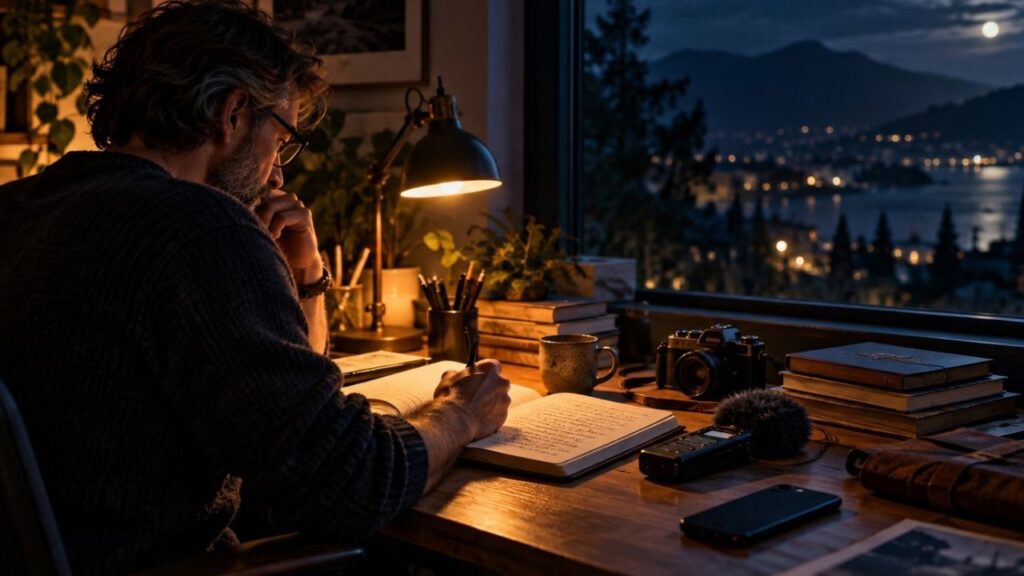
Creativity After 50_ Why Less Screen Time Can Help You Create

Creativity Needs Input. It Also Needs Absence.

There is a danger in talking about less screen time as if creativity happens only in silence.

It does not.

Creative work needs input.

Writers read.

Musicians listen.

Photographers look.

Filmmakers watch.

Artists study other artists.

AI can expose us to possibilities we would not have discovered alone.

Search can answer a technical question in seconds.

YouTube can teach something that might once have taken months to learn.

The problem begins when input never becomes output.

When researching music becomes a substitute for making music.

When watching videos about writing becomes easier than writing.

When saving visual inspiration becomes more satisfying than taking photographs.

When discussing creativity with AI produces the feeling of progress without the discomfort of actually finishing something.

Input should eventually create pressure toward making.

If it only creates more input, something has gone wrong.

AI Can Help a Second Creative Life. It Can Also Multiply It.

I use AI as part of my creative process.

I do not see it as the enemy of meaningful creative work.

For someone building independently, AI can be incredibly useful.

It can help clarify a thought.

It can organize research.

It can challenge an idea.

It can help with technical problems that would otherwise interrupt the work.

It can make one person more capable.

But there is another side to that power.

AI makes possibilities cheap.

You can generate ten directions where previously you might have had one.

You can explore twenty titles.

Five concepts.

Three visual styles.

Another arrangement.

Another interpretation.

Another project.

Another possibility.

For a multi-passionate creator, that abundance can become dangerous.

The problem is no longer:

I don’t know what to do.

The problem becomes:

I can imagine too many things I could do.

At some point, creativity needs the opposite of generation.

It needs selection.

It needs commitment.

It needs the decision that this is the track, this is the story, this is the photograph, this is the project I am finishing.

No tool can completely make that decision for you.

Less Screen Time Does Not Have to Mean a Digital Detox

I am not interested in disappearing into the woods and pretending the internet does not exist.

My work depends on technology.

My music is digital.

My books are distributed digitally.

My audience discovers work through search engines, streaming platforms, social platforms and websites.

The goal is not escape.

The goal is separation.

There should be moments when you are searching.

Moments when you are learning.

Moments when you are publishing.

And moments when you are simply making.

The mistake is allowing all four activities to happen simultaneously.

When I compose, perhaps I do not need Spotify analytics open.

When I write, perhaps I do not need to know whether yesterday’s post received another view.

When I walk with a camera, perhaps I do not need to photograph something and immediately decide how it will perform online.

The work deserves a stage before the audience arrives.

Make Before You Measure

This may be particularly important later in life because it is easy to become impatient.

If you feel you started late, every creative decision can begin to feel strategic.

Is this worth my time?

Will anyone listen?

Is there demand?

Should I choose another genre?

Is this SEO-friendly?

Will this perform on Pinterest?

Should the track be shorter?

Would another title work better?

These are legitimate questions.

I ask many of them myself.

But they belong to a different part of the process.

If every creative idea has to pass a market test before it is allowed to exist, the second creative life can become another job before it ever becomes a life.

Sometimes you need to create something before you know what it is useful for.

The strategy can come later.

The Offline Part of Creativity May Be Where Your Voice Lives

There is another reason I think this matters.

Online tools are very good at showing us what already exists.

Search reveals existing answers.

Algorithms reveal things similar to things we already liked.

Trend tools reveal growing patterns.

AI systems are trained on enormous amounts of existing human material.

All of that can be useful.

But your creative identity is not created only by finding what already works.

Part of it develops when nobody is suggesting the next thing.

During a walk.

While staring through a train window.

While writing something that has no keyword strategy.

While listening to a piece of music without trying to classify it.

While allowing an unfinished idea to remain unfinished long enough to become strange.

The quiet parts of creativity can look unproductive.

They may be where some of the most personal decisions happen.

Try Creating Before You Connect

I increasingly like one simple idea:

Create before you connect.

Not every day needs to begin with email, feeds, analytics, news or research.

Sometimes the first part of your creative time can belong entirely to the work.

Write before opening the browser.

Compose before checking streams.

Edit photographs before looking at other photographers.

Sketch the idea before asking AI what it thinks.

Even thirty minutes can change the relationship.

You begin the session by adding something to the world rather than immediately allowing the world to add something to you.

That difference is small.

But repeated over months and years, small differences become bodies of work.

Your Second Creative Life Needs Room

One of the lessons I keep returning to is that creative work does not only require time.

It requires room.

Mental room.

Emotional room.

Room to be bad at something.

Room to try ideas that have no obvious purpose.

Room to hear your own preferences before you encounter everybody else’s.

Technology can help create that life.

AI can help create that life.

The internet can help distribute that life.

None of them need to disappear.

But they should not occupy every available surface.

The Second Creative Life is not about rejecting the modern creative world.

It is about learning how to use that world without allowing it to consume the attention required to make something of your own.

Perhaps the most useful technology habit is therefore surprisingly simple.

Know when to close it.

Put the phone somewhere else.

Turn off the feed.

Leave the analytics for later.

Let the room become quiet enough that the unfinished thing in front of you becomes the most interesting thing there.

Then make something.
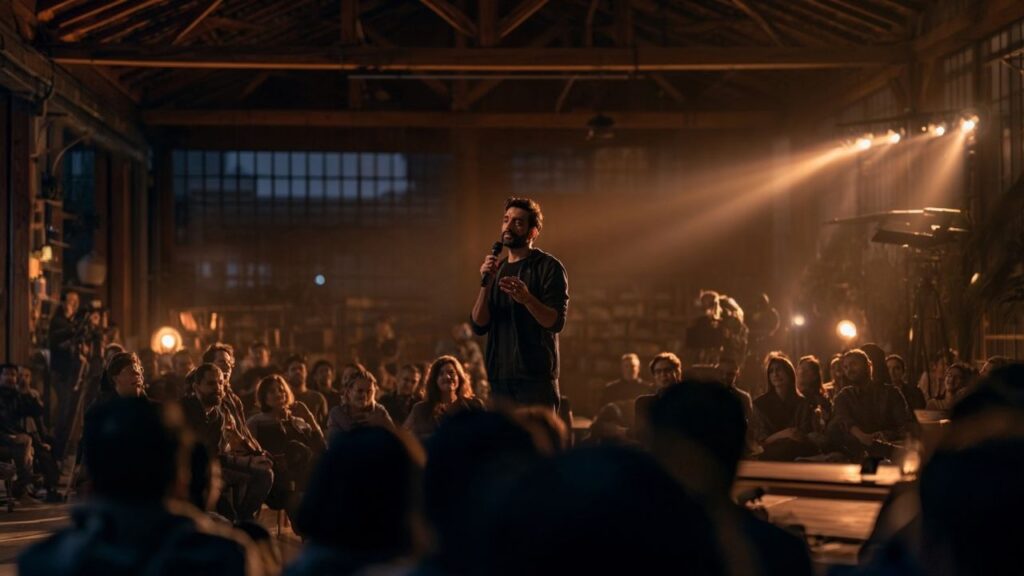
second creative life less screen time

Continue The Second Creative Life

This article is part of The Second Creative Life, DarkLofi’s ongoing exploration of creativity, Resistance, focus, identity and meaningful work later in life.

If your biggest fear is that you started too late, continue with Too Old to Start? Why Creativity After 50 Is Not Too Late.

If your problem is having too many creative directions at once, read Too Many Ideas, Not Enough Focus: The Multi-Passionate Creator After 50.

And if starting again makes you uncomfortable because you are used to knowing what you are doing, continue with From Expert to Beginner Again: Why Starting Over After 50 Feels So Uncomfortable.

FAQ

Does reducing screen time make you more creative?

Not automatically. Creativity depends on many factors, and digital tools can support creative work. The useful distinction is between intentional screen use and constant digital interruption. Reducing unnecessary digital input can create more uninterrupted time and attention for making things.

How can I reduce screen time without giving up creative technology?

Separate creation from consumption. Use software, AI and online research deliberately when they help the work, but create periods where feeds, notifications, analytics and unrelated browsing are removed.

Is AI bad for creativity?

AI can support creativity by reducing technical friction, helping with research and opening new possibilities. The risk appears when generating more possibilities replaces choosing, practicing, finishing and developing personal judgment.

Why is focus difficult when starting a creative life after 50?

Later-life creators often combine work, responsibilities, multiple interests and awareness that time matters. Digital tools add even more possibilities. The challenge is often not finding an idea but deciding which idea deserves sustained attention.

What are good offline creative activities after 50?

Writing by hand, photography walks, sketching, journaling, playing an instrument, physical collage, reading, field recording, gardening, model building and crafts can all create periods of focused activity away from constant online input. The right activity is the one you are willing to return to consistently.

What is The Second Creative Life?

The Second Creative Life is a DarkLofi series about returning to meaningful creative work later in life. It explores starting after 50, creative Resistance, focus, identity, AI-assisted creativity, learning again and building a body of work without pretending time is unlimited.

Tags: AI-assisted creativityanalog creativityCreative Focuscreative habitscreative life after 50Creative ResistanceCreativity After 50creativity later in lifedigital detoxdigital overloaddigital wellbeingfocus after 50independent creatorsmindful technologymulti-passionate creatorsno phone hobbiesoffline creativityscreen free hobbiesscreen time and creativitystarting over after 50The Second Creative Life
Wartonno

Wartonno

Wartonno is a composer, creator, curator, narrator and worldbuilder working with cinematic cyberpunk ambient music, dark soundscapes and story-led creative projects. Through music, visual worldbuilding and editorial work, Wartonno explores digital exhaustion, artificial intelligence, future-noir cities, liminal spaces and the human presence inside technological systems.

Related Posts

Your experience comes with you into the new room
The Second Creative Life

From Expert to Beginner Again: Why Starting Over After 50 Feels So Uncomfortable

September 3, 2026
Too Old to Start_ Creativity After 50 and the “Too Late” Lie
The Second Creative Life

Too Old to Start? Why Creativity After 50 Is Not Too Late

August 15, 2026
Abstract illuminated path representing creative focus after 50
The Second Creative Life

Too Many Ideas, Not Enough Focus: The Multi-Passionate Creator After 50

August 8, 2026
  • Trending
  • Comments
  • Latest
abandoned hospital hallway

Microfiction: Fifth Floor, East Wing

June 9, 2026
Dark Ambient Music for Overthinking at Night

Dark Ambient Music for Overthinking, Anxiety, and Nighttime Calm

March 10, 2026
Misty forest at dawn

Chrysalism — A Liminal Soundtrack for Stillness, Focus & Emotional Shelter

June 12, 2025
Backrooms Ambient Music Liminal Horror and Empty Room Sounds

Backrooms Ambient Music: Liminal Horror & Empty Room Sounds

June 25, 2026
Dark Ambient Music for Overthinking at Night

Dark Ambient Music for Overthinking, Anxiety, and Nighttime Calm

4
Backrooms-inspired liminal hallway and bedroom listening room representing dark ambient music, bedroom pop, and overthinking

From Backrooms to Bedroom Pop: Why Late-Night Music Is Becoming Emotional Architecture

4
Short Urban Fatasy Story The Negative Within

The Camera That Sees the Unseen: A Free Urban Fantasy Short Story You Won’t Forget

3
Meridian city cemetery purple

The Harvest of Faces – A Meridian City Short Story

3
Why Your Second Creative Life May Need Less Screen Time

Why Your Second Creative Life May Need Less Screen Time

September 26, 2026
Suno v6 Lawsuit - Can AI Models Inherit Copyright Risk

Suno v6 Lawsuit: Can a Licensed AI Model Inherit Copyright Problems?

September 20, 2026
Liminal archive room after midnight inspired by The Lost Tapes and dark ambient music

Signals After Midnight: A Liminal Microfiction Inspired by The Lost Tapes

September 19, 2026
Field recordings visualized as sound waves inside an empty nighttime railway station

When the Real World Enters the Music: Why Field Recordings Are Returning to Ambient

September 17, 2026

Dark Ambient Lofi Music: Soundtracks for Dreamers and Outsiders

Dark Ambient Spotify Playlists for Focus, Sleep, Reading & Liminal Reflection

Home

Privacy Policy

The Second Creative Life

Enter the Liminal Zone

Subscribe for rare ambient drops, dream-sound zines, and quiet moments worth drifting into.

Thank you!

You have successfully joined our subscriber list.

Dark Lofi Media Logo

DarkLofi is an independent editorial publication created by Wartonno. It explores ambient and alternative listening culture, AI music, AI-assisted creativity, independent creators and the Second Creative Life: returning to creative work later in life. DarkLofi is part of the wider Wartonno creative ecosystem, but it functions as an editorial publication rather than an artist identity.
About Wartonno →
Explore Wartonno Sound →

Follow Us

Browse by Category

  • Aely Lin
  • AI Music & Listening Culture
  • Behind the Visual
  • Character Files
  • Cults & Orders
  • Dark Ambient & Lofi Music
  • Dark Lofi Journal
  • Downloads & Exclusives
  • Independent Artists
  • Liminal Horror
  • Liminal Mindfulness
  • Liminal Thoughts
  • Microfiction
  • Music Downloads
  • Occult Mystery
  • Places of Power
  • Playlist Spotlights
  • Short Stories
  • Somnio Poetica
  • Sound & Silence
  • Sound Discoveries
  • Soundscape Explorations
  • Story Behind the Track
  • The Meridian Codex
  • The Second Creative Life
  • Timelines & Events
  • Track Descriptions
  • Urban Fantasy
  • Visuals & AI Art
  • Wallpapers & Art Prints
  • Wartonno Sound
  • Whispers

Recent News

Why Your Second Creative Life May Need Less Screen Time

Why Your Second Creative Life May Need Less Screen Time

September 26, 2026
Suno v6 Lawsuit - Can AI Models Inherit Copyright Risk

Suno v6 Lawsuit: Can a Licensed AI Model Inherit Copyright Problems?

September 20, 2026
Liminal archive room after midnight inspired by The Lost Tapes and dark ambient music

Signals After Midnight: A Liminal Microfiction Inspired by The Lost Tapes

September 19, 2026
  • About
  • Advertise
  • Privacy & Policy
  • Contact

© 2025 | Website made by Wartonno Art.

No Result
View All Result
  • Short Stories
  • Dark Ambient & Lofi Music
  • Dark Lofi Journal
  • Visuals & AI Art
  • Whispers
  • Downloads & Exclusives
  • The Meridian Codex

© 2025 | Website made by Wartonno Art.

This website uses cookies. By continuing to use this website you are giving consent to cookies being used. Visit our Privacy and Cookie Policy.